
Garden Rose Tortrix
Orthotaenia undulana
Description
How to identify
The Garden Rose Tortrix (Orthotaenia undulana) is a small moth belonging to the family Tortricidae, known for its cryptic appearance and complex behavior.
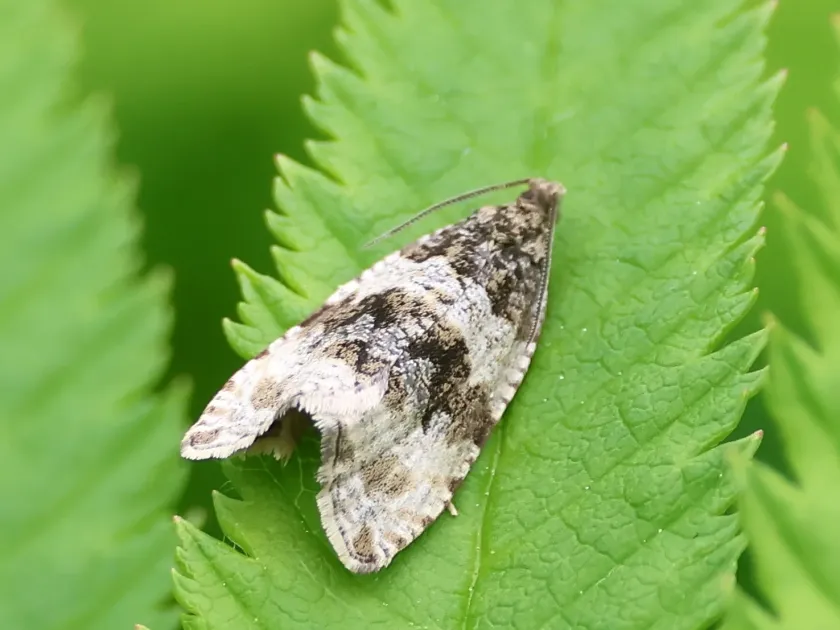
The adult moth typically has a wingspan ranging from 14 to 18 mm, featuring mottled brown and grey patterns that mimic bark.
The larvae are small, usually greenish or brownish caterpillars with a distinct dark head capsule and a thoracic plate.
Pupation occurs within folded leaves or silken webs, where the insect remains protected until the final metamorphosis stage is completed.
The species is widely distributed in forest edges, gardens, and shrub-dominated habitats across temperate regions.
What it damages
The larvae are polyphagous, feeding on a diverse range of host plants including fruit trees like apple and plum, as well as various deciduous forest species.
Feeding damage typically begins with the young larvae consuming developing buds and shoots, significantly impacting the structural development of the plant.
Older larvae roll leaves into tight shelters, consuming the leaf tissue from within, which results in skeletal leaves and stunted growth.
In nurseries and young orchards, heavy infestations can lead to severe defoliation and reduction in overall plant vigor and fruit yield.
The physiological stress caused by leaf loss makes trees more susceptible to secondary infections and unfavorable weather conditions.
When it appears
The life cycle usually involves one or two generations per year, depending heavily on the prevailing summer temperatures in the region.
Overwintering occurs as young larvae, which seek shelter in bark crevices or among leaf litter to survive the cold winter months.
In the spring, as temperatures rise, the overwintered larvae emerge to begin feeding on newly emerging foliage and flower buds.
The flight period of adult moths typically spans from late spring through mid-summer, during which mating and egg-laying occur.
The late-summer generation larvae are responsible for the most noticeable leaf damage before they prepare for their winter dormancy.
Signs of infestation
The most reliable sign of an infestation is the presence of rolled or folded leaves bound together with thick silken webbing.
When these leaf rolls are inspected, one can find the caterpillar or its dark, granular frass, which confirms active feeding.
Tips of shoots and branches may appear withered, brown, and distorted due to the larvae eating the central tissue of the bud.
During the flight season, moths may be observed flying in short, rapid bursts around host trees, especially during the dusk hours.
Extensive webbing on the foliage is a primary indicator that the local population of the pest has reached a significant level.
Control measures
Cultural control involves removing and destroying infested leaves and prunings to reduce the overwintering population density.
Encouraging natural predators such as parasitic wasps and birds can significantly aid in suppressing the population of the moth.
Pheromone traps are an effective tool for monitoring the arrival of adults, allowing for precise timing of chemical or biological interventions.
Targeted use of biological pesticides, such as Bacillus thuringiensis, provides excellent control while preserving beneficial insect species.
Chemical control should be limited to instances of severe infestation, focusing on the period when larvae are young and most vulnerable to treatment.
Taxonomy
- Latin name
- Orthotaenia undulana
- Order
- Lepidoptera (butterflies)
- Family
- Tortricidae
- EPPO code
- ORTNUN
Discussion
No discussions yet — be the first.