
Tree weevil
Orthorhinus
Description
How to identify
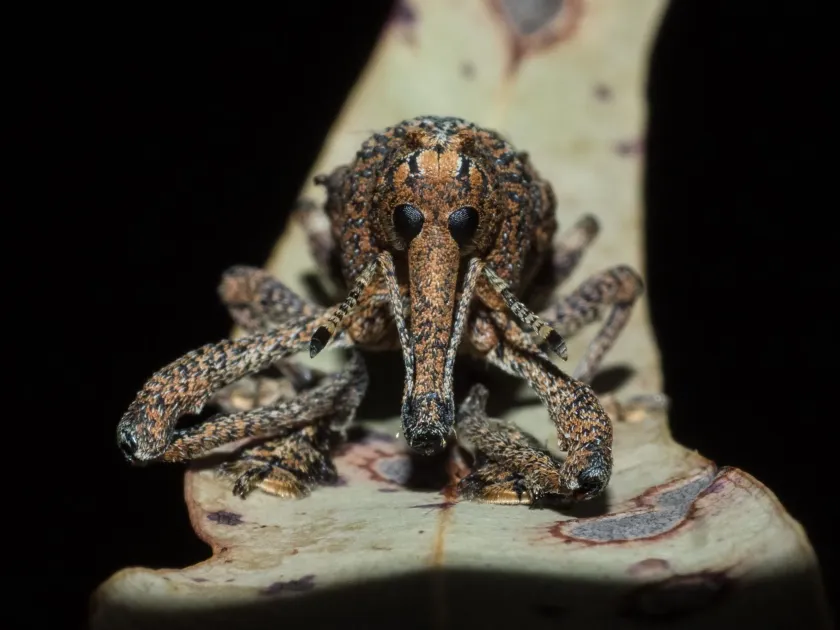
The tree weevil, belonging to the genus Orthorhinus within the Curculionidae family, is a notable pest characterized by its elongated snout, which is typical for all weevil species.
Adult beetles typically measure between 5 and 15 mm in length and possess a thick exoskeleton often covered in mottled scales, providing excellent camouflage against tree bark.
Their coloration ranges from dull grey to brown and near-black, making them incredibly difficult to spot during daylight hours while they remain stationary on branches.
The larvae are white, legless grubs with a distinctive curved C-shaped body and a hardened, dark head capsule adapted for boring through woody plant tissues.
This species undergoes a complete metamorphosis, with the life cycle comprising egg, larval, pupal, and adult stages, with the majority of the lifecycle spent internally.
What it damages
Tree weevils target various woody species, including many ornamental trees and fruit-bearing crops, posing a significant risk to overall plant vigor.
Larval stages are the most destructive, as they consume the inner bark and sapwood, creating extensive galleries that disrupt the plant's vascular transport system.
Adult beetles feed on buds, tender shoots, and leaves, causing aesthetic damage and inhibiting the development of new growth during the spring season.
The tunnels created by larvae provide entry points for secondary pathogens, such as wood-decay fungi and bacteria, which often cause further systemic damage.
In cases of severe infestation, the cumulative damage leads to wilting, branch dieback, and can eventually cause the death of young or weakened trees.
Signs of infestation
Small, round emergence holes on the surface of the bark are the most visible indication that adult weevils have completed their development and exited the wood.
Frass, which resembles fine sawdust, often accumulates at the base of the tree or within bark crevices, indicating active larval boring and feeding activity.
Yellowing, flagging, or wilting foliage on specific branches often points to internal structural damage that is cutting off nutrients to that part of the canopy.
Bark abnormalities such as ridges, swellings, or splits can signify that the tree is attempting to heal over areas where larvae have been tunneling beneath the surface.
Observing the canopy at night with a flashlight may reveal adult beetles active on the foliage, as these insects are primarily nocturnal in their feeding habits.
Control measures
Sanitation is key to control; pruning and immediately destroying infested limbs is the most effective way to remove larvae from the environment.
Systemic insecticides applied during the peak emergence period of adult beetles can protect healthy trees by targeting the insects before they lay eggs.
Maintaining strong plant health through proper irrigation and fertilization helps trees better withstand and recover from limited feeding damage caused by weevils.
Applying white horticultural paints or protective coatings to tree trunks can discourage female weevils from laying eggs on the bark surface.
- Monitor trees regularly during the active growing season.
- Use physical barriers where possible for young, high-value trees.
- Remove and incinerate any severely compromised plant material.
Taxonomy
- Latin name
- Orthorhinus
- Order
- Coleoptera (beetles)
- Family
- Curculionidae
- EPPO code
- ORTRSP
Discussion
No discussions yet — be the first.