
Orthogalumna
Orthogalumna
Description
How to identify
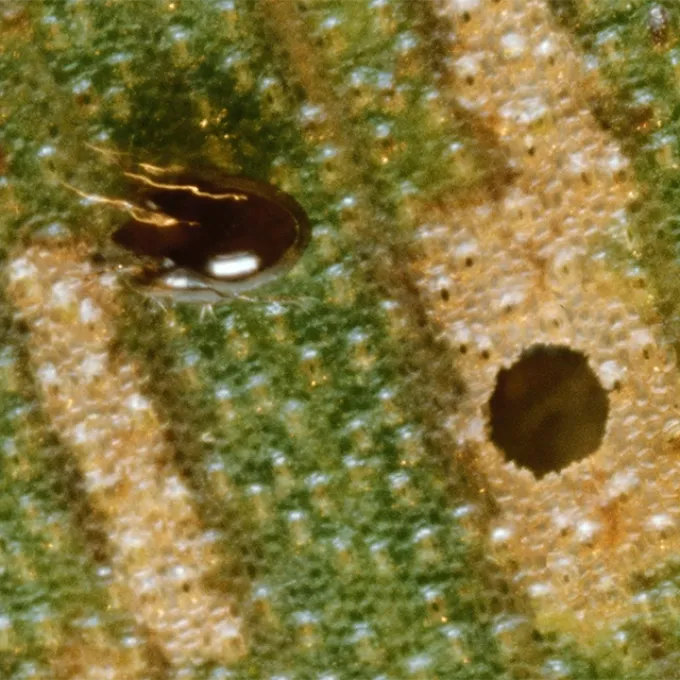
Orthogalumna is a genus of oribatid mites (Oribatida), part of the Galumnidae family. These are microscopic armored mites characterized by a dark, heavily sclerotized exoskeleton.
Visually, they resemble tiny, shiny beetles and possess characteristic wing-like structures called pteromorphs on the sides of their abdomen. They are generally slow-moving creatures compared to other mite species.
The life cycle of Orthogalumna progresses through several stages: egg, larva, three nymphal stages, and adult. The lifecycle is highly dependent on soil moisture levels and the presence of organic debris.
To identify them in the field, a magnifying glass with at least 20x magnification is usually required, as adults typically measure less than one millimeter in length.
These mites predominantly inhabit the top layers of the soil, but under specific climatic conditions, they may migrate to the aerial parts of plants.
What it damages
The primary diet of Orthogalumna consists of decaying organic matter, but when populations reach high densities, they can switch to feeding on living plant tissues.
Vegetable crops and ornamental plants grown in high-humidity conditions are most susceptible to damage from these pests.
The mites damage young seedlings by sucking sap from the epidermal cells of roots and the base of the stems, leading to stunted growth and secondary infection risks.
The injuries caused by Orthogalumna create entry points for fungal and bacterial pathogens, which significantly increase the risk of plant mortality.
The pest is most dangerous during periods of mass reproduction when their natural food source, such as leaf mold, becomes depleted, forcing them to feed on living tissues.
When it appears
The peak activity of Orthogalumna occurs during the spring and summer months, coinciding with moderate temperatures and high soil humidity.
In greenhouse environments, these mites can remain active throughout the year, provided that conditions favoring their reproduction are maintained.
Populations grow most rapidly during periods of heavy rainfall or over-irrigation, as a moist environment is critical for larval development and respiration.
In the autumn, as temperatures drop, the mites decrease their activity levels and migrate deeper into the soil profile for overwintering in a state of diapause.
The development time for a single generation can range from several weeks to a month, depending on the ambient temperature and soil conditions.
Signs of infestation
The primary indicators of an infestation include the yellowing and gradual wilting of lower leaves, often accompanied by the thinning of the stem near the base.
Upon inspecting the root system, one may observe microscopic necrotic spots and ulcers caused by the mites feeding on the plant's vascular tissues.
A characteristic sign of their presence is the appearance of tiny, black, shiny dots on the surface of the soil or at the base of the stems.
Stunted plant growth despite regular watering and sufficient nutrient availability is often a strong indicator of a hidden oribatid mite infestation.
Severe infestations lead to the degradation of root hairs, rendering the plant unable to efficiently absorb moisture and essential mineral nutrients.
Control measures
The first step in protecting crops is adhering to proper agronomic practices, such as regular soil cultivation to ensure aeration and prevent waterlogging.
Gardeners and farmers should avoid applying excessive amounts of non-composted organic fertilizer, as this creates a primary breeding ground for these mites.
Once an infestation is detected, specialized acaricides effective against soil-dwelling mites should be applied via soil drenching or targeted spraying.
- Soil application of insecto-acaricide solutions.
- Thorough removal of plant debris from the fields.
- Careful management of humidity levels in greenhouses.
- Use of biological control agents, such as entomopathogenic fungi.
Chemical control measures must be implemented comprehensively, as these mites can move through the soil profile to avoid direct surface contact with pesticides.
Taxonomy
- Latin name
- Orthogalumna
- Order
- Mites
- Family
- Galumnidae
- EPPO code
- ORTGSP
Discussion
No discussions yet — be the first.