
Violet weevil
Orobitis cyaneus
Description
How to identify
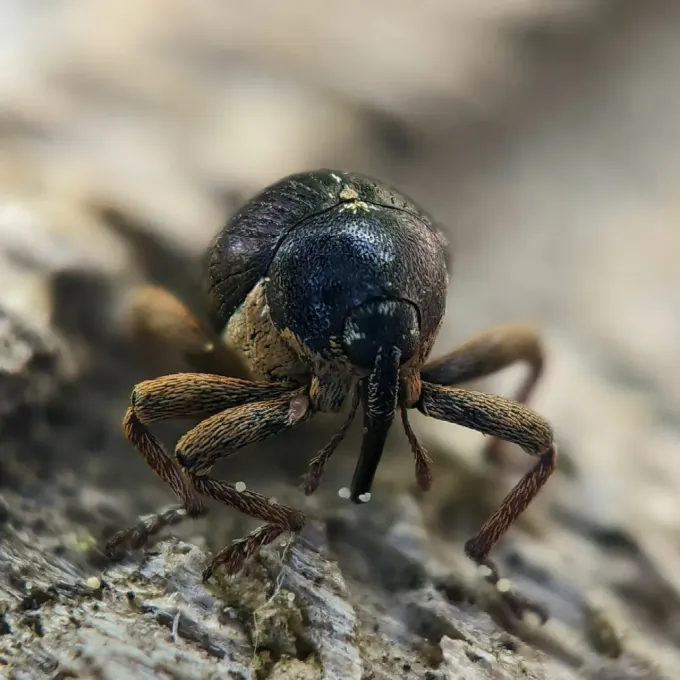
The violet weevil (Orobitis cyaneus) is a small beetle belonging to the Curculionidae family, order Coleoptera. Adult beetles measure between 2.5 and 3.5 mm and have a very distinct, almost spherical body shape.
They are characterized by a dark blue to black color with a metallic sheen. The surface of the elytra is sparsely covered with light-colored hairs, and their snout (rostrum) is elongated, typical for the weevil species.
What it damages
The primary host plants for this pest are members of the Violaceae family. The violet weevil specifically targets various species of violets and pansies, both in the wild and in domestic garden settings.
The larvae are specialized seed-feeders that develop inside the seed capsules of the host plant. By consuming the developing seeds, they significantly impact the reproductive capacity of the infested plants.
When it appears
Adult beetles typically emerge in the spring when temperatures begin to rise. During this phase, they feed on the foliage and tender stems of the violet plants to gain energy for the upcoming breeding season.
Egg-laying is synchronized with the development of the plant's fruit. The life cycle is completed by late summer, at which point the adults enter a diapause state and overwinter in the soil or leaf litter.
Signs of infestation
Signs of infestation are most evident on the seed capsules. Small puncture marks may be visible where the female weevil has inserted her eggs into the developing fruit of the plant.
Once the capsules mature or are opened, one can observe hollowed-out seeds or the presence of larvae inside. Often, the entire contents of the seed capsule are destroyed, leaving behind only the outer shell.
Control measures
Manual control is often the most practical approach for garden settings. This involves regularly inspecting the plants and harvesting infested seed pods before the larvae have a chance to emerge as adults.
For larger infestations, systemic insecticides can be applied during the early spring when adults are active on the foliage. However, timing is critical, as treatments must occur before the larvae bore into the protected environment of the fruit.
Taxonomy
- Latin name
- Orobitis cyaneus
- Order
- Coleoptera (beetles)
- Family
- Curculionidae
- EPPO code
- OROBCY
Discussion
No discussions yet — be the first.