
Orchid weevil
Orchidophilus peregrinator
Description
How to identify
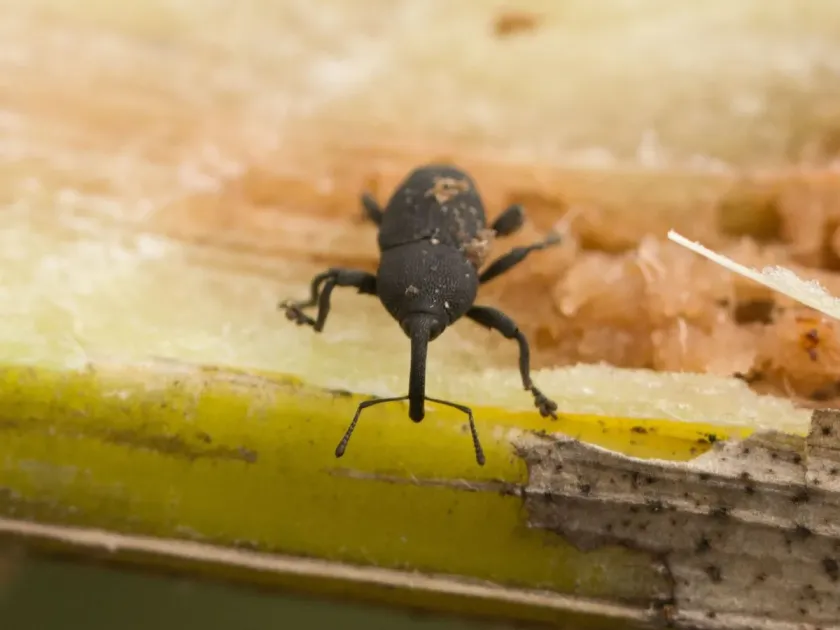
The orchid weevil (Orchidophilus peregrinator) is a small beetle belonging to the Curculionidae family, which primarily targets orchid species. Adult weevils are characterized by their elongated snouts and dark brown or black coloration.
These pests are highly specialized, having adapted to live and feed within the succulent tissues of their host plants, which provides them with significant protection from external contact insecticides.
The life cycle involves egg, larva, pupa, and adult stages. The larvae are legless, cream-colored grubs that remain hidden inside stems or pseudobulbs throughout their development.
Orchid weevils thrive in the warm and humid environments typical of greenhouses and indoor orchid collections, allowing for continuous generations if left unchecked.
Due to their small size and cryptic behavior, they are often introduced into collections through contaminated orchid specimens purchased from infested nurseries.
What it damages
The orchid weevil feeds on a variety of orchids, including Dendrobium, Cattleya, and Phalaenopsis. Both adults and larvae contribute to the destruction of plant tissues.
Larval feeding is the most destructive phase, as they tunnel through pseudobulbs and stems, causing tissue necrosis and structural instability in the plant.
Adult weevils cause damage by feeding on leaves, buds, and floral spikes, leaving behind small holes that diminish the plant's aesthetic appeal and health.
Secondary infections, such as fungal or bacterial rots, often infiltrate the tunnels created by the larvae, leading to the rapid decay of the orchid's interior parts.
If not addressed, a severe infestation can lead to the systemic collapse of the plant, especially in species with thick storage organs like pseudobulbs.
Signs of infestation
Initial signs of presence include small, circular feeding punctures on leaves or floral spikes caused by adult weevil activity.
Yellowing, premature wilting, or shriveling of pseudobulbs that persist despite proper watering and root health are common symptoms of internal larval feeding.
Frass, which resembles fine sawdust, is frequently found around the base of the plant or at the entrance points of the larvae's tunnels.
Malformed growth or aborted flower buds are often indicators that the internal tissues of the growth center have been compromised by larvae.
In advanced cases, the internal structure of the pseudobulb may feel hollow when pressed, confirming that the tissue has been consumed from within.
Control measures
Strict quarantine protocols for all new acquisitions are essential. Isolate new plants for at least 30 days to monitor for any signs of weevil activity before introducing them to the main collection.
Mechanical control is the first step: physically prune away and destroy all plant parts that show signs of infestation, including stems or bulbs with tunnels.
Systemic insecticides, particularly those containing imidacloprid or similar active ingredients, are recommended for long-term control as they are absorbed by the plant and target the feeding larvae.
Using yellow sticky traps can help detect the presence of flying adults, allowing for earlier intervention before a population explosion occurs.
Maintaining high hygiene standards, such as sanitizing cutting tools between plants, is crucial to prevent the accidental spread of the pest across a collection.
Taxonomy
- Latin name
- Orchidophilus peregrinator
- Order
- Coleoptera (beetles)
- Family
- Curculionidae
- EPPO code
- ORCHPE
Discussion
No discussions yet — be the first.