
Beach hopper
Orchestia
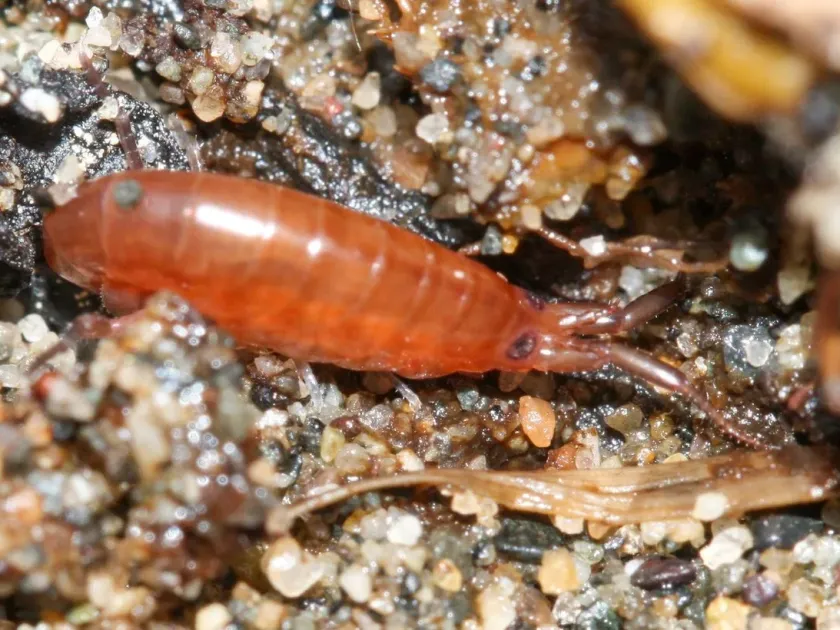
Description
How to identify
Beach hoppers (Orchestia) are crustaceans belonging to the order Amphipoda and the family Talitridae. They have laterally flattened bodies and are often mistaken for tiny shrimp.
While their natural habitat is coastal vegetation, they frequently migrate into greenhouses, nurseries, and damp storage areas where moisture levels are consistently high.
They are primarily nocturnal, hiding during the day in organic matter, under mulch, or within the top layer of moist soil to avoid desiccation and predators.
Equipped with specialized jumping legs, they can retreat rapidly when disturbed, making them difficult to capture or observe during daylight hours.
Their coloration usually matches the surrounding substrate, ranging from pale brown to translucent, which helps them remain undetected in dark, damp environments.
What it damages
Beach hoppers are opportunistic feeders that primarily attack tender plant tissues, including seedling roots, stems, and lower foliage near the soil surface.
They are particularly problematic in soilless cultures, peat-based growing media, and environments with high concentrations of decaying organic matter.
Feeding on root systems stunts plant development and can lead to secondary infections, as damaged tissues are prone to fungal and bacterial pathogens.
Young transplants are highly vulnerable; feeding by beach hoppers can completely destroy the stems, leading to sudden plant collapse and loss of yield.
In ornamental horticulture, these pests can cause significant aesthetic damage by chewing irregular holes in the leaves of low-growing plants.
Signs of infestation
The most evident sign is the appearance of shredded or irregular leaf margins on plants growing close to the ground in moist conditions.
A sudden decline or wilting of seedlings often indicates that the roots or basal stems have been damaged by feeding activity beneath the soil line.
Small, dark, scattered fecal droppings around the base of the plant are a strong indicator of an established population of beach hoppers.
When disturbing the surface of the soil or moving mulch, you may notice quick, jumping movements, confirming the presence of these crustaceans.
Presence of small, clean-cut entry holes in the stem collar of young plants suggests that beach hoppers are utilizing the stem as a primary food source.
Control measures
The primary control measure is environmental management; reduce soil moisture and increase airflow in greenhouses to create an unfavorable habitat.
Practice strict sanitation by removing decaying organic debris, fallen leaves, and weeds, which provide essential shelter and food for these pests.
Implement simple physical traps, such as placing damp boards or moistened fabric on the soil overnight, to collect and destroy the pests in the morning.
Biological control using entomopathogenic nematodes applied to the soil has proven effective in suppressing crustacean populations in protected cultivation.
Ensure that all potting media and soil are free from contamination and potential hiding spots before planting to prevent initial colonization.
Taxonomy
- Latin name
- Orchestia
- Family
- Talitridae
- EPPO code
- ORCTSP
Discussion
No discussions yet — be the first.