
Hoatzin
Opisthocomus
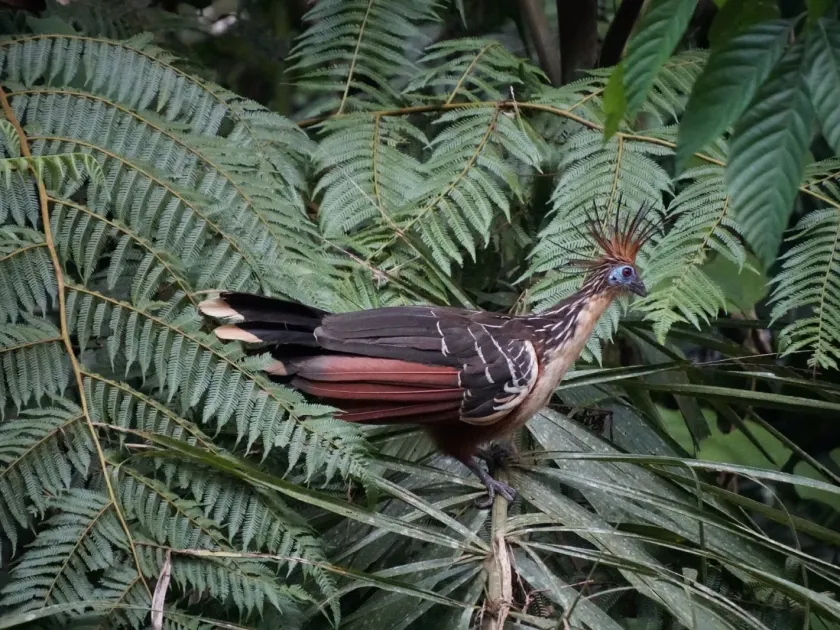
Description
How to identify
The hoatzin (Opisthocomus hoazin) is a distinctive tropical bird, the sole member of the order Opisthocomiformes. It is found in the swamps and forests of the Amazon and Orinoco basins.
It is characterized by its crested head, long tail, and unusual digestive system that utilizes fermentation to break down foliage. The species is evolutionarily distinct from all other extant birds.
Juvenile hoatzins possess functional claws on their wings, an archaic feature that allows them to climb through mangrove branches before they develop flight feathers.
Adult hoatzins are recognized by their strong, musky odor, which is a byproduct of their unique bacterial fermentation process in the foregut, acting as a defense mechanism.
Taxonomically, the bird remains a subject of study, as its development and physiological adaptations distinguish it from common avian species.
What it damages
The diet of the hoatzin is primarily herbivorous, consisting of leaves, flowers, and fruits from various riparian plants. They are among the few birds that rely on foliage as a primary food source.
While hoatzins consume vegetation, they do not pose a threat to agricultural production. Their feeding habits are localized within specific wetland environments away from farmland.
The damage they cause is limited to incidental pruning of wild plant species, which is ecologically benign and does not affect cultivated crops or yield parameters.
Due to the specific nutritional requirements of the bird, they are not attracted to domestic crops or high-yield agricultural plants, preventing potential conflicts.
From an agronomic perspective, the hoatzin has zero impact on the economic productivity of crops, and it is therefore not classified as a pest in any context.
Control measures
No pest control measures are recommended for the hoatzin. As it does not interfere with human agricultural interests, control efforts are unnecessary and ecologically inappropriate.
If habitat management is required for commercial projects, it is advised to ensure that riparian corridors are respected, allowing the species to flourish in its natural habitat.
Methods to repel the birds are not required, as they exhibit no behavior that could lead to the damage of commercial plantations or home garden crops.
Protecting the bird is a conservation priority, and any human interference with their population is discouraged by environmental regulations in their native range.
Agronomists are encouraged to monitor bird biodiversity in nearby forest patches as an indicator of ecosystem health rather than seeking to mitigate their presence.
Taxonomy
- Latin name
- Opisthocomus
- Family
- Opisthocomidae
- EPPO code
- OPSTSP
Discussion
No discussions yet — be the first.