
Northern grasshopper mouse
Onychomys leucogaster
Description
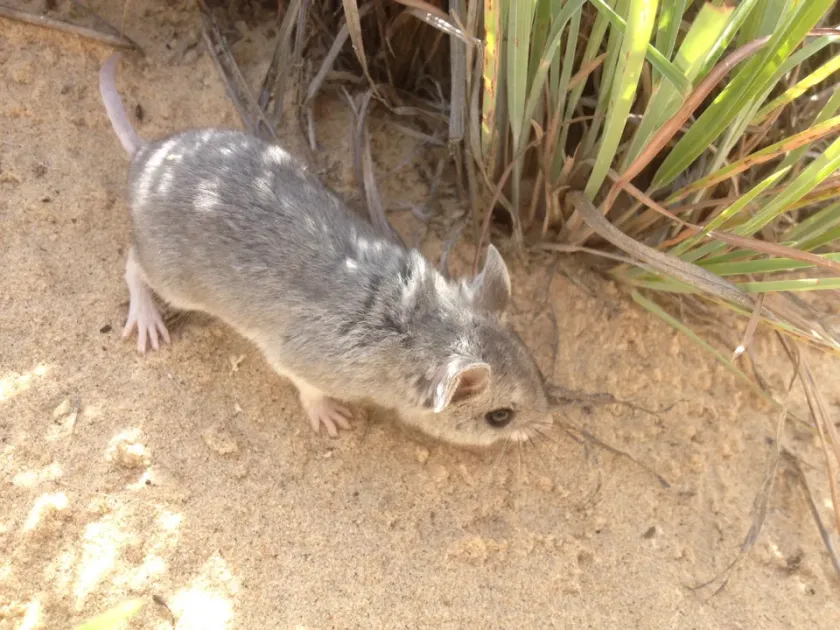
How to identify
The northern grasshopper mouse (Onychomys leucogaster) is a unique member of the Cricetidae family, renowned for its predatory behavior rather than a strictly herbivorous diet.
Physically, these rodents possess a compact, muscular build and a thick, short tail, which are adaptations suited for arid and semi-arid environments.
Unlike most mice that congregate in large colonies, this species is highly territorial and solitary, often marking its range with distinct high-pitched vocalizations.
Their fur coloration usually ranges from grayish-brown to pale tan, offering superior camouflage against the soil and sparse vegetation of typical farmland.
Because they are specialized predators, their behavioral patterns differ significantly from other common field rodents, making them a unique challenge for farmers.
What it damages
While their diet primarily consists of insects and other small arthropods, they are known to consume plant matter, especially when preferred insect prey is scarce.
In agricultural settings, they may gnaw on the roots of young seedlings, as they actively search for moisture and nutrients during hot, dry growing seasons.
By digging elaborate burrow systems in fields, these rodents can physically disrupt soil structure, potentially affecting the integrity of plant root zones.
Although they rarely cause large-scale devastation, their localized feeding can introduce secondary pathogens to the damaged roots, weakening the plant's health.
Furthermore, because they are efficient insect hunters, they may inadvertently reduce populations of beneficial predatory insects that naturally control other pests.
When it appears
These mice are active throughout the year, with their peak activity occurring during the warmer spring and summer months when prey availability is high.
As nocturnal animals, their feeding and digging activities are most intensive during the night, making them difficult to observe directly during the day.
They do not hibernate, although their activity levels may decrease slightly during colder winter periods, during which they rely on cached food and shelter.
The early spring season is critical, as the germination of new crops coincides with the increased activity of mice emerging from their winter burrows.
During peak summer heat, the incentive for these rodents to target succulent plant roots increases as they struggle to maintain their water intake.
Signs of infestation
The most reliable sign of their presence is the discovery of neat, circular burrow entrances, measuring approximately 5 cm in diameter, near the base of plants.
Look for discarded exoskeletons and insect remains near these entrances, as they frequently bring their prey back to their burrows to feed securely.
Sudden wilting of localized patches of crops is a strong indicator that the root systems have been damaged or severed by rodent tunneling activity.
Specific bite marks on roots, characterized by distinct grooves, can differentiate their damage from that of subterranean insect larvae or larger rodents.
During the night, their distinctive, high-pitched call, which serves as a territorial warning to other mice, can alert farmers to their presence in the field.
Control measures
Effective management begins with landscape sanitation, specifically by removing brush and weed debris that provides necessary cover for these rodents.
Regular tillage of fields is an excellent mechanical control method, as it disrupts burrow systems and forces the rodents to relocate to less sensitive areas.
Encouraging the presence of natural predators, such as owls and raptors, can provide sustainable control over the local mouse population in agricultural areas.
In cases of severe infestation, targeted trapping or the use of approved rodenticides can be implemented, provided they comply with local agricultural regulations.
Maintaining proper field moisture levels can reduce the need for rodents to seek out succulent plant roots as a source of emergency hydration.
Taxonomy
- Latin name
- Onychomys leucogaster
- Order
- Rodents
- Family
- Muridae
- EPPO code
- ONYHLE
Discussion
No discussions yet — be the first.