
Grasshopper mouse
Onychomys
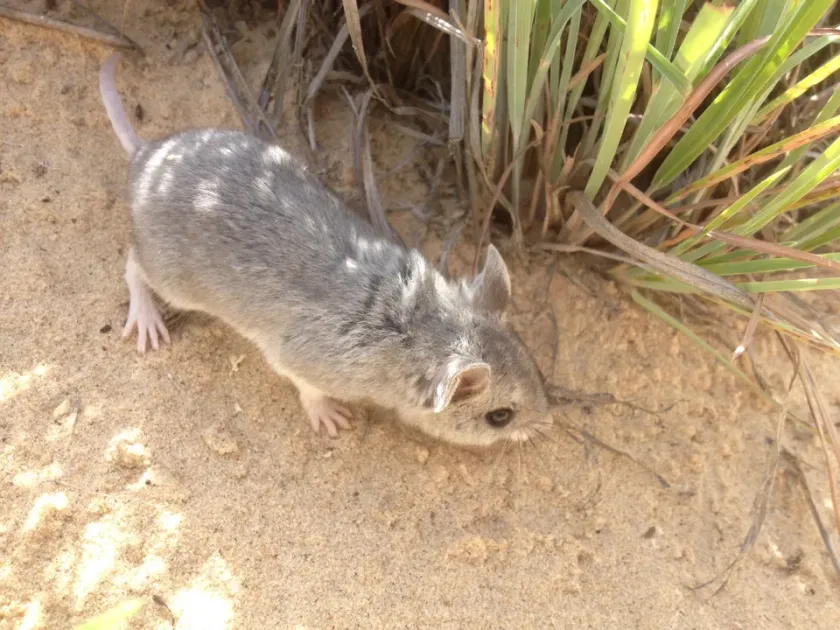
Description
How to identify
The Grasshopper mouse (genus Onychomys) is a unique group of rodents within the family Cricetidae, natively found in North American deserts and grasslands.
These mice are distinctly carnivorous, feeding almost exclusively on insects, scorpions, and other small vertebrates, which sets them apart from most other rodents.
They possess a robust, stocky body with a thick tail and are known for their territorial behavior, often patrolling large areas to defend their hunting grounds.
They are primarily nocturnal, preferring to operate under the cover of darkness to hunt for prey and maintain their underground burrow systems.
Their fur coloration is well-adapted to their environment, providing camouflage against the sandy and rocky terrain they typically inhabit.
What it damages
While primarily insectivorous, the Grasshopper mouse can damage agricultural fields by digging intricate burrow systems that destabilize the topsoil.
These excavations often occur directly beneath the root zone of crops, causing mechanical damage that stunts growth or leads to the collapse of plants.
Although they rarely consume cultivated plants as a primary food source, they may gnaw on seeds or roots when insect populations are seasonally low.
Their burrowing activity facilitates soil erosion in affected areas, potentially creating drainage issues and nutrient imbalances in vegetable patches.
The overall impact on commercial crops is generally lower than that of seed-eating rodents, yet their presence can complicate soil management practices.
When it appears
The activity of these mice peaks during the warmer months when their primary prey, various insects and spiders, are most abundant in the fields.
Their reproductive season occurs during the spring and summer, requiring increased energy intake and resulting in higher burrowing activity to expand nesting areas.
During the winter season, their metabolic activity slows, and they remain largely underground, spending less time hunting on the surface.
Farmers are most likely to encounter signs of these rodents following seasonal tillage operations that disturb their natural habitat.
The population density is highly correlated with the availability of ground-dwelling insects, making irrigated fields an attractive potential habitat.
Signs of infestation
One of the primary indicators of their presence is the appearance of small, round, and meticulously kept entrance holes leading into deep underground tunnels.
Discarded remnants of insect exoskeletons found near burrow entrances provide strong evidence of a Grasshopper mouse colony living in the vicinity.
Localized plant wilting or sudden death of seedlings without any signs of foliage feeding often points to subterranean damage to the root system.
During the night, they are known to emit a distinct, high-pitched vocalization to defend their territory, which can be heard in quiet rural settings.
The lack of characteristic surface grazing patterns distinguishes their activity from that of typical grain-eating rodent species.
Control measures
Deep plowing and regular soil cultivation are the most effective strategies to disrupt their nesting sites and encourage the colony to relocate.
Implementing effective weed management reduces the insect population, thereby decreasing the primary food source that attracts these predators to the field.
Encouraging local populations of birds of prey, such as owls or hawks, through the installation of perches can provide natural population control.
Since they are carnivores, traditional grain-based rodenticides are generally ineffective and may pose unnecessary risks to non-target beneficial species.
Maintaining a well-managed crop perimeter and minimizing fallow, weedy patches helps in preventing the establishment of new burrow systems.
Taxonomy
- Latin name
- Onychomys
- Order
- Rodents
- Family
- Muridae
- EPPO code
- ONYHSP
Discussion
No discussions yet — be the first.