
Woodlouse
Oniscus
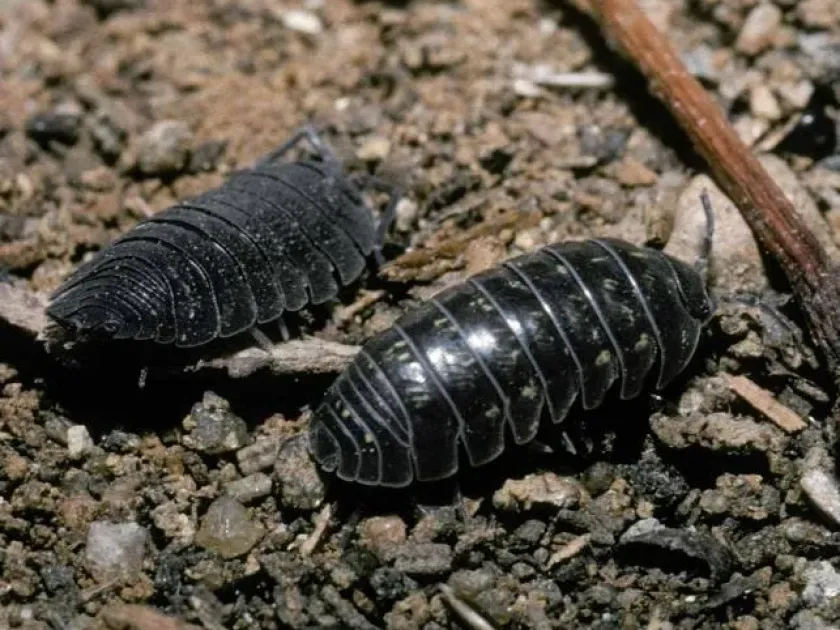
Description
How to identify
The woodlouse (genus Oniscus) belongs to the class of higher crustaceans, order Isopoda, and family Oniscidae. It is a terrestrial crustacean that has adapted to living in damp environments.
The body is oval, segmented, and protected by a hard exoskeleton that is typically grey or brownish. Adult woodlice generally measure between 10 and 20 mm in length.
They possess seven pairs of legs, enabling quick movement. When disturbed or threatened, many woodlice species instinctively curl into a tight ball as a primary defensive mechanism.
Because woodlice breathe through gills, they require high humidity to survive. Consequently, they are almost exclusively found in dark, moist environments where they can avoid desiccation.
These pests are nocturnal, spending the daylight hours hiding under stones, decaying logs, mulch, or various types of garden debris to stay protected from direct sunlight.
What it damages
Woodlice can cause significant damage to vegetable crops, berries, and ornamental plants, especially in greenhouses or areas with dense planting schemes.
Their diet includes tender seedling shoots, young leaves, and root systems. They frequently attack fruits that are in direct contact with the soil, such as strawberries and tomatoes.
In greenhouse operations, woodlice can devastate young seedlings by chewing through the stems at the soil line, leading to the rapid collapse and death of the plant.
Beyond the direct physical damage caused by their feeding, woodlice can act as vectors for fungal and bacterial infections, leading to rot and systemic plant disease.
They also pose a threat to harvested produce stored in cool, damp locations like basements and cellars, where they consume root vegetables and tubers.
When it appears
In outdoor environments, woodlice are most active during the warmer months, particularly following periods of heavy rain when soil moisture levels remain high.
Inside greenhouses and nurseries, woodlice can remain active year-round if temperatures are maintained above 15°C and moisture levels remain sufficiently high.
The breeding cycle of woodlice is rapid under optimal conditions, allowing populations to expand quickly if there is an abundance of decaying organic matter to feed on.
High densities of woodlice are typically observed under protective covers, boards, plastic sheets, or thick layers of organic mulch where they find stable, humid conditions.
As outdoor temperatures drop in the autumn, woodlice often migrate toward indoor environments, greenhouses, or root cellars to seek shelter and food sources for the winter.
Signs of infestation
A primary indicator of woodlouse activity is the appearance of ragged, irregular holes in the leaves, especially those located near the soil surface.
The presence of fine, dark granular frass (excrement) around the base of the plant stem is a clear sign that woodlice have been feeding on the tissue.
Sudden wilting or lodging of young transplants is often caused by the stems being girdled or chewed through by these pests during the night.
Observing adult woodlice under boards, debris, or mulch after moving them during the early morning hours provides confirmation of their presence in the immediate area.
Evidence of shallow, pitted wounds on fruit that eventually lead to secondary rot is a classic sign of woodlouse infestation on crops like strawberries.
Control measures
The most effective strategy is the management of moisture. Ensure greenhouses are well-ventilated, improve soil drainage, and avoid over-saturating the substrate.
Regular sanitation is critical; remove piles of leaves, boards, stones, and other debris that provide the necessary cool, damp hiding spots for woodlice populations.
Mechanical trapping is highly effective: placing damp cloths, boards, or halved potatoes on the soil overnight creates a lure. The pests collected can then be disposed of manually.
- Applying lime or wood ash along greenhouse paths to create a dry, alkaline barrier that woodlice avoid.
- Using appropriate contact insecticides registered for the specific crop if populations reach damaging levels.
- Introducing biological control agents, such as entomopathogenic nematodes, which target woodlice in the soil.
Regular hoeing and cultivation of the top layer of soil disrupt the woodlice's runways and tunnels, while helping the surface dry out, making the environment less hospitable.
Taxonomy
- Latin name
- Oniscus
- Family
- Oniscidae
- EPPO code
- ONISSP
Discussion
No discussions yet — be the first.