
Muskrat
Ondatra zibethicus
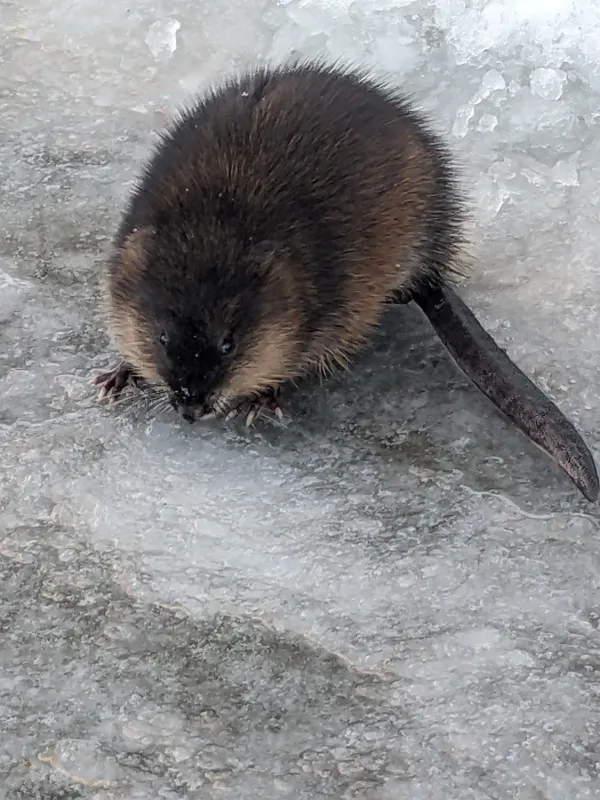
Description
How to identify
The muskrat (Ondatra zibethicus) is a semi-aquatic rodent of the Cricetidae family, characterized by a compressed tail and dense, waterproof fur.
Adult muskrats weigh between 0.7 to 1.5 kg and possess powerful front incisors specifically adapted for gnawing through woody plants and roots.
They are primarily nocturnal and crepuscular, spending most of their time in water, which serves as a natural protection from terrestrial predators.
Muskrats are highly social and build complex burrow systems with underwater entrances to keep their living chambers safe and dry.
As an invasive species in many regions, they demonstrate rapid reproductive rates, often leading to rapid population surges in suitable habitats.
What it damages
Muskrats inflict significant economic losses by feeding on agricultural crops planted near irrigation canals, ponds, and water reservoirs.
Commonly damaged crops include corn, soybeans, carrots, and sugar beets, which are consumed by muskrats moving from water to land.
The most severe impact, however, is their burrowing activity, which compromises the structural integrity of dams, dikes, and embankments.
Burrows often cause water leakage, soil erosion, and complete breaches of water management infrastructure, leading to costly repair requirements.
In aquaculture, muskrats damage containment netting and interfere with water circulation systems, negatively affecting fish farming productivity.
When it appears
Spring marks the onset of peak activity as muskrats emerge to repair winter-damaged burrows and begin their breeding cycle.
The summer season correlates with the highest damage levels to agricultural fields as the rodent population matures and consumes fresh vegetation.
During the autumn, muskrats become hyper-active, storing food and reinforcing their lodges to survive the approaching cold winter months.
Winter activity continues beneath the ice, where muskrats persist in modifying their burrow systems to maintain internal microclimates.
Multiple litters per year ensure a continuous cycle of population replenishment, requiring year-round monitoring to manage their impact.
Signs of infestation
One of the most obvious signs is the presence of floating food platforms or "feeding huts" made of cattails and reeds near the water's edge.
Active burrows are identified by fresh mounds of mud and excavated vegetation debris found near the entrances along the waterline.
Well-worn trails through dense shoreline vegetation leading to adjacent garden or crop areas are clear indicators of muskrat traffic.
Signs of gnawing on the stems of aquatic plants or garden crops near the water surface indicate recent feeding sessions by the rodents.
Bubbles surfacing in the water can indicate underwater entrances to burrow systems located along the steep banks of canals.
Control measures
The most effective strategy involves reinforcing embankments with heavy stones, wire mesh, or concrete to physically prevent burrowing.
Maintaining clear margins around water bodies by removing dense vegetation reduces the habitat suitability for muskrat lodge construction.
Population management is often carried out through controlled trapping, which must be performed following local wildlife regulations and permits.
Frequent inspections of dams and irrigation canals are essential for detecting early signs of burrowing, allowing for quick repair before damage escalates.
In some cases, lowering the water level during winter can expose burrow entrances, discouraging further occupation of the site by the rodents.
Taxonomy
- Latin name
- Ondatra zibethicus
- Order
- Rodents
- Family
- Muridae
- EPPO code
- ONDAZI
Discussion
No discussions yet — be the first.