
Calanthe weevil
Omobaris calanthes
Description
How to identify
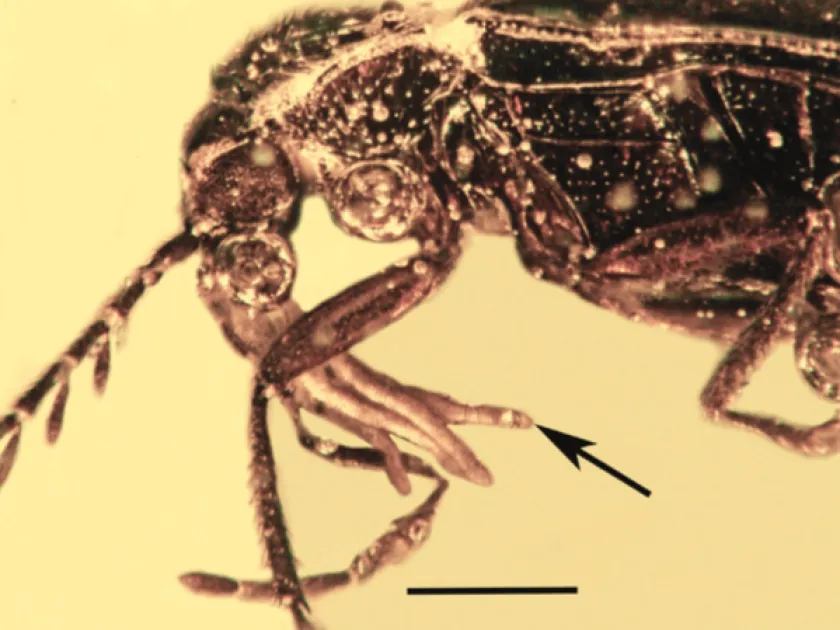
The Calanthe weevil (Omobaris calanthes) is a small beetle belonging to the Curculionidae family. Known for its distinct snout (rostrum), this pest has specialized in utilizing certain orchid species as a primary host for its reproduction and feeding.
Adult beetles are typically dark in color and exhibit secretive behavior, often remaining hidden in the crevices of orchid pseudobulbs or leaf axils during the day. Their size is small, making detection difficult for amateur growers without regular, close inspections.
The larval stage is legless and typically creamy-white, characterized by a curved body shape. Larvae spend their entire development cycle inside the plant, protected from the external environment, which makes them a challenging pest to eradicate once established.
The life cycle of Omobaris calanthes is synchronized with the vegetative growth of its host plants. Temperature and humidity play a critical role in the rate of development from egg to adult beetle.
Successful management depends heavily on understanding the beetle's life cycle and identifying its activity patterns, particularly during the peak growing season of the host orchids.
What it damages
This weevil primarily targets Calanthe orchids and other closely related genera. Damage is caused by both the adults, which feed externally, and the larvae, which bore into the plant's internal structures.
Adult feeding appears as small, irregular pits or holes on the leaves and tender buds. While this damage is rarely lethal, it weakens the plant and creates entry points for fungal or bacterial pathogens.
Larvae are the most destructive stage, as they tunnel through pseudobulbs and stems. By destroying the internal tissues, they disrupt the plant's vascular system, leading to systemic weakness and eventual tissue collapse.
A severe infestation often results in stunted growth, yellowing foliage, and a failure to produce flower spikes. If left untreated, the plant may suffer from chronic decline and eventually die.
Because the damage is often internal, it can be easily mistaken for nutrient deficiency or water-related stress, which often delays effective intervention until the damage is already significant.
Signs of infestation
The first signs of an infestation include small, depressed spots on the leaves or buds, which are characteristic of adult feeding activity. These spots may enlarge or darken over time.
Softened, spongy, or hollow pseudobulbs are a strong indicator of larval boring. If the pseudobulb feels unstable or appears to be rotting from the inside, it is likely infested.
The presence of fine frass (insect excrement) at the base of the plant or emerging from small exit holes in the stem is a classic symptom of larval activity within the orchid.
Yellowing of individual leaves despite normal watering and fertilization cycles often suggests that the plant's internal plumbing has been compromised by larvae.
Direct sightings of the beetles can be achieved by inspecting the plant at night using a flashlight, as they are often more active during low-light conditions.
Control measures
The most effective control strategy involves the use of systemic insecticides that are absorbed by the plant and kill larvae feeding within the stems or pseudobulbs.
Mechanical control includes the physical removal and destruction of visible adults and the isolation or disposal of heavily infested plants to prevent the spread to the rest of the collection.
Strict quarantine protocols for any new plants entering your collection are essential to ensure that you do not introduce the pest into an otherwise clean environment.
Maintaining optimal growing conditions is a crucial defensive strategy, as healthy, robust plants are better able to tolerate and recover from light infestations.
- Apply systemic insecticides during active growth.
- Isolate new plants for observation.
- Remove and burn severely damaged plant parts.
- Sanitize tools after working with infested specimens.
- Conduct night inspections to catch active adults.
Taxonomy
- Latin name
- Omobaris calanthes
- Order
- Coleoptera (beetles)
- Family
- Curculionidae
- EPPO code
- OMOBCA
Discussion
No discussions yet — be the first.