
Omias
Omias
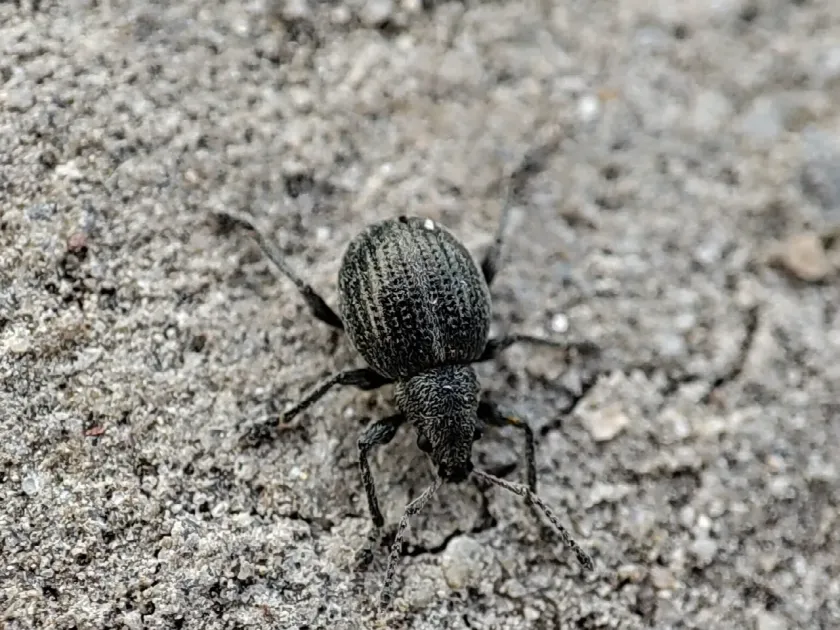
Description
How to identify
Omias is a genus of weevils belonging to the Curculionidae family, order Coleoptera. These beetles are characterized by their short snouts and are known for their secretive, soil-dwelling behavior.
Adult beetles typically measure between 3 to 6 mm in length. Their coloration ranges from light brown to deep dark brown, often featuring scales on the elytra that provide effective camouflage against the soil surface.
The larvae are typical of ground-dwelling weevils: legless, C-shaped grubs, white in color, with a prominent brown head and strong mandibles adapted for chewing roots.
These insects prefer secluded habitats, spending the daylight hours hidden beneath soil crusts, leaf litter, or deep within the root zone of host plants. They are primarily active during twilight and nighttime.
The genus includes various species, all of which share similar biological traits, making them persistent pests in both agricultural fields and garden environments.
What it damages
Omias has a broad range of host plants, including various forage grasses, berry shrubs, and vegetables. Damage is caused by both the adult beetles and the larvae, affecting different parts of the plant.
Larval feeding on roots is the most destructive phase. It disrupts the plant's ability to uptake water and nutrients, resulting in stunted growth, yellowing foliage, and eventual wilting of the host.
Adult beetles feed on the foliage, creating characteristic semicircular notches along the leaf margins. While usually less lethal than root damage, heavy beetle feeding can significantly stress young seedlings.
Infestations often result in patchy crop development. In areas with high larval density, significant plant loss can occur, particularly in newly established beds or young orchards.
Fields adjacent to permanent pastures or uncultivated lands are at the highest risk, as these areas act as reservoirs for the pest population to expand into managed crops.
When it appears
Adults emerge from the soil in the spring as temperatures rise, typically from April to May, coinciding with the early stages of plant development.
Following a period of maturation feeding, females deposit eggs into the soil near the base of host plants. Larvae hatch within a few weeks and begin their destructive feeding cycle in the root zone.
The larval stage is prolonged, often spanning the summer and autumn months. In many cases, the life cycle may extend over more than one year depending on local climatic conditions.
Pupation occurs in the soil within specialized earthen cells, usually during the following spring. New adults emerge shortly thereafter to repeat the cycle.
Monitoring for the pest is crucial during the spring peak of adult activity and throughout the summer when larvae are causing subsurface damage.
Signs of infestation
The most visible sign of an Omias infestation is the 'notched' leaf edges on host plants. These jagged or semicircular marks are diagnostic of adult weevil feeding activity.
Unexplained wilting of plants, despite adequate soil moisture, is a strong indicator of root damage caused by larvae. Digging around the root ball will often reveal the larvae present in the soil.
Patchy, uneven growth across a field or garden bed is another common symptom. Plants in these affected patches often show signs of nutrient deficiency and weakness.
In cases of severe infestation, small plants may easily be pulled out of the soil due to the extensive destruction of the root system by the grubs.
Regular nighttime inspections with a flashlight can help detect adult weevils, which emerge to feed on foliage after sunset.
Control measures
Cultural practices, such as deep autumn plowing, are highly effective in disrupting the life cycle. This process brings larvae to the surface, exposing them to predators and desiccation.
Crop rotation is essential for reducing long-term infestation risks. Avoiding susceptible crops in fields previously used for long-term grasses can significantly decrease the pest pressure.
For chemical control, soil-incorporated insecticides applied at planting time protect the developing roots from larval feeding. Foliar applications may be used to target adults.
Biological control options, including the use of entomopathogenic fungi or beneficial nematodes, can effectively reduce larvae populations in the soil without harmful environmental impact.
- Practice rigorous weed management to eliminate alternative hosts.
- Use high-quality, pest-free planting stock.
- Implement light traps for monitoring adult activity.
- Enhance plant vigor through balanced fertilization to aid recovery.
Taxonomy
- Latin name
- Omias
- Order
- Coleoptera (beetles)
- Family
- Curculionidae
- EPPO code
- MYLASP
Discussion
No discussions yet — be the first.