
Bamboo spider mite
Oligonychus orthius
Description
How to identify
The bamboo spider mite (Oligonychus orthius) is a member of the Tetranychidae family. It is a tiny, spider-like pest, measuring approximately 0.5 mm in length, making it very difficult to detect with the naked eye without careful inspection.
Adult mites are typically oval-shaped and possess a yellowish-green to brownish coloration. They exhibit a cryptic behavior, preferring to live on the underside of bamboo leaves, where they are protected from direct sunlight, wind, and rain.
The life cycle of this mite consists of the egg, larva, protonymph, deutonymph, and adult stages. Under favorable conditions, particularly high temperatures during the summer, the lifecycle can be completed in as little as 7 to 10 days, leading to explosive population growth.
Fertilized females have the ability to enter a state of diapause during cold weather or unfavorable environmental conditions, hiding in bark crevices or at the base of bamboo stems to survive until the next growing season.
Dispersal is primarily passive, occurring via wind currents, movement of infested nursery stock, or accidental transfer by animals and humans working near the plants.
What it damages
The primary hosts for Oligonychus orthius are various species of bamboo (e.g., Phyllostachys, Sasa). The mite feeds by piercing the leaf epidermis and extracting plant cell contents, which disrupts photosynthesis.
Continuous feeding causes the leaves to weaken significantly, leading to a loss of vigor, stunted growth, and a reduction in the plant's overall health. If left untreated, the entire bamboo grove can lose its decorative appeal.
In cases of heavy infestation, not only the mature foliage but also the succulent young shoots can be damaged, resulting in deformation and premature drying of the affected plant parts.
Commercial nurseries are particularly vulnerable, as infested bamboo stock often fails to meet quality standards, leading to economic losses. The rapid reproductive cycle means that a small infestation can turn into a major problem in a very short time.
Furthermore, the presence of these mites can lead to secondary infections. Sooty mold often develops on the honeydew-like excrement left by the mites, which further blocks light and air from the leaf surface.
Signs of infestation
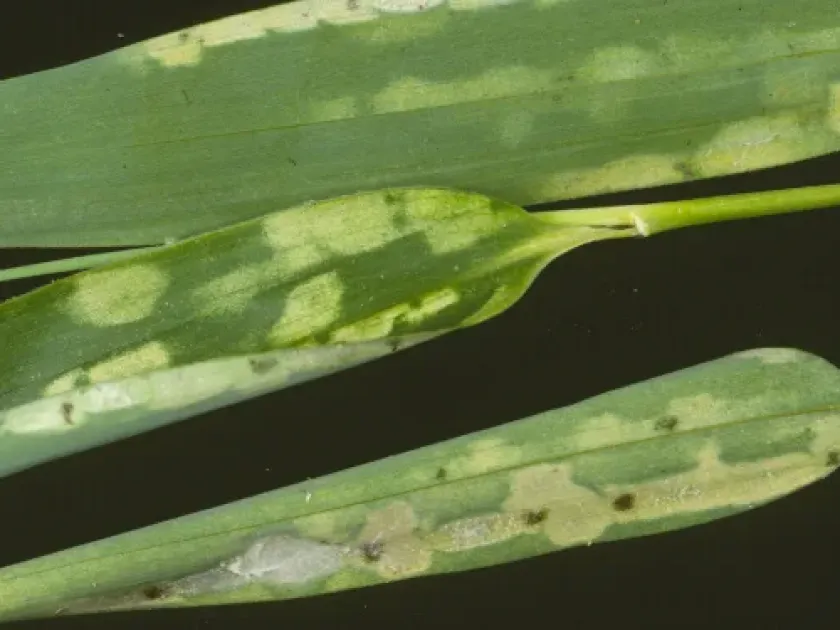
The first signs of infestation are small, pale yellow or white spots on the upper surface of the leaves, indicating where the mites have pierced the plant tissues to feed.
As the colony expands, these spots merge, causing the leaves to develop a mottled, yellow, or silvery appearance. Eventually, heavily damaged leaves may turn completely yellow, become brittle, and drop off prematurely.
The most reliable sign of a bamboo spider mite infestation is the presence of fine, silken webbing on the underside of the leaves. This webbing protects the mites from predators and environmental stressors.
To confirm the diagnosis, a simple "white paper test" can be performed: place a sheet of white paper under an infested leaf and gently tap the leaf. If tiny moving dots fall onto the paper, it confirms the presence of mites.
Observant gardeners can also spot the shed skins (exuviae) of the mites, which appear as tiny, shiny silver scales clinging to the undersides of the leaves amidst the webbing.
Control measures
Controlling Oligonychus orthius requires an integrated approach that combines cultural practices and chemical interventions. Early detection is key to preventing widespread damage in a bamboo planting.
Chemical control usually involves the use of specific acaricides. It is highly recommended to rotate products with different modes of action to prevent the mites from developing resistance to any particular active ingredient.
- Perform regular inspections, focusing on the undersides of leaves.
- Apply systemic or contact acaricides as soon as the first signs of webbing appear.
- Mist or sprinkle the plants with water, as high humidity and moisture discourage mite reproduction.
- Prune and destroy heavily infested branches to reduce the total population.
- Sanitize tools regularly to prevent spreading the infestation to healthy plants.
Because most acaricides do not effectively kill mite eggs, a follow-up application is necessary within 5 to 7 days after the first treatment to target newly hatched nymphs.
Biological control methods, such as introducing predatory mites like Phytoseiulus persimilis, can be highly effective in greenhouse environments or private gardens to suppress population spikes without relying solely on chemical pesticides.
Taxonomy
- Latin name
- Oligonychus orthius
- Order
- Mites
- Family
- Tetranychidae
- EPPO code
- OLIGOR
Discussion
No discussions yet — be the first.