
Cotton spider mite
Oligonychus gossypii
Description
How to identify
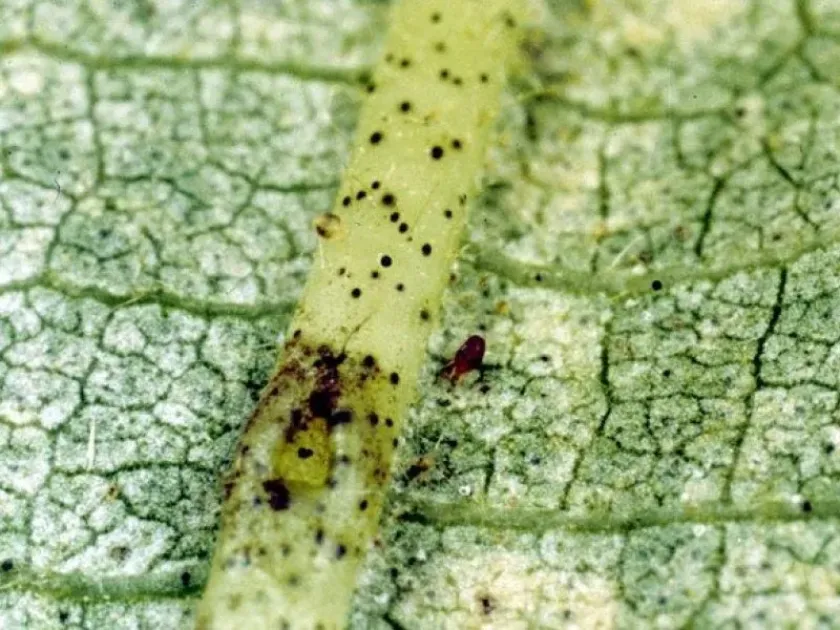
The cotton spider mite (Oligonychus gossypii) is a member of the Tetranychidae family, belonging to the order Trombidiformes. These pests are extremely small, often appearing as tiny, oval-shaped specks to the naked eye, ranging in color from greenish-yellow to reddish-brown.
The life cycle of this mite consists of an egg, larva, two nymphal stages, and an adult. Depending on environmental conditions, particularly high temperatures and low humidity, the entire generation can develop in just over a week, facilitating rapid outbreaks.
These mites are characterized by their ability to produce fine silk webbing. This webbing acts as a protective shield for the mite colony, helping them survive external environmental fluctuations and providing a structure for movement across the host plant.
Reproduction is largely sexual, although some populations can exhibit different strategies. The eggs are typically laid on the underside of leaves, where they are protected from environmental hazards and direct sunlight.
Dispersal primarily occurs via wind currents that carry the mites and their webbing to neighboring plants, making localized infestations difficult to contain without proper field-wide strategies.
What it damages
While named for its preference for cotton, Oligonychus gossypii is a polyphagous pest. It causes significant economic damage to other crops such as cacao, coffee, and cassava, significantly impacting agricultural yields in tropical and subtropical regions.
The damage is caused by the piercing-sucking mouthparts of the mite, which penetrate the leaf surface to extract cell contents. This destruction of leaf cells interrupts photosynthesis, causing a significant physiological strain on the host plant.
Affected leaves initially show chlorosis, which progresses to bronzing and necrosis. If the infestation is not checked, the plant undergoes severe wilting and premature defoliation, which hampers the development of reproductive organs.
In cotton, the loss of foliage results in a direct reduction in the size and quality of the fiber. The plant's ability to allocate resources to boll development is severely hindered, leading to stunted overall growth.
Young plants are particularly vulnerable and can experience stunted development or complete failure if the mite population reaches critical levels during the early stages of growth.
Signs of infestation
The most common early symptom is the appearance of small, yellow, or white stippling marks on the upper surface of the leaves, corresponding to feeding sites on the underside.
As the infestation progresses, the fine webbing becomes visible, particularly between leaf veins or at the junction of the leaf and stem. This silk serves as a diagnostic sign that differentiates mite damage from fungal or nutrient-related issues.
Leaves will eventually turn yellow, then bronze, and finally brown, becoming brittle and dropping off. The infestation typically starts at the lower foliage and moves upwards, creating a characteristic pattern of damage.
Stunted growth, lack of vigor, and a dull, dusty appearance of the plant are clear indications that the pest has established a significant colony and is actively draining the plant's resources.
Upon closer inspection with a magnifying glass, the moving mites and their clear-to-light-yellow eggs can be clearly seen, usually clustered near the main veins on the underside of the leaves.
Control measures
Management of the cotton spider mite relies on an Integrated Pest Management (IPM) approach. Cultural practices such as weed control and maintaining crop health through balanced irrigation are the first lines of defense against outbreaks.
Biological control is highly effective, utilizing natural predators such as phytoseiid mites and various ladybeetle species that hunt and consume spider mites, thereby naturally keeping populations below economic injury levels.
When chemical intervention is required, the use of selective acaricides is recommended. It is essential to rotate products with different modes of action to manage the rapid evolution of pesticide resistance within the mite population.
- Monitor fields regularly, especially during hot, dry weather.
- Avoid over-use of nitrogen fertilizers, which can encourage rapid mite reproduction.
- Ensure thorough coverage of leaf undersides during spray applications.
Timing of application is critical; sprays should be applied at the first sign of infestation before the colony spreads throughout the entire canopy, as the webbing protects mites from many contact-based pesticides.
Taxonomy
- Latin name
- Oligonychus gossypii
- Order
- Mites
- Family
- Tetranychidae
- EPPO code
- OLIGGO
Discussion
No discussions yet — be the first.