
Raspberry leafroller
Olethreutes permundana
Description
How to identify
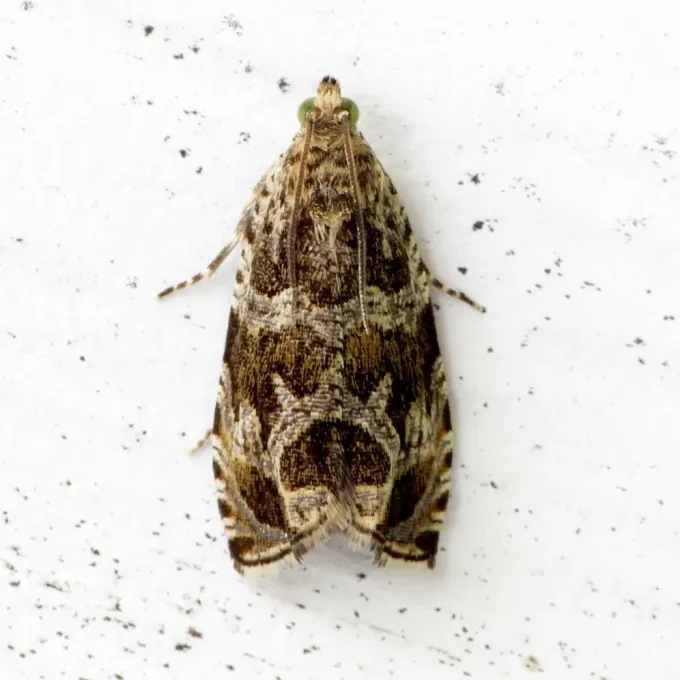
The raspberry leafroller (Olethreutes permundana) is a small moth belonging to the family Tortricidae. Adult moths are typically nocturnal and have forewings with a mottled pattern of light and dark colors, which provides excellent camouflage against tree bark.
The larvae, or caterpillars, go through several developmental stages. When young, they are pale, but as they grow, their color shifts to a brownish shade, often with a darker head capsule, which is typical for leaf-tying moths.
The life cycle begins with the overwintering of larvae inside protective silken cocoons. These cocoons are typically found hidden within plant debris, leaf litter, or crevices in the wood of the raspberry canes.
In spring, as temperatures rise, the larvae emerge to feed on the tender buds and young leaves. This timing coincides with the most active growth period for the raspberry plant, making the damage particularly critical.
After completing their larval development, they pupate within the folded leaves. After a short pupal stage, the adult moths emerge to mate and lay eggs, continuing the cycle for the next generation.
##damage##The primary host for Olethreutes permundana is the raspberry plant. However, it is also known to infest related species in the Rosaceae family, including blackberries and various wild brambles that can harbor the population.
The caterpillars are foliage feeders that use silk to tie leaves together. By feeding inside these protective rolls, they can destroy significant portions of the leaf surface area, impacting the plant's ability to photosynthesize.
Perhaps the most devastating impact is the damage done to the flower buds. Caterpillars often feed on developing blossoms, which directly prevents fruit set and leads to reduced yields for the season.
Young shoots are also targets for the larvae. By feeding on the meristematic tissue at the tip of the cane, they can cause stunted growth or distorted development of the entire branch.
In cases of high infestation, the cumulative effect of foliage loss and reproductive organ destruction can severely weaken the plant, making it more susceptible to environmental stress and opportunistic diseases.
Signs of infestation
The most telltale sign of a raspberry leafroller infestation is the presence of rolled or folded leaves at the tips of the canes. These leaves are held together by visible, sticky webbing produced by the caterpillar.
Gardeners should look for ragged edges on the leaves and holes in the foliage. When the folded leaves are carefully unfolded, the caterpillar or its brownish waste (frass) is usually visible inside the shelter.
Damage to the floral clusters is another critical indicator. If you observe dried, withered, or partially consumed buds, it is likely that leafroller larvae are active within the vicinity of the plant.
Monitoring is crucial during the early spring bloom phase. Detecting the larvae before they migrate deep into the fruit buds can significantly increase the chances of maintaining a healthy harvest.
- Rolled leaves tied together with silk webbing.
- Small, ragged holes in the leaves.
- Consumed or withered flower buds.
- Visible larvae or frass inside leaf shelters.
- Distorted growth patterns at the cane tips.
Control measures
Cultural control starts with sanitation. Removing and destroying fallen leaves and pruning debris in late autumn helps eliminate the wintering sites for the larvae, significantly reducing the population for the next year.
On a small scale, physical removal is highly effective. Manually picking and destroying the rolled, infested leaves during the early spring can prevent the larvae from maturing and spreading to other canes.
Biological control using microbial insecticides, such as products containing Bacillus thuringiensis, is recommended. These are specific to caterpillars and are considered safer for beneficial insects and pollinators.
Chemical intervention should be considered only when threshold levels of infestation are exceeded. It is essential to choose products labeled for berries and to apply them strictly following safety guidelines, especially regarding the harvest interval.
Avoiding the use of broad-spectrum insecticides during the flowering period is critical to protect bees and other vital pollinators. Integrated Pest Management (IPM) strategies emphasize keeping the plant healthy to withstand minor pest pressure.
Taxonomy
- Latin name
- Olethreutes permundana
- Order
- Lepidoptera (butterflies)
- Family
- Tortricidae
- EPPO code
- EXARPE
Discussion
No discussions yet — be the first.