
Spotted apple moth
Olethreutes malana
Description
How to identify
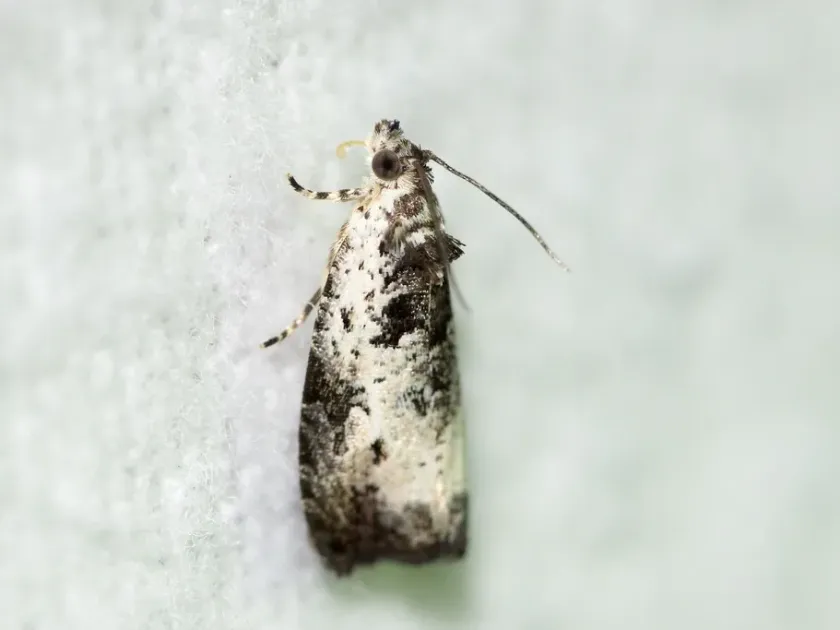
The spotted apple moth (Olethreutes malana) belongs to the order Lepidoptera and the family Tortricidae. Adult moths have a wingspan of approximately 15–18 mm, with forewings featuring a distinct mottled or spotted pattern that aids in blending with bark or foliage.
Larvae are typically yellowish-green or grey with a dark head capsule. They pass through several growth stages, remaining largely hidden within leaf rolls or silk nests for protection against predators and weather.
Eggs are minute and flat, deposited singly or in small groups on the surface of leaves, often near the veins. Their small size makes them extremely difficult to detect during regular orchard scouting.
Pupae are brown and often found in sheltered sites such as bark crevices, leaf litter, or debris near the base of the tree. This stage is crucial for overwintering and ensures the species' survival across seasons.
The biological cycle of this pest is closely synced with the phenology of host trees. Optimal conditions during the spring allow for a rapid transition through developmental stages, increasing potential damage.
What it damages
The primary hosts include apple trees, though the pest also infests pears and quinces. In cases of high population density, it can occasionally impact stone fruit varieties present in the orchard.
Larval feeding is the primary cause of damage. Caterpillars consume leaf parenchyma, creating irregular patches and holes, which impairs the tree's photosynthetic ability and reduces overall vigor.
Under high pressure, larvae may feed on developing flower buds and young fruitlets. This results in cosmetic damage, fruit deformity, and premature fruit drop, significantly lowering the commercial value of the yield.
Severe infestations weaken the trees, reducing the formation of fruit buds for the following year. Long-term defoliation makes the orchard more susceptible to stress and various secondary diseases.
The feeding sites created by the larvae often become entry points for fungal pathogens. Controlling this pest is therefore essential to maintain the general sanitary health of the orchard.
When it appears
Adult flight usually begins in the spring, coinciding with bud burst and early flowering stages. This phase serves as the primary window for installing pheromone traps to monitor population levels.
The period of active larval feeding spans from late spring through mid-summer. During this time, the caterpillars are most destructive and require the most attention for effective management.
Depending on the geographic location, the species may complete one or two generations per year. The second generation typically appears in late summer, affecting terminal growth and late-season leaves.
Overwintering occurs at the pupal stage. Sheltered environments such as thick, rough bark, ground cover, or leaf litter provide the necessary protection against sub-zero winter temperatures.
Environmental factors significantly influence population dynamics. Warm, stable spring temperatures typically lead to higher survival rates and earlier emergence of the first generation of larvae.
Signs of infestation
The most recognizable sign is the presence of leaves rolled or tied together with fine silk. These enclosures serve as protective shelters where the larvae actively feed throughout the day.
Feeding damage shows up as skeletonized patches or irregular holes in the leaf surface. Frass, or larval excrement, is often visible inside these silk-webbed structures as a telltale sign of current infestation.
Pheromone trap captures provide the most accurate quantitative data regarding moth emergence. A spike in catches indicates that the population is active and protective measures should be initiated.
Wilting buds or blossoms connected by silk threads are early warning signs of larval activity. This can lead to significant floral loss and a reduction in the number of fruits set on the tree.
In winter, pupae can be detected by examining the deep crevices of older bark. Systematic bark cleaning or removing debris at the base of the tree can help identify and reduce overwintering sites.
Control measures
Cultural control methods include scrubbing tree trunks to remove old bark and debris, which eliminates overwintering sites. Thorough disposal of fallen leaves is essential for reducing carry-over populations.
Biological control using microbial insecticides based on Bacillus thuringiensis is highly effective against early-instar larvae while minimizing negative impacts on beneficial predatory insects.
Chemical control must be timed precisely to match the larval hatch window. Applying systemic insecticides before the larvae roll themselves into leaves is vital for achieving optimal contact and effectiveness.
Integrated Pest Management (IPM) strategies emphasize monitoring population thresholds. Targeted applications during the bloom and petal-fall stages provide the best protection for both foliage and future fruit.
- Placement of pheromone-based mating disruption dispensers.
- Encouraging natural enemies such as parasitic wasps and birds.
- Manual pruning and removal of infested terminals during early summer.
Taxonomy
- Latin name
- Olethreutes malana
- Order
- Lepidoptera (butterflies)
- Family
- Tortricidae
- EPPO code
- EXARMA
Discussion
No discussions yet — be the first.