
Olethreutes moth
Olethreutes
Description
How to identify
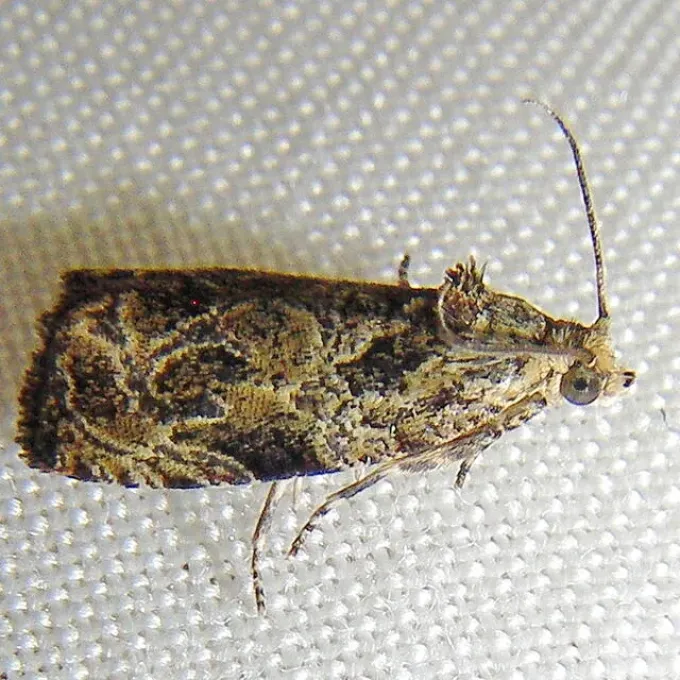
The genus Olethreutes belongs to the Tortricidae family within the order Lepidoptera. These moths are typically small to medium-sized, with a wingspan ranging between 15 and 20 mm, and exhibit intricate patterns on their forewings.
Adult moths are nocturnal or crepuscular, spending the daylight hours resting on bark or in foliage where their mottled, bark-like coloration provides excellent camouflage against predators.
The larvae, or caterpillars, are cylindrical with a sclerotized head capsule and three pairs of thoracic legs. Their appearance often ranges from translucent white to greenish-brown depending on their developmental stage.
The life cycle undergoes complete metamorphosis. Overwintering usually occurs at the larval stage, where the caterpillars remain in silken hibernacula hidden in bark crevices or ground debris until spring.
Taxonomic identification is notoriously difficult due to the high morphological similarity between species, often requiring the dissection of the genitalia to confirm the specific species within the genus.
What it damages
Olethreutes moths are significant pests in orchards, primarily targeting fruit-bearing trees such as apples, pears, and various members of the Rosaceae family. They can also affect ornamental trees and shrubs.
Larvae feed initially by skeletonizing the underside of leaves. As they mature, they begin to web multiple leaves together or fold a single leaf, creating a protective shelter where they continue their feeding.
The most severe damage occurs when larvae penetrate the fruit itself. By boring into the developing fruit, they cause premature fruit drop and create entry points for secondary fungal infections like rot.
In nurseries, larval feeding on terminal buds can halt the vertical growth of young trees, resulting in bushy, deformed, or stunted plants that lose their commercial value.
Repeated infestations over multiple seasons significantly weaken the tree's vigor, making it more susceptible to drought, winter cold, and secondary pest attacks due to reduced overall health.
When it appears
The flight period for adult moths typically begins in late spring, corresponding with the flowering stage of host plants. The presence of these adults usually signals the onset of the first generation.
After mating, females deposit eggs on the leaves, stems, or developing fruit. Incubation typically lasts for about one to two weeks depending on prevailing humidity and temperature conditions.
Larval activity peaks during the early to mid-summer period. During this time, they are most aggressive in their feeding habits and are the easiest to locate due to their visible webbing.
Pupation occurs within the folded leaves or hidden spots on the branches. The duration of this stage is relatively short, allowing for potentially multiple generations per year in warmer climates.
As daylight hours decrease in late summer and autumn, late-stage larvae seek overwintering sites, entering a period of diapause that allows them to survive extreme winter temperatures.
Signs of infestation
The most reliable sign of an Olethreutes infestation is the presence of webbed or curled leaves in the canopy, which the larvae use as feeding and protection nests.
- Small entry holes and frass (larval excrement) found on the fruit surface.
- Premature fruit drop, often with tunnels leading to the fruit's core.
- Dead, brown, or dried-out terminal shoots.
- Localized patches on leaves where only the surface tissue has been consumed.
Evening monitoring using light traps can help detect the presence of adult moths in the vicinity, indicating that mating and egg-laying cycles are currently underway.
Increased activity of birds and predatory wasps in the canopy can sometimes be an indirect indicator of a high larval population within the tree foliage.
Control measures
Cultural control measures, such as removing fallen leaves and pruning away infected branches, are essential for reducing the population density and overwintering sites of the pests.
Biological controls include the use of Bacillus thuringiensis (Bt) sprays, which specifically target lepidopteran larvae and offer an environmentally friendly alternative to broad-spectrum insecticides.
Monitoring using pheromone traps is highly recommended to pinpoint the exact start of the flight period, which allows for the application of control measures at the most vulnerable larval stages.
Conservation of natural enemies, including parasitoid wasps and predatory bugs, can help keep Olethreutes populations below economic injury levels without the need for chemical intervention.
If chemical application is necessary, it must be timed precisely with the larval hatch window to ensure maximum efficacy while minimizing the harmful impact on non-target beneficial insects.
Taxonomy
- Latin name
- Olethreutes
- Order
- Lepidoptera (butterflies)
- Family
- Tortricidae
- EPPO code
- OLETSP
Discussion
No discussions yet — be the first.