
Obelia dichotoma
Obelia dichotoma
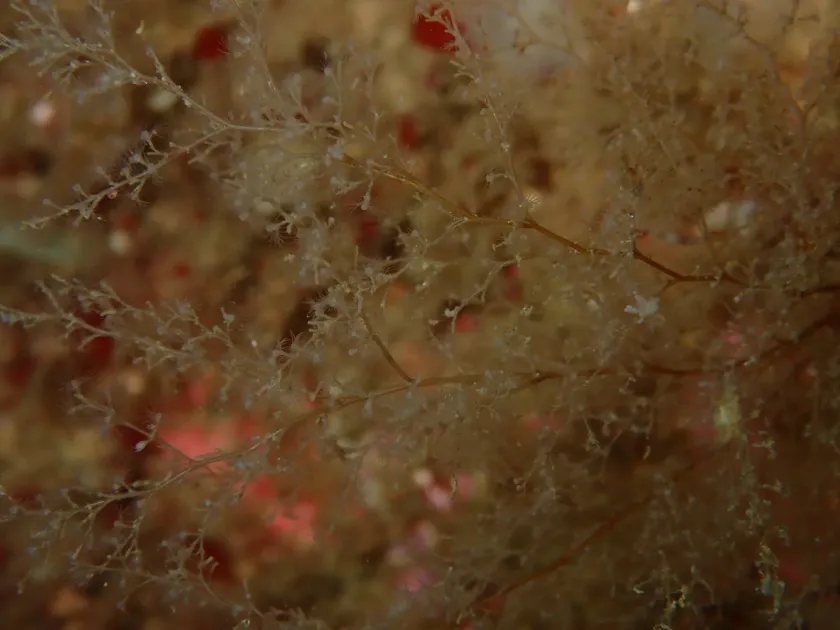
Description
How to identify
Obelia dichotoma is a colonial hydrozoan belonging to the class Hydrozoa. It is commonly found in coastal marine environments across the globe, forming delicate, plant-like structures.
The colony consists of a branched stem supported by a chitinous perisarc, featuring numerous hydrothecae. Each hydrotheca contains a feeding polyp (hydranth), which is responsible for capturing small prey.
The branching pattern is distinctly dichotomous, which is the defining physical characteristic of this species. Colonies are typically off-white to yellowish-brown in color.
The life cycle includes an alternation of generations, switching between a sessile polyp stage and a free-swimming medusa stage. The medusae are minute and short-lived.
Identification is usually confirmed through microscopic examination of the hydrothecae shape and the arrangement of the polyps along the main stalk.
What it damages
Obelia dichotoma is a significant pest in the aquaculture industry, as it contributes to the biofouling of fish cages, ropes, and shellfish equipment.
Heavy colonization blocks the mesh openings of cages, which severely restricts water flow. This reduction in water exchange leads to oxygen depletion and waste accumulation.
For shellfish farmers, the presence of these hydroids creates direct competition for food particles and can physically smother the target organisms.
The accumulated biomass of the hydroid colonies significantly increases the weight of submerged equipment, leading to structural stress on mooring lines and cages.
Fouling also complicates routine maintenance tasks and increases the risk of harbor pathogen buildup within the dense colony mats.
When it appears
The growth and proliferation of Obelia dichotoma are highly seasonal, dictated by water temperature and the availability of suspended nutrients.
Peak growth typically occurs during spring and summer months when warmer temperatures accelerate the rate of asexual budding and colony expansion.
In winter, activity slows down significantly, although the colonies can persist as dormant fragments that initiate rapid regrowth as conditions improve.
The settlement of planula larvae usually follows a seasonal pulse, which is a critical period for managers to implement preventative maintenance.
Environments with high organic loading, such as areas near intense fish feeding, may exhibit extended growing seasons for this hydroid.
Signs of infestation
Initial signs of infestation appear as a fine, translucent, and fuzzy coating on submerged netting and equipment, which looks soft to the touch.
When lifted out of the water, the colonies collapse against the surface of the net, often looking like a slimy or gelatinous layer.
A major indicator is the rapid clogging of net mesh with particulate matter, leading to a noticeable decrease in water circulation inside the cages.
Changes in the color of the net, moving toward a brownish or yellowish hue, suggest advanced colonization and the accumulation of debris within the hydroid structure.
Stress among cultured species, such as slower growth rates or poor feed conversion, often points to environmental degradation caused by significant biofouling.
Control measures
The primary control method involves the application of non-toxic, anti-fouling coatings to netting and submerged structures to prevent larval settlement.
Regular mechanical cleaning using automated brush systems is essential for removing hydroid colonies before they reach a mature, heavy-growth stage.
Net rotation and air-drying of equipment on shore is highly effective, as desiccation and UV exposure are lethal to Obelia colonies.
Good husbandry practices, including the optimization of feed supply, help to reduce the organic enrichment of water, thereby limiting the growth potential of the hydroids.
Integrated pest management strategies often combine periodic cleaning schedules with environmental monitoring to stay ahead of the rapid growth cycles.
Taxonomy
- Latin name
- Obelia dichotoma
- Family
- Campanulariidae
- EPPO code
- OBELDI
Discussion
No discussions yet — be the first.