
Obelia
Obelia
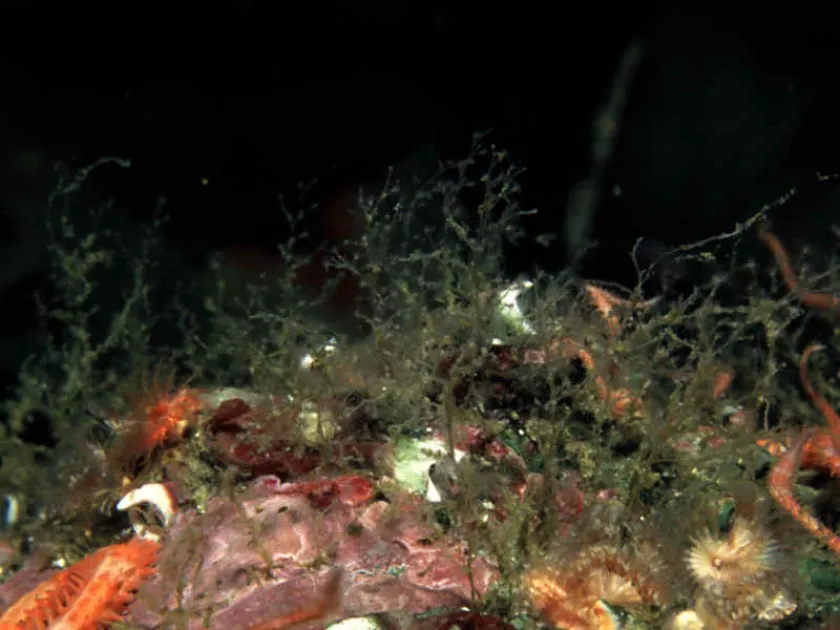
Description
How to identify
Obelia is a genus of hydrozoan polyps within the family Campanulariidae. These organisms exhibit a complex life cycle that alternates between a sessile polyp stage and a free-swimming medusa stage.
In their polyp stage, Obelia forms delicate, branching colonies that attach firmly to hard substrates. These colonies are protected by a transparent, chitinous covering known as a perisarc, which helps them withstand water currents.
The colonies consist of specialized polyps: some are responsible for feeding, while others (gonangia) are dedicated to the production of medusae. This division of labor allows for efficient survival and rapid colonization.
They are widely distributed in coastal waters worldwide. While they play a role in marine ecosystems, their ability to cover hard surfaces makes them a major concern for marine infrastructure.
For agricultural and aquaculture managers, identifying Obelia early is crucial because these hydroids are prolific colonizers capable of turning clean surfaces into dense, fouled structures.
What it damages
While Obelia does not affect land crops, it is a significant economic threat to marine aquaculture. These hydroids commonly colonize fish cages, mollusk lines, and other submerged farm equipment.
The primary damage is caused by the physical blockage of net mesh. This fouling severely restricts water flow through the cages, leading to oxygen depletion and waste accumulation inside the enclosure.
Increased weight and drag caused by heavy Obelia growth put excessive physical stress on the structural components of the cages, which can lead to equipment failure during high-energy weather events.
The dense structure of the colony traps organic debris, creating a breeding ground for opportunistic pathogens. This can negatively impact the health of the farmed fish or shellfish.
Economic impact includes high labor costs for cleaning, shorter lifespan of nets, and production losses due to environmental stress caused by restricted water circulation.
When it appears
The growth and spread of Obelia are heavily influenced by water temperature and nutrient availability. Rapid proliferation typically occurs during the spring and summer months.
During these peak seasons, colonies undergo rapid asexual reproduction, allowing them to expand their coverage significantly within just a few weeks under favorable conditions.
Growth slows down significantly during autumn and winter, but the colonies often remain dormant and viable. As soon as temperatures rise, the growth resumes from existing colonies.
The medusa stage facilitates the dispersal of the species. Currents carry these reproductive units to new, clean areas, leading to the contamination of previously unaffected farm sites.
Efficient management strategies rely on monitoring temperature and site cleanliness, allowing operators to intervene before the hydroid population reaches critical mass.
Signs of infestation
The first sign of infestation is a thin, whitish or brownish, fuzz-like growth on netting or submerged ropes. Upon closer inspection, this fuzz reveals a complex, tree-like structure.
A reduction in flow velocity through the net is a critical indicator of biofouling. Using flow meters, farm managers can detect the presence of Obelia long before it becomes visible to the naked eye.
Stressed behavior in farmed fish, such as gathering near the surface or near aeration sources, often signals that water exchange has been compromised by fouling.
When nets are hauled, they feel heavier and may emit a foul odor due to the accumulation of trapped debris within the Obelia colonies. The colonies collapse and lose their structure when removed from water.
- Presence of fine, branching polyps on mesh.
- Increased weight and surface area of nets.
- Significant drop in water flow through the cage.
- Trapped organic silt and debris within the growth.
- Structural strain on cage connectors and anchor lines.
Control measures
Mechanical cleaning is the most effective approach for removing Obelia. High-pressure washing systems can dislodge the colonies from net fibers without causing excessive damage to the materials.
Applying antifouling coatings to nets and frameworks is a proactive measure that prevents larval attachment. Modern non-toxic alternatives are preferred for their environmental safety.
Implementing a rotation system for gear, where nets are periodically removed, dried, and cleaned on shore, helps maintain optimal hygiene levels across the entire farm site.
Early detection through regular inspection is vital. By removing small clusters of polyps early, the need for intensive, high-cost cleaning operations can be significantly reduced.
An integrated farm management plan, combining chemical antifouling, regular mechanical cleaning, and environmental monitoring, is essential for maintaining production standards in marine environments.
Taxonomy
- Latin name
- Obelia
- Family
- Campanulariidae
- EPPO code
- OBELSP
Discussion
No discussions yet — be the first.