
Notoedres cati
Notoedres cati
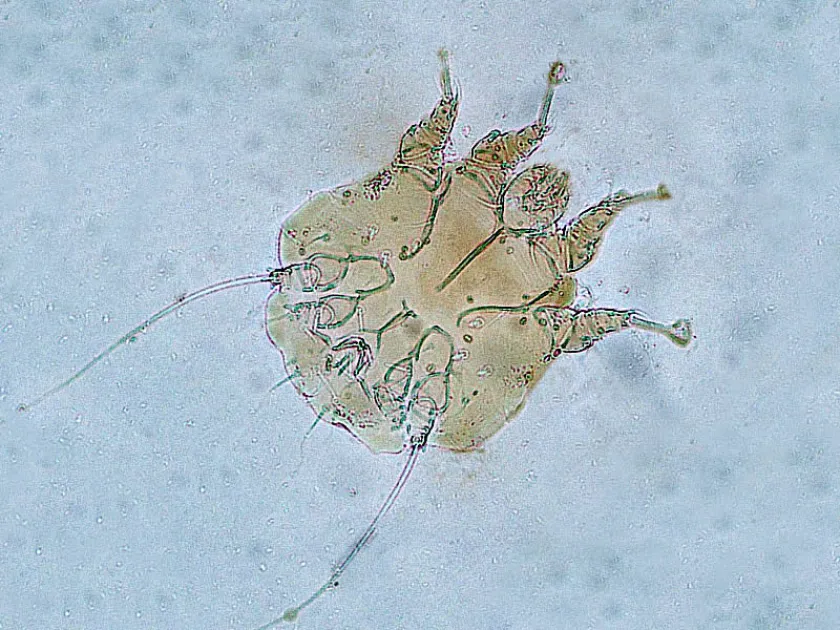
Description
How to identify
Notoedres cati, commonly known as the feline scabies mite, is a microscopic parasite belonging to the family Sarcoptidae. It is a highly contagious agent that inhabits the superficial layers of the skin.
The adult mite is roughly circular in shape with a dorsal surface marked by parallel striae. It measures approximately 0.15 to 0.25 millimeters, requiring microscopic magnification for definitive identification.
The entire life cycle of N. cati, consisting of egg, larva, nymph, and adult stages, occurs on the host animal. The female mite tunnels into the epidermis to deposit eggs.
These mites are obligate parasites and are fragile when detached from the host. Their survival in the environment is typically limited to a few days depending on humidity and temperature levels.
Transmission occurs through direct physical contact between animals. Due to the high reproductive rate of the mites, the infestation can spread rapidly throughout a group of animals.
What it damages
This organism is an animal parasite and is not classified as a pest for agricultural crops, gardens, or forests. It does not pose any threat to botanical or agricultural productivity.
The host range is primarily limited to members of the Felidae family, although it may occasionally infect other small carnivores or rabbits that come into close contact with infested cats.
In the context of farm management, this mite is not an agronomic concern. Its impact is restricted to the health and well-being of the animals kept on the premises.
Economic losses associated with this pest are limited to veterinary costs, potential reduction in the efficacy of working animals (like cats used for rodent control), and labor required for cleaning.
There are no chemical control measures or IPM strategies required for this species in relation to plant protection, as it has no biological interaction with flora.
Signs of infestation
The hallmark sign of notoedric mange is intense pruritus, leading to constant scratching, biting, and rubbing by the affected animal. This significantly disrupts the skin barrier.
Lesions typically begin on the inner edge of the pinnae (ears) before progressing rapidly to the face, eyes, and nose. In severe cases, the lesions spread to the neck and paws.
The skin in affected areas becomes thickened, wrinkled, and covered with characteristic gray or yellow crusts. These crusts are composed of serous exudate and debris from the mite's activity.
Alopecia (hair loss) is a common clinical feature in areas where mites have established tunnels. Secondary bacterial infections often complicate the primary infestation due to constant trauma.
Severe and prolonged infestations result in weight loss, lethargy, and overall poor physical condition, as the animal's energy is redirected toward dealing with the skin irritation.
Control measures
The primary control strategy involves the application of effective acaricidal agents. Topical treatments, spot-on formulations, or systemic injectables are commonly utilized under veterinary supervision.
Environmental management is crucial to prevent re-infestation. All bedding, grooming tools, and surfaces that the animal frequents must be cleaned or treated with appropriate disinfectants.
Macrocyclic lactones, such as selamectin or ivermectin, are considered highly effective for eradicating mite populations. The choice of drug depends on the severity of the case and the animal's health.
Quarantine of new or newly rescued animals is an essential practice to ensure that no subclinical infestations are introduced to existing populations on the farm or household.
- Veterinary examination and confirmation via skin scraping.
- Administration of prescribed acaricidal medications.
- Sanitation of living areas and animal bedding.
- Limiting contact with stray or potentially infested animals.
Taxonomy
- Latin name
- Notoedres cati
- Order
- Mites
- Family
- Sarcoptidae
- EPPO code
- NOTECA
Discussion
No discussions yet — be the first.