
Rose tortrix moth
Notocelia roborana
Description
How to identify
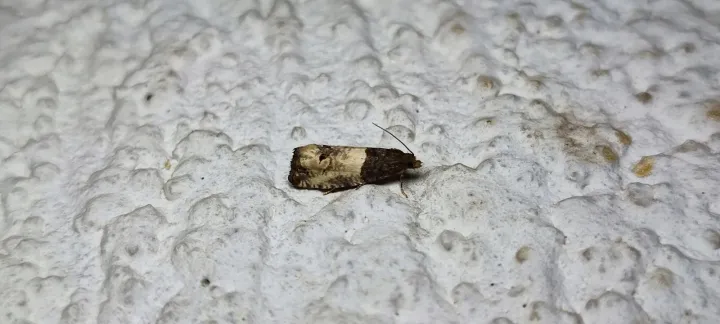
The rose tortrix moth (Notocelia roborana) is a member of the Tortricidae family of moths. The adult moth has a wingspan of approximately 20–24 mm and displays a distinctive brown and grey mottled pattern on its forewings, providing excellent camouflage.
The larvae, or caterpillars, reach lengths of 15–18 mm. They typically exhibit a yellowish-green to brownish body color with a dark head capsule, which serves as a key identifying characteristic for field diagnostics.
This species is univoltine, meaning it completes one life cycle per year. They overwinter as larvae, hidden in silk cocoons within bark crevices or under plant debris near the base of the host plants.
In spring, as temperatures rise, the larvae emerge from their winter dormancy to feed on young plant tissues. This period is critical for their development and the subsequent impact on the host plant.
Adult moths are primarily active during the summer months, specifically June and July. They are nocturnal insects and remain hidden during the day, making them difficult to spot without specialized monitoring traps.
What it damages
The primary host plants for Notocelia roborana are species within the Rosaceae family, most notably garden roses and wild roses. The moth is highly specialized, causing significant damage to rose gardens.
While roses are the preferred host, larvae may occasionally be found on other related shrubs. However, their presence is most impactful on ornamental roses, where they can severely reduce the aesthetic and commercial value of the crop.
The larvae cause damage by feeding on the apical buds in early spring, which prevents the development of new leaves and flowers. This results in stunted growth and deformed plant architecture.
As the season progresses, the larvae move to the buds and flowers. They bind petals together with silk threads and feed inside the bud, often destroying the reproductive organs of the bloom entirely.
A severe infestation can lead to a drastic reduction in flower production, with up to 80% of buds being damaged or destroyed during peak larval feeding activity.
When it appears
The active damage season begins in spring, coinciding with the leaf-bud break of host plants. Depending on the climate, this typically occurs in April or May, when larvae are most vulnerable to treatment.
The flight period for adult moths occurs throughout June and July. During this time, mating and egg-laying take place, with eggs being deposited on the undersides of leaves and on young stems.
Larval development continues throughout the summer until temperatures drop in the autumn. At this point, the larvae seek suitable sites for overwintering, completing their annual cycle.
Environmental factors, such as unusually warm springs, can accelerate the emergence of larvae. Monitoring local weather patterns is essential for predicting the timing of pest activity.
By understanding the phenological stages of both the rose and the moth, gardeners can apply protective measures at the most effective time, significantly reducing the pest population.
Signs of infestation
The earliest signs of an infestation are damaged, non-opening buds in spring, often accompanied by silk webbing on the tips of young shoots.
- Presence of silken webs binding leaves together.
- Rolled or deformed leaves, often forming tube-like structures.
- Chewed, stunted, or withered flower buds.
- Accumulation of frass (larval excrement) inside webbed leaf clusters.
- Skeletonized leaf patches where larvae have fed on the tissue.
If you observe leaves tightly rolled or fastened together, these are typical nesting sites for the larvae. Carefully opening these structures usually reveals the caterpillar inside.
In mid-summer, the lack of blooms or the presence of malformed, webbed flowers are strong indicators that a rose tortrix moth population is present in the garden.
Control measures
For small-scale gardens, the most effective mechanical control is the manual removal and destruction of rolled leaves and damaged buds containing the larvae.
Biological control methods include the use of Bacillus thuringiensis, which is highly effective against young larvae while remaining safe for beneficial pollinators like honeybees.
Chemical control should be implemented using systemic insecticides during the early stages of larval emergence. It is crucial to apply these before the larvae have fully protected themselves within rolled leaves.
Sanitation practices are vital; removing and destroying plant debris in the autumn significantly reduces the number of overwintering larvae, lowering the risk of infestation the following year.
Implementing pheromone traps for monitoring is recommended to track the flight of adult moths, allowing for precise timing of any necessary pesticide applications.
Taxonomy
- Latin name
- Notocelia roborana
- Order
- Lepidoptera (butterflies)
- Family
- Tortricidae
- EPPO code
- NOTCRB
Discussion
No discussions yet — be the first.