
Notocelia
Notocelia
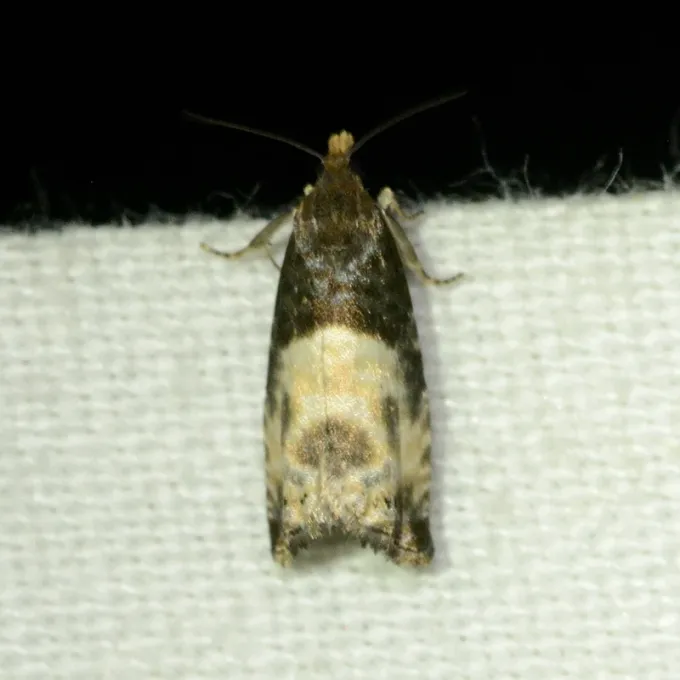
Description
How to identify
Notocelia is a genus of moths belonging to the family Tortricidae, commonly known as leafrollers. These insects are well-adapted to orchard environments, with adult moths exhibiting cryptic coloration that provides camouflage against tree bark.
The larvae are typically cylindrical, reaching up to 20 mm in length when fully developed. They usually possess a dark head capsule and a body color that matches the plant tissues they consume, ranging from pale green to brown.
Taxonomic identification of species within this genus is complex due to the morphological similarity between close relatives, often requiring specialized entomological examination of genitalia.
Pupation occurs within sheltered environments, such as curled leaves or bark crevices. The pupa is protected by a silken cocoon reinforced with leaf fragments, providing a barrier against predators.
Adult moths are primarily crepuscular or nocturnal, spending daylight hours resting motionless on the undersides of leaves, which makes them difficult to spot during routine garden inspections.
What it damages
Notocelia species are significant pests primarily targeting Rosaceae crops, including apple, pear, plum, and various ornamental rose species, leading to both aesthetic and yield losses.
Early-season larval activity is particularly destructive, as the larvae feed on developing buds. By consuming the inner parts of the buds, they prevent normal flowering and fruiting.
As the season progresses, larvae transition to foliage and shoots. They use silk to bind leaves together into "nests," within which they feed safely, causing skeletonization and leaf deformities.
The feeding on terminal shoots results in stunted growth and the bending of stems, which can severely disrupt the architectural development of young trees in nurseries and young orchards.
High infestation levels lead to reduced photosynthetic capacity, weakening the tree and making it more susceptible to secondary infections or environmental stress factors.
When it appears
The Notocelia lifecycle is highly synchronized with the phenological stages of their host plants. Overwintering occurs at the larval stage, tucked away in bark crevices or near buds.
Activity begins in early spring as temperatures rise, corresponding with the bud-break phase of host trees. This period is the most critical window for observing larval emergence.
The adult flight period typically occurs between late spring and mid-summer, depending on regional climatic conditions and the specific lifecycle of the Notocelia species present.
Most species in this genus are univoltine, but some can produce a second generation under favorable warm conditions, increasing the pressure on the orchard later in the summer.
Larvae prepare for winter by finding protected sites once environmental cues, such as shortening day length and cooling temperatures, signal the end of the active growing season.
Signs of infestation
A key indicator of early infestation is the presence of damaged or "blind" buds that fail to open in spring, often accompanied by small entry holes at the base of the bud.
Summer symptoms are characterized by leaves that are curled, rolled, or bound together with silk threads. These nests often appear brown or withered due to the damage inflicted inside.
The presence of larval frass, appearing as small dark pellets embedded within the silken webbed nests, serves as a clear diagnostic sign of active feeding by the caterpillars.
Terminal shoots may exhibit wilting, browning, or atypical curvature. This distortion is easily visible when comparing infested branches to healthy parts of the canopy.
- Non-opening buds in early spring.
- Silk-bound, curled, or rolled leaves.
- Distorted and stunted terminal growth.
- Larval frass visible within webbed leaf clusters.
Control measures
Cultural control is a primary defense and includes the regular removal of infested leaves, shoot tips, and debris to reduce the overwintering population of the pests.
Manual removal of silken nests during the early season can effectively suppress local populations, particularly in small gardens where chemical intervention may not be desired.
Chemical control should be timed with the emergence of larvae. Systemic or contact insecticides are most effective when applied during the spring bud-burst phase.
Biological control, using Bacillus thuringiensis or beneficial predatory insects, offers an environmentally friendly alternative for managing populations while preserving natural orchard biodiversity.
Pheromone monitoring traps are recommended for orchardists to track moth flight, allowing for precise application of control measures only when population thresholds are exceeded.
Taxonomy
- Latin name
- Notocelia
- Order
- Lepidoptera (butterflies)
- Family
- Tortricidae
- EPPO code
- NOTCSP
Discussion
No discussions yet — be the first.