
Nisotra javana
Nisotra javana
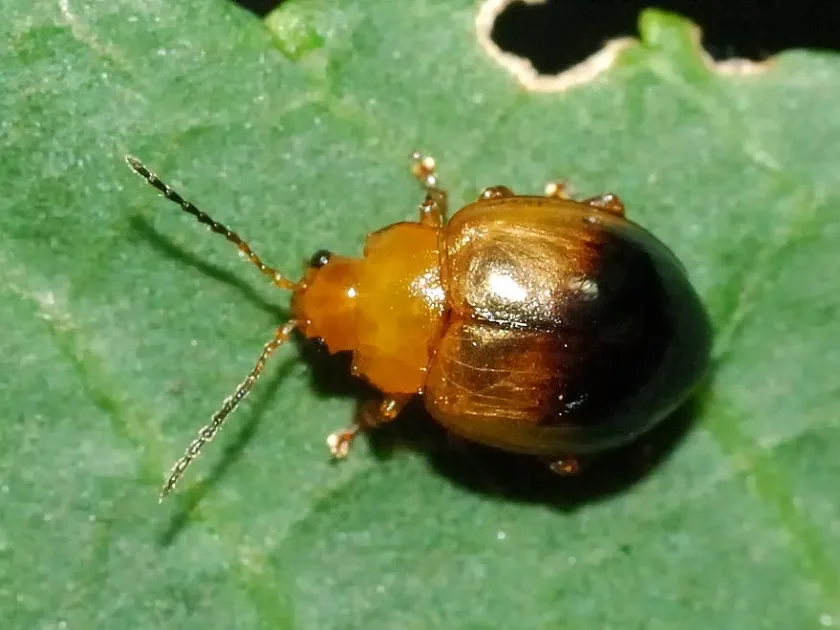
Description
How to identify
Nisotra javana is a species of flea beetle belonging to the family Chrysomelidae. These insects are well-known agricultural pests, particularly in tropical and subtropical regions where they target specific botanical families.
The adult beetle is small with a glossy, oval-shaped body. The coloration is typically dark brown or black, often displaying a metallic sheen that acts as a form of camouflage on the foliage of host plants.
The life cycle of this pest involves complete metamorphosis: egg, larva, pupa, and adult. The females lay eggs in the soil near the host plant's roots, ensuring the emerging larvae have immediate access to food.
Larvae are typically soil-dwelling, feeding on the roots and the subterranean portion of the stems. This stage is crucial for the population dynamics, as it is protected from many direct foliar treatments.
Adults are highly mobile and possess the characteristic jumping ability of the tribe Alticini. They are the primary agents of foliar damage and are responsible for the rapid spread of the infestation across fields.
What it damages
Kenaf Hibiscus cannabinus is the primary crop damaged by Nisotra javana. The beetle's feeding can severely impact the growth and fiber yield of this valuable industrial crop.
The pest also utilizes other plants within the Malvaceae family as alternative hosts. These secondary hosts can sustain the beetle population even when the main crop is not available, complicating management efforts.
Damage is twofold: adults chew holes in leaves, known as shot-holing, which reduces photosynthetic capacity; larvae cause root damage, hindering nutrient uptake and overall plant vigor.
In cases of severe infestation, young seedlings are particularly vulnerable and may die shortly after emergence, leading to patchy stands and reduced economic returns for the farmer.
The cumulative effect of larval and adult feeding leads to plant stunting, which results in shorter and poorer quality fiber, significantly reducing the market value of the harvested produce.
Signs of infestation
The most immediate sign of an infestation is the presence of numerous small, round holes in the leaves. These patterns are created by adult beetles feeding on the leaf tissue.
Below the soil line, signs of larval activity include necrotic lesions on the roots and evidence of tunneling. Affected plants often show chlorosis or wilting, reflecting the damage to their root systems.
Stunted plant growth is a common indicator that the population density of the beetles is reaching economic levels. Uneven field appearance is a hallmark of an established Nisotra colony.
Adults are most active during the cooler hours of the morning and evening. Observations conducted during these periods can reveal high concentrations of beetles on the undersides of leaves.
Surrounding weed vegetation from the Malvaceae family often shows similar feeding patterns. Monitoring these weeds can provide an early warning of an impending move to the crop field.
Control measures
Integrated Pest Management (IPM) is essential for controlling Nisotra javana. This includes cultural practices such as deep ploughing after harvest to expose and destroy soil-dwelling stages.
Eliminating host weeds around the perimeter of the field is a critical preventative measure. This significantly reduces the initial pressure of the pest population on the young crop.
Chemical control involving systemic insecticides is effective when applied early in the growth stage. Proper timing ensures that both emerging adults and larvae are suppressed before severe damage occurs.
Biological control agents, including specific entomopathogenic fungi, have shown promise in controlling soil-borne larval stages, providing a more sustainable alternative to chemical sprays.
- Use of crop rotation to break the pest's life cycle.
- Deployment of yellow sticky traps for monitoring activity.
- Use of seed dressings to protect young seedlings from early attacks.
Taxonomy
- Latin name
- Nisotra javana
- Order
- Coleoptera (beetles)
- Family
- Chrysomelidae
- EPPO code
- NISOJA
Discussion
No discussions yet — be the first.