
Norway lobster
Nephrops
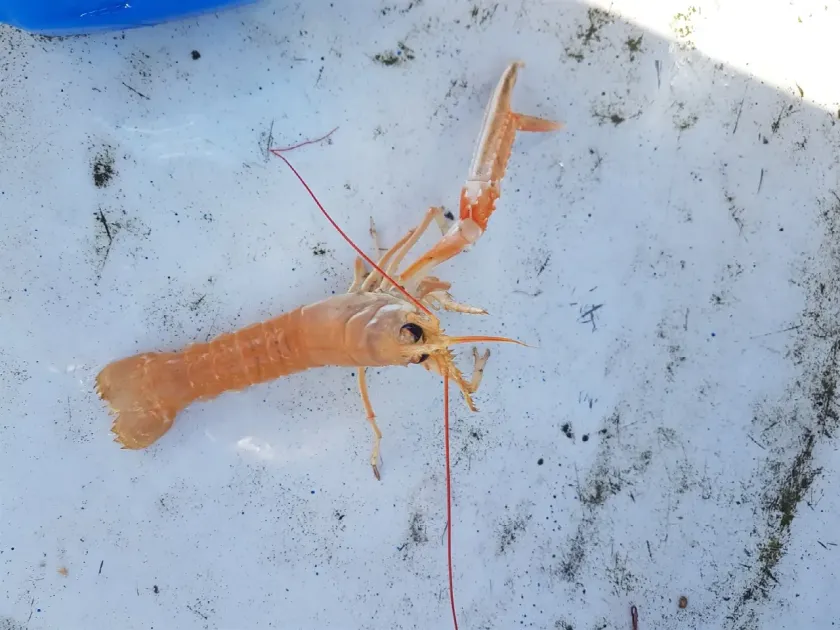
Description
How to identify
The Norway lobster, scientifically classified as Nephrops norvegicus, belongs to the family Nephropidae. It is a benthic crustacean predominantly found in the North Atlantic and Mediterranean Sea.
Physically, it is recognized by its slender, orange-pink body and elongated, spiny chelae (claws). Adults typically range in length from 10 to 20 cm, depending on the specific environmental conditions of their habitat.
These organisms exhibit complex burrowing behavior, creating elaborate tunnel systems in muddy or sandy-muddy seabeds. They are nocturnal by nature, often emerging from their burrows to forage at night.
The life cycle involves larval stages that drift in the water column before settling on the sea floor to begin their juvenile development. This entire developmental phase occurs in marine environments.
It is crucial to state that Nephrops norvegicus is an exclusively aquatic species. It possesses physiological adaptations that make it incapable of surviving in terrestrial environments, including farm fields or greenhouses.
What it damages
The Norway lobster is not a plant pest. It causes no damage to agricultural crops, including cereals, vegetables, or fruit-bearing trees, as it simply does not interact with terrestrial flora.
There is no mechanism by which this marine animal could impact farming productivity. Its habitat requirements are completely incompatible with the conditions found in agricultural soil or irrigation systems.
Its feeding habits are strictly carnivorous and detritivorous, focusing on smaller marine invertebrates and organic waste found in sea mud. It lacks the biological apparatus to consume or damage living plant tissue.
Including this species in lists of agricultural pests is factually incorrect. It has no biological, economic, or physical impact on the activities related to plant production or crop management.
Consequently, no protective measures or control strategies are required in agriculture. Any suggestion of management practices for this animal in farming contexts is unfounded and technically unnecessary.
Taxonomy
- Latin name
- Nephrops
- Family
- Nephropidae
- EPPO code
- NPHRSP
Discussion
No discussions yet — be the first.