
European lobster
Homarus gammarus
Description
How to identify
The European lobster (Homarus gammarus) is a crustacean belonging to the order Decapoda and the family Nephropidae.
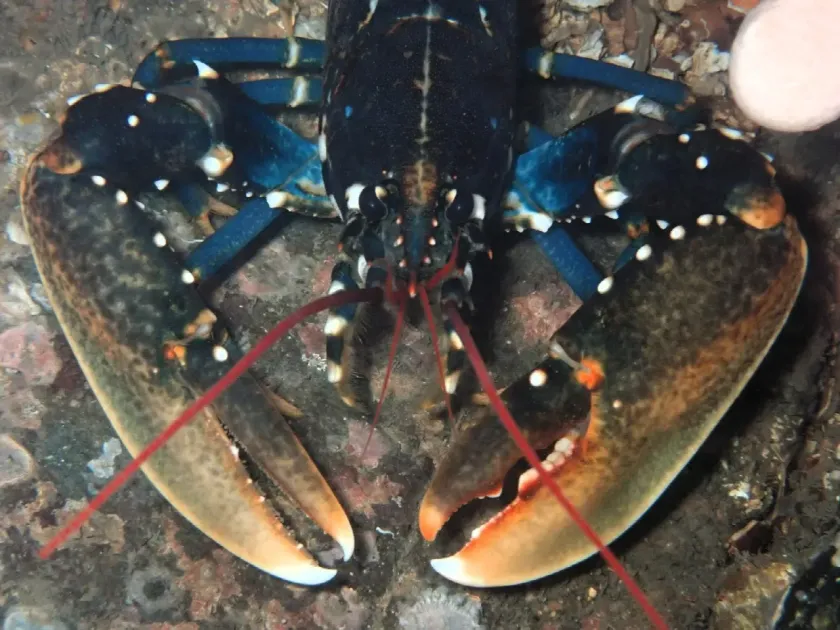
This species is well-known for its large, heavy, and asymmetrical claws, which are essential for its predatory behavior in the ocean.
The body is covered by a hard exoskeleton that provides protection, varying in shades of dark blue, green, and black.
They inhabit rocky seabeds, specifically seeking crevices in underwater reefs where they can hide from potential threats.
Development involves several larval stages in the water column before settling on the sea floor as a juvenile lobster.
What it damages
The European lobster is not a plant pest and poses no threat to any agricultural, horticultural, or silvicultural crops.
Because it is an strictly marine species, it cannot survive or interact with land-based plants or crops.
Their diet consists entirely of mollusks, small crustaceans, and other marine invertebrates, meaning they have no interest in plant tissues.
The classification of this lobster as a pest in an agricultural context is entirely incorrect and scientifically unfounded.
There are no control measures required for this species in agriculture, as it is a vital part of the natural marine food web.
Taxonomy
- Latin name
- Homarus gammarus
- Family
- Nephropidae
- EPPO code
- HOARGA
Discussion
No discussions yet — be the first.