
Bushy-tailed woodrat
Neotoma cinerea
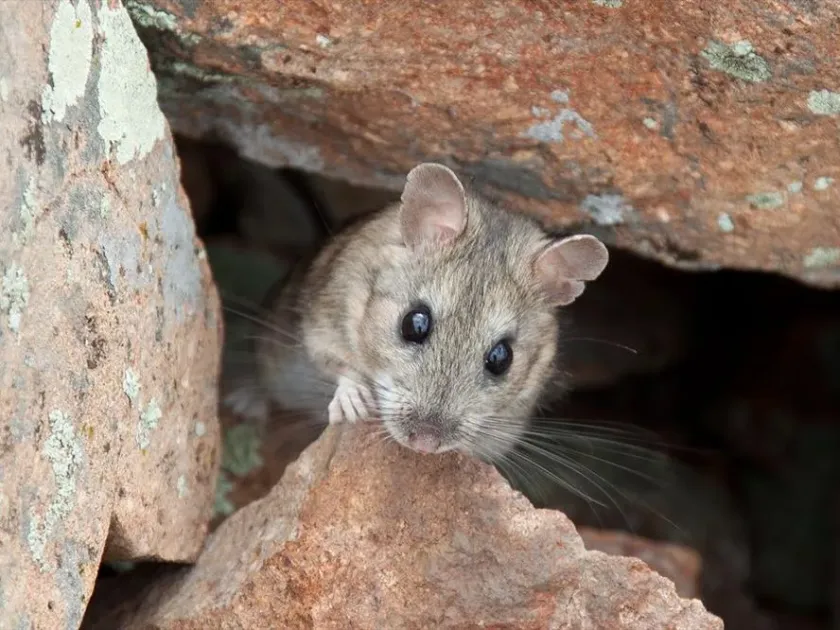
Description
How to identify
The bushy-tailed woodrat is a distinct rodent species known for its large, furry, squirrel-like tail, which sets it apart from other common woodrat varieties.
These animals typically measure 25 to 45 centimeters in length, with a thick coat that ranges in color from light gray to dark brownish-buff, featuring a white underbelly.
They possess large, prominent ears and long whiskers that are highly sensitive, allowing them to navigate rocky crags, crevices, and mountainous environments with ease.
Known for their hoarding behavior, these rodents are famous for building elaborate nests, often incorporating debris, rocks, and scavenged human items into their dwellings.
Unlike many other rodents, they are agile climbers and prefer elevated rocky habitats, though they frequently settle in structures near agricultural land if the environment is suitable.
What it damages
As opportunistic feeders, bushy-tailed woodrats consume a variety of vegetation, including seeds, fruits, young twigs, and buds from various agricultural and wild plants.
In agricultural settings, they can cause significant damage to orchards by stripping the bark from trees, especially during winter months when food sources are scarce.
They are notorious for invading barns, sheds, and silos, where they consume stored crops, contaminate grain with urine and feces, and destroy equipment through persistent chewing.
Their habit of gnawing on structural elements, insulation, and wiring can lead to costly repairs and even present a fire hazard in storage buildings.
During periods of population density, they can significantly reduce crop yields in fields located adjacent to rocky, natural habitats where these rodents reside.
When it appears
Bushy-tailed woodrats remain active throughout the year, as they do not undergo true hibernation, though their activity levels may decrease during extreme winter weather.
Autumn is a period of intense activity as they engage in foraging and hoarding behavior, preparing their nests for the colder winter months ahead.
The breeding season typically occurs during late spring and summer, leading to increased activity and higher population numbers during the harvest months.
In winter, their dependency on human-provided food and shelter increases, making them more visible and problematic around farms and rural infrastructure.
The transition between seasons dictates their movement patterns, as they often relocate to more sheltered areas when natural forage becomes depleted.
Signs of infestation
One of the most notable signs of a bushy-tailed woodrat infestation is the presence of large, haphazardly constructed dens or middens made of sticks, debris, and stones.
Visual confirmation can be achieved by spotting gnaw marks on tree trunks or branches, which are often ragged and found near the base or low-hanging areas of the plant.
Droppings are frequently found near nest sites, trails, and feeding areas, serving as a primary indicator of where the population is concentrated.
Owners often notice the sudden disappearance of small tools, hardware, or personal items, which the rodents have carried away to add to their collection.
- Large piles of scavenged material or debris in sheds or rock crevices.
- Distinctive scratching or scurrying sounds in walls, ceilings, or crawl spaces.
- Damage to electrical wiring, plastic equipment housings, or wooden structural supports.
Control measures
Exclusion is the most effective management strategy, which involves sealing all holes, cracks, and gaps in walls, floors, and foundations of agricultural structures.
Removing potential shelter sites, such as rock piles, brush, and accumulated debris around the farm, helps to discourage the rodents from nesting in the immediate area.
Mechanical trapping using live-capture traps is a practical and environmentally conscious method for controlling small populations around buildings.
For protecting specific high-value trees, physical barriers like metal hardware cloth or wire mesh sleeves prevent rodents from accessing and damaging the bark.
Where chemical control is necessary, rodeniticide baits should be placed inside secure, tamper-resistant bait stations to prevent access by non-target wildlife and pets.
Taxonomy
- Latin name
- Neotoma cinerea
- Order
- Rodents
- Family
- Muridae
- EPPO code
- NETOCI
Discussion
No discussions yet — be the first.