
Grey tortrix
Neosphaleroptera nubilana
Description
How to identify
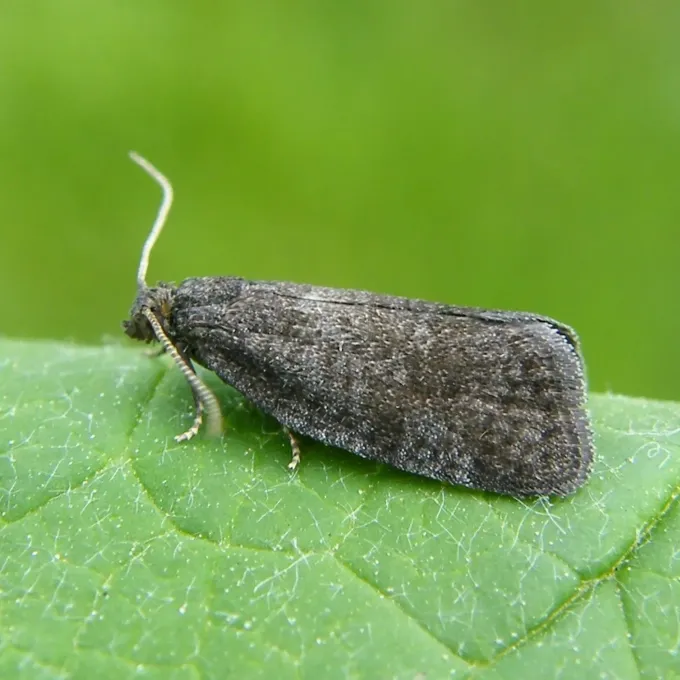
The grey tortrix (Neosphaleroptera nubilana) belongs to the Tortricidae family. The adult moth has a wingspan of 12–16 mm, with greyish-brown forewings that bear mottled patterns, allowing it to blend in with tree bark seamlessly.
The larvae are small, usually yellowish-green or greyish with a dark head and thoracic plate. They undergo several larval stages, becoming more voracious as they grow through the spring and early summer.
Overwintering occurs as young larvae, which construct tough silken cocoons in crevices, under loose bark, or around the base of buds. This adaptation allows them to survive harsh winter temperatures effectively.
In spring, as temperatures rise, the overwintered larvae emerge to feed on developing buds and young foliage. This timing coincides with the most vulnerable stages of the tree's spring development.
The life cycle is closely synchronized with the phenology of fruit trees, meaning that climate patterns significantly influence the severity of the infestation in any given year.
What it damages
The grey tortrix primarily affects pome and stone fruits, including apple, pear, cherry, and plum trees. Hawthorn is also a common host plant that can support large populations.
Larvae cause damage by webbing leaves together to form shelters. Inside these structures, they feed extensively on leaf tissue, leading to localized skeletonization or complete leaf destruction.
Buds are a prime target in early spring. The larvae bore into them, destroying the embryonic foliage and flowers, which directly reduces the tree's potential crop yield.
Young fruitlets may also be damaged, causing scarring or stunted growth, which lowers the commercial value of the fruit if the trees are in a productive orchard.
Severe infestations weaken the trees, reducing their vigor and ability to store reserves for the following season, which can lead to biennial bearing patterns.
Signs of infestation
The first signs of infestation are damaged or hollowed-out buds in early spring that fail to produce normal leaves or flowers.
Webbed leaf clusters are a classic indicator of tortrix activity. If you inspect the tree canopy, these distinct, crumpled leaf bundles are easily visible.
Browned or desiccated patches on leaves give the tree a scorched appearance, indicating that larvae have consumed the tissue within the webbed areas.
Excrement (frass) pellets found inside the silken shelters provide confirmation of active feeding by the larvae.
During the flowering period, damaged or webbed blossoms that fail to develop into healthy fruit are a clear sign of a significant pest presence.
Control measures
Cultural control is essential, including the removal of loose bark and clearing up plant debris in autumn where the larvae may seek shelter for the winter.
Biological control methods, such as using Bacillus thuringiensis sprays, are highly effective against younger larvae while remaining safe for most beneficial insects.
Chemical treatments should be timed carefully, ideally targeting the period after bud burst or immediately post-blossom to catch the larvae before they create protective webs.
Monitoring the flight of adult moths using pheromone traps allows growers to predict egg-laying cycles and optimize the timing of pesticide applications.
- Pruning and destroying heavily infested branches.
- Encouraging natural predators such as lacewings and parasitic wasps.
- Systematic monitoring and threshold-based intervention.
Taxonomy
- Latin name
- Neosphaleroptera nubilana
- Order
- Lepidoptera (butterflies)
- Family
- Tortricidae
- EPPO code
- CNEPNU
Discussion
No discussions yet — be the first.