
Cabbage stem weevil
Neoglocianus
Description
How to identify
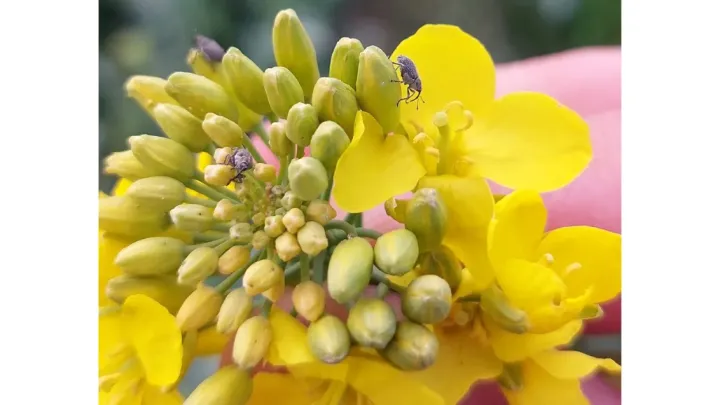
The cabbage stem weevil (Neoglocianus pallidactylus) is a small beetle belonging to the Curculionidae family. Adult beetles are typically 2.5–3 mm long, with a dark gray or black body and a distinctive light-colored patch at the base of the elytra.
The body is covered with fine scales, which provide effective camouflage. The head features a long, slender, and slightly curved snout, which the female uses to puncture plant tissues for egg-laying.
Larvae are legless and possess a curved, pale yellow-white body with a brown head capsule. They are strictly endophagous, meaning they develop entirely within the stems or leaf petioles of the host plants.
Pupation occurs in the soil. The pupae are pale and undergo development before emerging as adults of the next generation. The transition from larva to pupa is a critical stage in their biological cycle.
Adults overwinter in the upper soil layers or under dense plant debris. They emerge in early spring as soon as temperatures rise, typically around 8-10 degrees Celsius, to begin feeding.
What it damages
This pest is a specialist that primarily targets plants within the Brassicaceae family. It poses a significant threat to various cabbage cultivars, including white cabbage, cauliflower, broccoli, and kale.
Oilseed rape, mustard, and radish are also highly susceptible to infestation. Damage is typically observed during the early growth stages of the plants, but adults can also feed on mature leaves.
Adults create small, circular feeding punctures on leaves, which, while usually minor, weaken the plant's physiological state and increase susceptibility to secondary pathogens.
Larval feeding causes the most severe damage. They tunnel through the petioles and stems, causing deformation, growth stunting, and occasionally the death of young seedlings or plants.
Mass infestations can lead to significant yield losses. The internal tunneling weakens the plant's structure, making it more vulnerable to wind breakage and environmental stress.
When it appears
The emergence of adults begins in early spring. They migrate from overwintering sites to nearby cruciferous weeds before moving onto cultivated crops once they are available.
The mating and egg-laying period spans several weeks in the spring. Females carefully insert eggs into the stems or petioles of young plants, making the larvae difficult to detect at first.
The larval stage is most active during late spring and early summer. This period coincides with the intensive growth phase of the crops, making the plants particularly vulnerable to nutritional depletion.
After completing their development, larvae exit the plant tissues and drop to the ground to pupate. The duration of this process is highly dependent on local climate conditions and soil moisture.
New adults emerge by mid-summer. They continue to feed for a short period before seeking sheltered overwintering sites as temperatures start to drop in autumn.
Signs of infestation
The earliest signs of infestation are small, pin-prick-sized holes on the leaf surface. These often appear in clusters and are a primary indicator for pest monitoring programs.
Plant deformation, such as twisted or curved stems and petioles, is a common symptom of internal larval tunneling. In some cases, leaves may wilt unexpectedly despite adequate moisture.
Yellowing or chlorosis of the foliage can occur as a result of disrupted vascular transport caused by the larvae feeding inside the stems.
Internal examination of stems often reveals tunnels packed with larval frass. These galleries can lead to localized necrosis and provide entry points for bacterial or fungal soft rots.
Using yellow sticky traps in the field is an effective diagnostic tool to monitor the presence and population density of adult weevils before significant damage occurs.
Control measures
Cultural control strategies focus on removing cruciferous weeds around the field edges, as these plants serve as critical early-season reservoirs for the pest population.
Crop rotation is essential. Avoid planting brassica crops in the same field for several consecutive years to break the cycle of the weevil and reduce pest pressure.
Chemical control should be implemented based on economic thresholds. Systemic insecticides applied during the early growth phase are often effective in preventing larvae from establishing inside the plants.
Deep autumn plowing is a highly effective mechanical method. It disrupts the pupation sites in the soil, exposing larvae and pupae to predators and harsh weather conditions.
- Monitor fields using yellow water traps or sticky boards.
- Remove volunteer cruciferous plants and weeds.
- Apply insecticides when adult activity peaks.
- Practice regular crop rotation to prevent buildup.
Taxonomy
- Latin name
- Neoglocianus
- Order
- Coleoptera (beetles)
- Family
- Curculionidae
- EPPO code
- NGLOSP
Discussion
No discussions yet — be the first.