
Nemophora degeerella
Nemophora degeerella
Description
How to identify
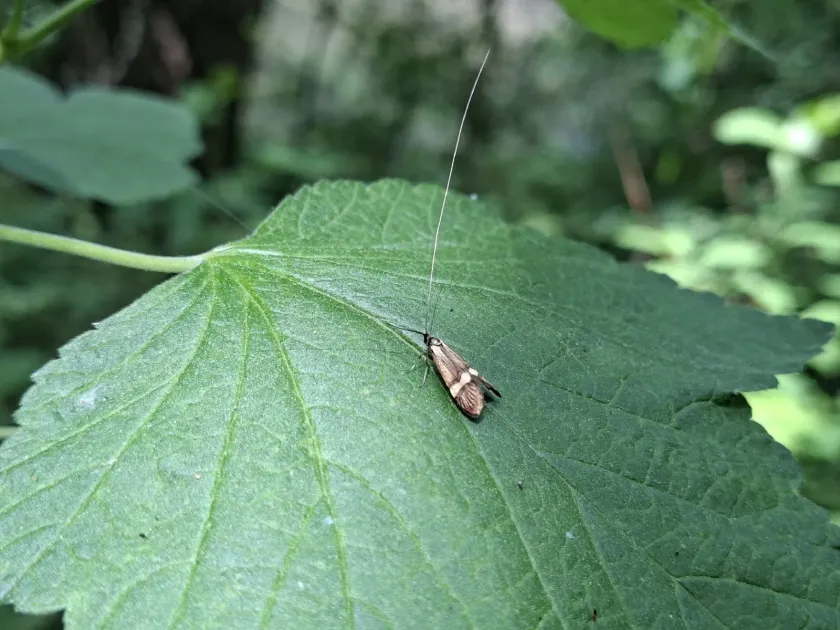
Nemophora degeerella, commonly known as the yellow-barred longhorn, belongs to the Adelidae family of moths. The most striking characteristic is the extraordinary length of the males' antennae, which can be several times longer than their body.
The adult moth features a golden-yellow to bronze wing color with a distinct, broad, and pale transverse band across the forewings, making it relatively easy to distinguish.
The larvae lead a cryptic lifestyle, living in leaf litter or moist soil, which makes them difficult to observe during their early developmental stages.
Adult moths have a wingspan ranging from 15 to 18 millimeters. They are characterized by a hairy body and an active, dancing flight pattern typically seen during sunny daylight hours.
The lifecycle includes a complete metamorphosis: egg, larva, pupa, and imago. Overwintering occurs at the larval stage, often within a protective case made of soil particles and silk.
What it damages
In nature, Nemophora degeerella primarily feeds on leaf litter and decaying plant matter, acting as a decomposer in forest ecosystems.
In agricultural settings, they are not usually considered primary pests; however, in high-humidity nursery conditions, they can cause damage to seedlings.
The damage is typically caused when larvae gnaw on the roots or stems of young plants that come into contact with the soil surface or organic mulch.
Large populations may negatively affect the growth of young crops by weakening their base, which can predispose the plants to subsequent fungal infections.
In greenhouses, these moths may disrupt the production of young vegetable or ornamental plants if organic debris is allowed to accumulate around the containers.
When it appears
Adult moths emerge in late May, with the flight season continuing through mid-June, coinciding with the flowering period of many deciduous trees.
Mating and oviposition occur throughout June, with females selecting damp, shady areas rich in plant debris for the development of their offspring.
Larval development takes place throughout the summer and early autumn as they feed steadily on the available plant detritus in their environment.
As temperatures drop in late autumn, the larvae construct durable cases in the upper soil layers to survive the winter months successfully.
Pupation occurs in the spring within these cases, and the final emergence of the new adult generation follows as the soil warms up.
Signs of infestation
The most visible sign of an infestation is the presence of groups of moths performing distinctive dancing flights in sunlit clearings or near hedge rows.
Examining the soil surface near the plants may reveal small, soil-covered cocoons, which are a definitive indicator of the larvae's presence.
Skeletal patches on the underside of leaves or gnawed stems near the ground are common indications that larvae are feeding on plant tissues.
The presence of fine, dark granular excrement scattered in the leaf mulch suggests high activity levels of larvae within the immediate area.
Stunted growth of young transplants in areas with poor drainage often correlates with the presence of these larvae in the substrate.
Control measures
The most effective cultural control measure is the removal of accumulated leaf litter and organic debris to eliminate potential feeding and wintering sites.
Regular cultivation and loosening of the soil surface in spring will disrupt the pupation process and significantly reduce the survival rate of the larvae.
Proper drainage systems should be implemented to ensure that the soil remains well-aerated, making the environment less favorable for the larvae.
Biological insecticides, specifically those containing Bacillus thuringiensis, can be applied if larvae are observed damaging crop stems directly.
Monitoring using pheromone-based traps is recommended in nurseries or commercial sites to track population density and take preemptive action before damage occurs.
Taxonomy
- Latin name
- Nemophora degeerella
- Order
- Lepidoptera (butterflies)
- Family
- Adelidae
- EPPO code
- NMPHDE
Discussion
No discussions yet — be the first.