
Longhorn moth
Nemophora
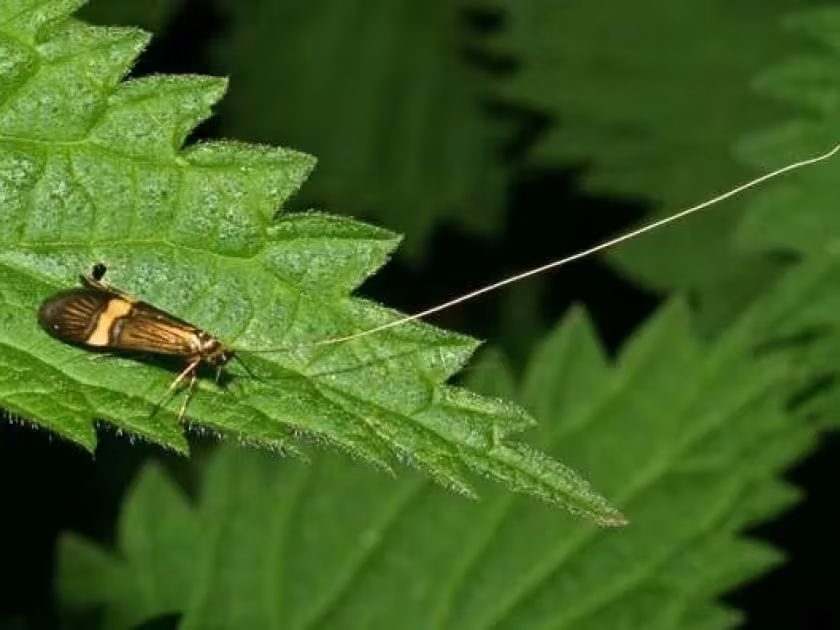
Description
How to identify
Longhorn moths (family Adelidae) are named for the exceptionally long antennae found in males, which can measure several times the length of their forewings.
These small moths typically have a wingspan ranging from 10 to 20 millimeters and often display iridescent or metallic scales on their wings.
Taxonomically, they belong to the order Lepidoptera, family Adelidae. They are known for their distinct wing venation and delicate body structure.
Larvae are unique in that they construct portable cases made from plant debris or soil particles, which provide them with protection during their development.
Adult moths possess functional mouthparts and are frequently observed visiting flowers to feed on nectar, exhibiting diurnal flight patterns.
What it damages
While many larvae act as detritivores, some species of Nemophora can cause damage to living plant tissues, including buds and young leaves.
In agricultural settings, they may affect fruit trees and shrubs by consuming floral tissues, potentially leading to yield reduction in sensitive crops.
The cryptic nature of the larvae, living within their protective cases, often allows them to feed undisturbed for extended periods.
Seed-bearing plants can also suffer from larval feeding, as the caterpillars may consume the developing seeds or internal parts of the seed pods.
Significant damage is usually sporadic and tends to occur in neglected areas or plantations where sanitation practices are not strictly followed.
When it appears
Adult moths typically emerge in late spring and early summer, coinciding with the flowering periods of many host plant species.
They are primarily active during sunny days, which are ideal for mating and searching for suitable sites for oviposition on leaves or soil.
The life cycle is univoltine, meaning there is one generation per year, with the larvae spending the winter dormant in leaf litter or soil.
Development resumes in the spring when overwintered larvae finish their growth and pupate within their cases before emerging as adults.
Temperature fluctuations during the early season significantly influence the synchrony of adult emergence and the overall population dynamics.
Signs of infestation
The most reliable sign of an infestation is the presence of small, portable cases carried by larvae as they move across plant surfaces.
Look for irregular feeding patches on leaves, often described as window-like damage where the upper epidermis of the leaf remains intact.
Small amounts of larval frass may be visible near the feeding sites, often incorporated into the casing material or scattered below.
The presence of adult moths with distinctive long antennae fluttering around foliage or flowers is a clear indicator of their activity.
Deformed buds or premature drop of floral tissues can indicate larval presence inside the growth points of the affected host plant.
Control measures
Good sanitation practices, such as clearing leaf litter and pruning dead twigs, are effective in reducing overwintering sites for the larvae.
Mechanical disturbance of the soil surface in early spring can help expose pupating larvae to predators or adverse environmental conditions.
If necessary, application of targeted insecticides during the flight period of adults can prevent egg-laying and reduce future generations.
Promoting a healthy environment for natural enemies, including birds and predatory insects, assists in maintaining pest populations below thresholds.
Monitoring using pheromone traps or light traps can help identify the timing of adult activity, allowing for more precise and effective intervention.
Taxonomy
- Latin name
- Nemophora
- Order
- Lepidoptera (butterflies)
- Family
- Adelidae
- EPPO code
- NMPHSP
Discussion
No discussions yet — be the first.