
Nemocestes incomptus weevil
Nemocestes incomptus
Description
How to identify
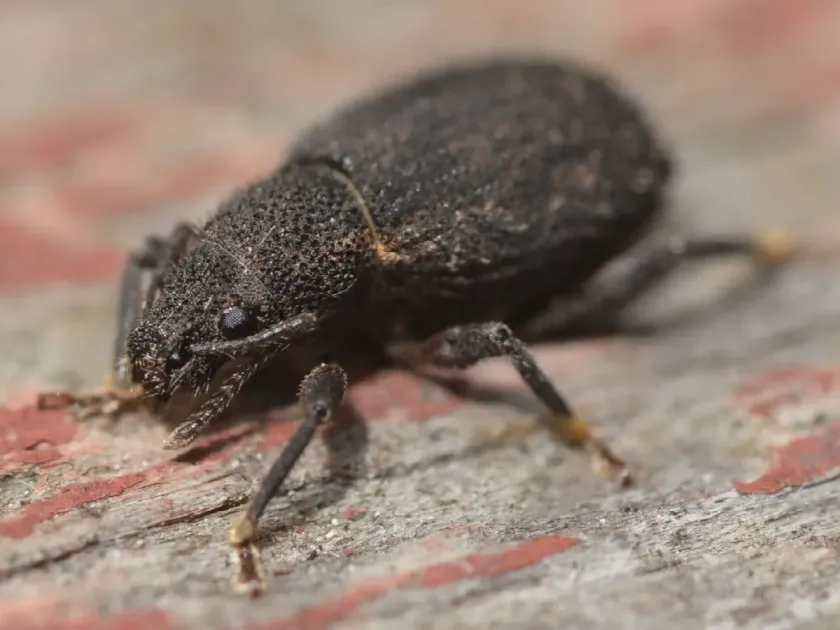
Nemocestes incomptus is a member of the Curculionidae family within the order Coleoptera. Like other weevils, adults are recognized by their distinct snout (rostrum) and elbowed antennae.
The adult weevils are generally cryptically colored to blend in with soil or bark, making them difficult to spot during routine scouting in the field.
Larvae are legless, C-shaped, and creamy white in color, typically residing in the soil profile where they feed on the roots of various host plants.
Accurate identification of this species often necessitates examining specific microscopic features, as many root-feeding weevils share similar morphological traits.
Their life cycle is highly dependent on environmental humidity and soil conditions, which dictate the seasonal activity and the success of the larval stages.
What it damages
This pest is known to impact a variety of nursery crops, small fruits, and ornamental plants, causing significant economic damage if left unmanaged.
Adult feeding results in characteristic notches along the edges of leaves, which, while visually indicative, usually causes only minor physiological stress to the plant.
The real destruction is caused by the larvae, which feed on the root systems, severing fine roots and sometimes girdling the main root structures.
Severe infestations often lead to a reduction in the vigor of the plant, increased susceptibility to drought, and in extreme cases, the total collapse of the plant due to lack of nutrient and water uptake.
Root damage provides entry points for soil-borne pathogens, such as Phytophthora or other fungi, further compounding the damage caused by the larvae.
When it appears
Adult Nemocestes incomptus activity is primarily observed during the late spring and summer months when weather conditions are suitable for mating and oviposition.
The larvae are subterranean and remain active throughout the growing season, though their feeding rate is correlated with soil temperature and moisture levels.
High levels of larval activity frequently coincide with the periods of greatest plant growth, causing maximum impact on the crop's developmental capacity.
Overwintering usually occurs in the larval stage deep within the soil profile, which protects them from extreme surface temperatures and provides a head start in early spring.
Scouting for adults should commence at the first signs of leaf notching, as this indicates that a new generation has emerged and egg-laying is likely underway.
Signs of infestation
Leaf notching along the margins is the most obvious sign of an adult population presence in the planting area, usually occurring at night.
Stunting and loss of vigor in individual plants are classic indicators of a root system that is failing due to larval feeding activity.
Wilting of foliage, especially during hot mid-day conditions, is a strong signal that the root system has been severely compromised by pest pressure.
When suspect plants are carefully lifted from the soil, the presence of C-shaped larvae in the root zone confirms the diagnosis of a root weevil infestation.
A decline in berry production or ornamental quality over successive years is often a late indicator of a persistent, untreated population of these pests.
Control measures
Effective management of this weevil requires an integrated approach that targets both the foliar-feeding adults and the root-feeding larvae.
Cultural practices, such as maintaining weed-free areas and optimal irrigation, help keep plants vigorous and resilient enough to withstand minor damage.
Chemical control with systemic insecticides can be effective during the adult stage, aimed at breaking the life cycle before significant oviposition occurs.
Biological control agents, particularly entomopathogenic nematodes or fungi, are increasingly used to suppress larval populations within the soil environment.
- Implementation of regular monitoring programs using light or pitfall traps.
- Deep tillage or cultivation in nursery settings to disturb larval development.
- Removal and destruction of highly infested plant materials to reduce population density.
Taxonomy
- Latin name
- Nemocestes incomptus
- Order
- Coleoptera (beetles)
- Family
- Curculionidae
- EPPO code
- NEMCIN
Discussion
No discussions yet — be the first.