
Nemocestes weevil
Nemocestes
Description
How to identify
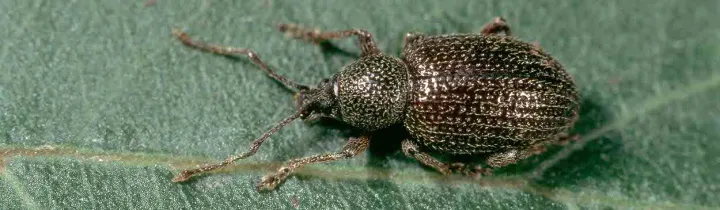
The Nemocestes genus belongs to the Curculionidae family, which are commonly known as root weevils. These beetles are characterized by a compact body, usually dull brown or gray, covered in fine scales that provide excellent camouflage against soil and bark.
Adult weevils possess a typical snout (rostrum) and elbowed antennae, which are hallmark features of the Entiminae subfamily. They are primarily nocturnal insects, remaining inactive and hidden during daylight hours.
The larvae are C-shaped, legless, and white with a brown head capsule. They live entirely below the soil surface, feeding on plant roots, which makes them difficult to monitor until significant damage has already occurred.
Adult size typically ranges from 5 to 10 mm in length. Accurate species identification within the genus often requires examination of structural features under magnification, as many species look very similar in the field.
Due to their secretive lifestyle, these insects are frequently overlooked until the host plants begin to show clear signs of distress or decline. Their ability to remain concealed in the soil profile makes them a persistent challenge.
What it damages
Both life stages of the Nemocestes weevil cause damage to plants. Adults feed on the foliage, leaving distinctive notched or scalloped edges on the leaves, which is a classic symptom of weevil infestation.
The larvae are responsible for the most severe damage by consuming roots and crowns. This feeding activity reduces the plant’s ability to take up water and nutrients, leading to yellowing, wilting, and often plant death.
Common host plants include various berry crops, particularly strawberries and raspberries, as well as nursery stock. In severe infestations, the entire root system can be compromised, causing the plant to be easily pulled from the ground.
Root damage provides an entry point for secondary soil-borne pathogens, such as fungi and bacteria, which can cause crown rot and further exacerbate the health decline of the plants.
In nursery settings, this pest can be devastating, as it can kill young, high-value plants before they are ready for market, resulting in significant economic losses for growers.
When it appears
The life cycle of the Nemocestes weevil is dictated by soil temperature and moisture. Adults generally emerge in early spring as temperatures rise, signaling the start of their active feeding and mating period.
Eggs are laid in the soil or near the crown of host plants throughout the spring and summer. Once the larvae hatch, they move into the soil to begin feeding on the root system, where they remain active throughout the summer and autumn.
Larvae are generally the overwintering stage, burying themselves deeper in the soil to avoid freezing temperatures. This hibernation allows the population to persist from one year to the next.
Pupation occurs in the soil, often in a small earthen cell created by the larva. Once the development cycle is complete, the new generation of adults emerges, continuing the cycle and often increasing the population density.
Environmental factors such as high humidity and stable soil temperatures can accelerate development, potentially allowing for multiple generations in warmer climates, though most species remain univoltine.
Signs of infestation
The most visible indicator of an adult infestation is the presence of scalloped leaf margins. Examining leaves for these semi-circular notches in the evening, when the beetles are active, is a primary way to detect them.
Stunted growth or sudden wilting that does not respond to irrigation is a strong sign of larval activity at the root zone. Plants may appear chlorotic and exhibit poor vigor compared to healthy neighbors.
If you suspect infestation, pulling a struggling plant will often reveal a damaged or severed root system. The presence of creamy-white larvae in the soil around the roots is a definitive sign of an active infestation.
Soil disturbance or mounds around the base of the plant might suggest the activity of insects emerging or burrowing back into the earth during daylight hours.
Monitoring the plant base at night with a flashlight can often reveal the beetles feeding on the leaves, confirming their presence on the property.
Control measures
Controlling the Nemocestes weevil requires a multifaceted approach that targets both the adult insects on foliage and the larvae in the soil to ensure long-term management.
Cultural control is critical; maintaining clean fields by removing debris and weeds helps eliminate the hiding spots that adults prefer during the day, reducing their survival rate.
Biological control using entomopathogenic nematodes (such as Heterorhabditis or Steinernema species) has proven highly effective against soil-dwelling larvae, as these microscopic worms actively hunt for the pest.
Chemical control may involve applying systemic insecticides to the foliage to target adults before they lay their eggs, or applying soil drenches to control larval stages in high-pressure areas.
- Rotate crops to disrupt the pest's life cycle.
- Use physical barriers where possible in container-grown plants.
- Monitor populations using pitfall or sticky traps to determine treatment timing.
- Always purchase certified, pest-free nursery stock to avoid introducing larvae.
Taxonomy
- Latin name
- Nemocestes
- Order
- Coleoptera (beetles)
- Family
- Curculionidae
- EPPO code
- NEMCSP
Discussion
No discussions yet — be the first.