
Naupactus
Naupactus navicularis
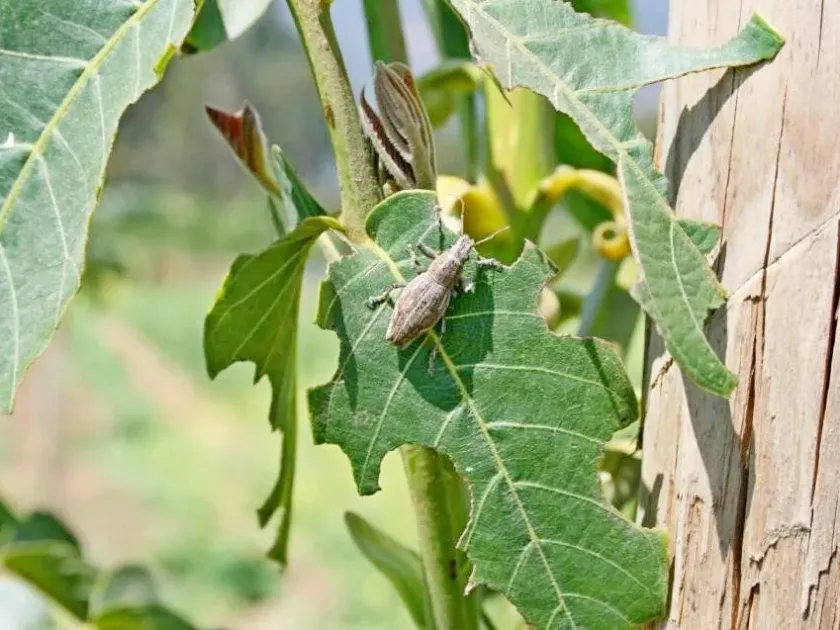
Description
How to identify
Naupactus (scientific name Naupactus navicularis) belongs to the Curculionidae family, commonly known as broad-nosed weevils. These insects are characterized by a robust body covered with small scales, which provide excellent camouflage against soil and bark backgrounds.
The adult weevils possess a short, broad snout typical of the genus. Their coloration usually ranges from shades of brown to grey, allowing them to remain inconspicuous during the daylight hours when they hide within dense foliage or just beneath the soil surface.
The life cycle follows a complete metamorphosis pattern: egg, larva, pupa, and adult. The larval stage is exclusively subterranean, which makes this phase of their development particularly dangerous and difficult to monitor in traditional agricultural settings.
Naupactus species are known for their nocturnal behavior. Adults emerge at night to feed on the foliage of host plants and return to the ground or sheltered areas before sunrise, which is a key behavioral trait for scouting and control.
Originating from South America, various Naupactus species have been reported as significant pests in citrus orchards and other agricultural systems worldwide. Their ability to adapt to different environments makes them a persistent threat to farmers.
What it damages
These pests have a wide host range, including citrus trees, grapes, soybeans, and numerous leguminous crops. Their larvae and adults can severely impact both perennial orchards and annual field crops alike.
Adult feeding is characterized by semi-circular notches cut into the margins of leaves. While this damage is rarely fatal to a healthy tree, heavy infestations can significantly reduce the total leaf area, thereby affecting photosynthesis and overall vigor.
The primary economic damage is caused by the larvae feeding on the root system. By consuming fine root hairs and stripping the bark from larger roots, they disrupt the plant's nutrient and water uptake mechanisms, leading to severe stunted growth.
Root damage also predisposes plants to secondary infections. Fungal pathogens and soil-borne diseases enter through the wounds created by the larvae, often causing the decline and eventual death of the entire plant.
In mature orchards, significant larval populations can lead to decreased yield quality and quantity, forcing growers to invest heavily in remediation and chemical treatments to preserve their livelihood.
Signs of infestation
The most visible sign of an active infestation is the presence of chewed leaf edges. Seeing these characteristic notches is an immediate call to action for growers to begin monitoring the crop at night to confirm the presence of adult weevils.
General plant decline, including yellowing leaves, premature leaf drop, and lack of new growth, often points to a compromised root system. Growers should carefully inspect the plant's health if these symptoms persist despite adequate irrigation.
Instability of the plant in the soil is a late-stage warning sign. If a tree or shrub can be easily rocked or tilted, it indicates that the root structure has been severely damaged by larval feeding activity over a significant period.
Visual inspection during the night using a flashlight is the most reliable way to identify adult beetles. They are often found on the underside of leaves or on the branches near the canopy.
Checking the soil within the drip zone of the plant by digging a small pit can reveal the presence of larvae. If larvae are found in large numbers near the crown or major roots, the infestation is likely critical.
Control measures
Mechanical cultivation or tilling of the soil around the base of the plants can help to disrupt the development of larvae and pupae. This practice is most effective when timed with the lifecycle stages occurring near the soil surface.
The use of entomopathogenic nematodes (such as Steinernema spp.) is a highly recommended biological control strategy. These beneficial organisms naturally hunt and infect the larvae within the soil without causing environmental harm.
Chemical control against adults should be applied at night when the beetles are most active. Choosing systemic or contact insecticides that are labeled for weevil management can help reduce the breeding population effectively.
Monitoring using sticky bands or traps placed on tree trunks can help determine the timing of insecticide applications, ensuring that treatments are made when adult populations are at their peak.
Phytosanitary practices are essential to prevent the spread of this pest. Always inspect new nursery stock for any signs of larval activity in the root ball before planting to ensure that no contaminated material enters the field.
Taxonomy
- Latin name
- Naupactus navicularis
- Order
- Coleoptera (beetles)
- Family
- Curculionidae
- EPPO code
- NAUPNA
Discussion
No discussions yet — be the first.