
White-fringed beetle
Naupactus leucoloma
Description
How to identify
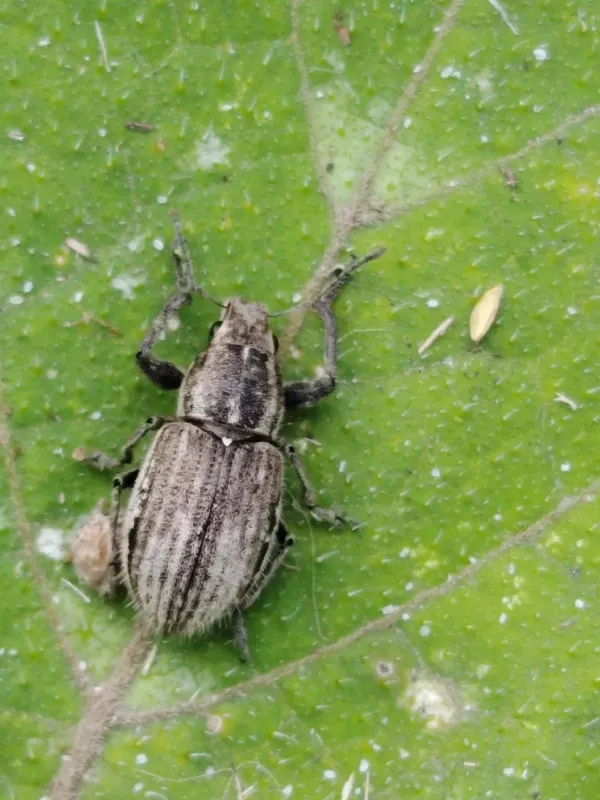
The white-fringed beetle (Naupactus leucoloma) is a species of broad-nosed weevil belonging to the Curculionidae family. Adults measure about 10–12 mm in length.
The body is covered in gray or brown scales, with distinct white longitudinal bands along the edges of the elytra, which is the species' main diagnostic feature.
Larvae are legless, white, with a brownish head and strong mandibles designed for feeding on various plant roots under the soil surface.
The species reproduces exclusively through parthenogenesis, meaning only females exist, leading to very rapid population growth and expansion into new areas.
Eggs are laid in clusters, often glued together and placed in the soil or at the base of host plants to ensure their survival and protection from weather.
What it damages
This beetle is a significant polyphagous pest, known to attack over 270 plant species including soybeans, potatoes, peanuts, and various legumes.
The larvae cause the most severe economic damage by feeding on roots, tubers, and rhizomes, often severing the taproot and killing the plant.
Adult beetles feed on leaves, creating distinct semi-circular notches along the edges, which reduces the photosynthetic capacity and vitality of the crops.
Heavy infestations lead to stunted growth, yellowing, and plant wilting, as the destroyed root system cannot support the water and nutrient needs of the crop.
Because the larvae are soil-borne, their feeding activity is often hidden, making the damage difficult to detect until the plant starts showing severe stress.
When it appears
The life cycle is closely linked to soil temperature and moisture, with adult activity typically occurring during the spring and summer months.
Larvae live in the soil throughout the year, with their peak feeding activity overlapping with the primary vegetative growth stages of most agricultural crops.
Overwintering occurs at the larval stage deep within the soil profile, allowing the insect to survive harsh cold weather by moving below the frost line.
Pupation takes place in soil cells during the spring, leading to the emergence of new adult generations that climb to the surface to feed and mate.
The timing of emergence depends on environmental conditions, but once they surface, they begin the egg-laying process to establish the next generation.
Signs of infestation
The most common sign of infestation is the notched appearance of leaves, caused by adults grazing on the edges of the plant foliage.
Field patches with sudden wilting or yellowing of plants often indicate root destruction caused by the feeding of larvae in the underground layer.
Plants affected by larval feeding can be easily pulled from the ground because their taproots have been partially or completely eaten away by the pests.
Small C-shaped white larvae found in the soil near the root zone during excavation are a direct confirmation of the pest presence in the field.
Egg masses found on the lower parts of plant stems or hidden in soil cracks are indicative of established pest populations in the area.
Control measures
Crop rotation is the most effective cultural practice, as it breaks the life cycle of the pest by depriving larvae of their preferred host plants.
Deep tillage during the pupation period can physically destroy the pupae in their soil cells, significantly reducing the emergence of the next generation.
Chemical control involving the use of systemic insecticides as seed treatments can protect seedlings from initial larval damage in high-risk areas.
Foliar insecticide applications are targeted at the adult beetles before they start laying eggs to prevent the population from expanding further.
- Utilizing entomopathogenic nematodes as a biological control agent for larvae.
- Maintaining strict machinery sanitation to prevent spread between fields.
- Deploying light traps to monitor adult presence and inform timing for applications.
Taxonomy
- Latin name
- Naupactus leucoloma
- Order
- Coleoptera (beetles)
- Family
- Curculionidae
- EPPO code
- GRAGLE
Discussion
No discussions yet — be the first.