
White-fringed beetle
Naupactus dissimilis
Description
How to identify
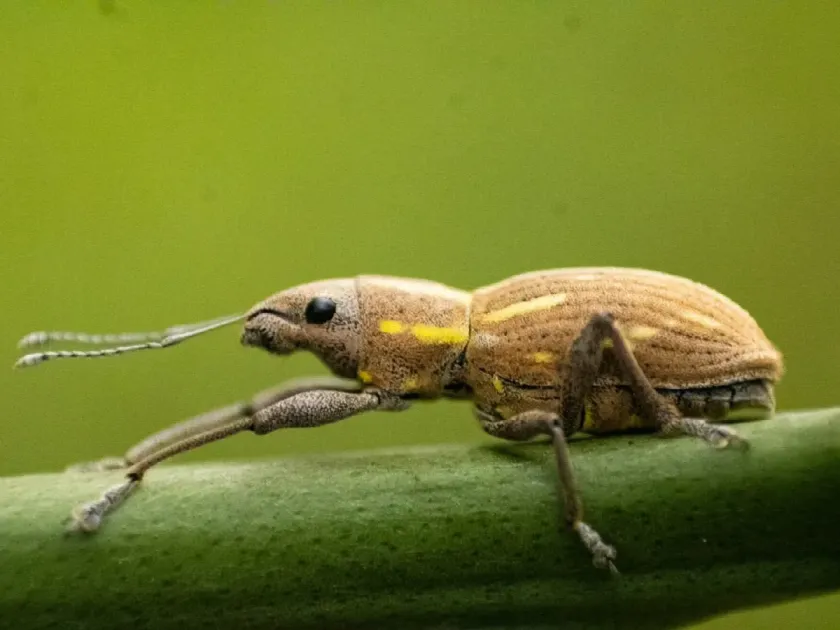
The white-fringed beetle (Naupactus dissimilis) belongs to the order Coleoptera and the family Curculionidae. Adult beetles are 8–12 mm long and possess a distinctive grey-brown body with white margins along the elytra, which gives them their common name.
The larvae are cream-colored, legless, and C-shaped, perfectly adapted for a life underground. They possess strong mandibles that allow them to effectively gnaw on plant roots, causing significant disruption to the host plant.
These beetles are primarily cryptic, often remaining hidden during the day. When disturbed, adults tend to drop to the ground and remain motionless to avoid detection by predators or scouts.
The species is a polyphagous pest, meaning it can feed on a wide variety of plant species. This adaptability allows it to thrive in different environmental conditions and move between various agricultural fields.
Reproduction is parthenogenetic, meaning female beetles can produce offspring without fertilization. This biological feature enables the rapid expansion of populations, making the pest difficult to control once it establishes itself.
What it damages
The larvae are the most damaging stage, as they feed on the roots of crops. This root damage deprives the plant of its ability to absorb water and essential nutrients, leading to stunting, yellowing, and eventually death.
Adult beetles feed on the foliage, creating characteristic notched or serrated edges on the leaves. While this leaf damage is usually not fatal, it reduces the photosynthetic surface, weakening the plant's overall vitality.
Soybeans are particularly susceptible to this pest, though it also infests corn, alfalfa, and several fruit crops. In heavy infestations, the loss of root integrity can lead to significant reductions in crop yields.
Plants affected by larval feeding become highly sensitive to environmental stress, such as drought. A weakened root system cannot recover, and severe infestations often cause entire patches of a crop to wilt and fail.
In addition to direct damage, the entry wounds caused by larvae can facilitate the infection of roots by various soil-borne pathogens, leading to secondary diseases that further destroy the plant.
When it appears
Adult Naupactus dissimilis activity typically begins in late spring and continues throughout the summer. During this time, they emerge from the soil to feed on foliage and complete their reproductive cycles.
Eggs are deposited in or near the soil, and upon hatching, the larvae immediately burrow underground. They remain in the soil throughout the growing season, where they continue their development at the expense of root systems.
The life cycle duration depends heavily on soil temperature and moisture. Warmer regions allow for more rapid development, contributing to higher pressure in agricultural production zones.
Larvae overwinter deep in the soil profile. This strategy provides them with protection against cold temperatures and traditional surface-level pest management techniques during the winter months.
Understanding the seasonal emergence patterns of the adult beetle is essential for farmers, as targeting them before they lay eggs is the most effective way to prevent future larval infestations.
Signs of infestation
The primary symptom of adult presence is the jagged or serrated appearance of leaf edges. This "scalloping" pattern is a clear indicator that adult weevils have been feeding on the plant canopy.
Stunted growth or unexplained wilting of plants is a key indicator of underground larval activity. If plants appear smaller than their neighbors in a uniform field, it is worth checking the roots.
Direct inspection of the roots during the growing season may reveal the presence of C-shaped white larvae. Soil disturbance at the base of the plant can also provide evidence of their existence.
Poor stand establishment and localized patches of dying plants across the field are classic signs of a significant larval infestation in the soil.
Monitoring using yellow sticky traps or conducting visual inspections of the field during the early morning or evening can help detect the beetles before they reach damaging population levels.
Control measures
Effective management requires a multi-pronged approach, starting with crop rotation. Moving host crops to new locations helps break the beetle's life cycle and prevents the buildup of larvae in the soil.
Deep autumn tillage is a highly recommended practice. By bringing the soil to the surface, larvae are exposed to harsh weather conditions and natural predators, which can drastically reduce their numbers.
Chemical control involving foliar insecticides can be used to manage adult populations. Application should be timed during the evening when beetles are most active to ensure maximum contact with the insects.
Seed treatments with systemic insecticides offer early-season protection for seedlings, preventing larvae from causing fatal damage to the developing root systems of young plants.
Regular field scouting is critical for making informed pest management decisions. Economic thresholds should be established to ensure that insecticide use is both effective and environmentally responsible.
Taxonomy
- Latin name
- Naupactus dissimilis
- Order
- Coleoptera (beetles)
- Family
- Curculionidae
- EPPO code
- NAUPDI
Discussion
No discussions yet — be the first.