
Naupactus
Naupactus
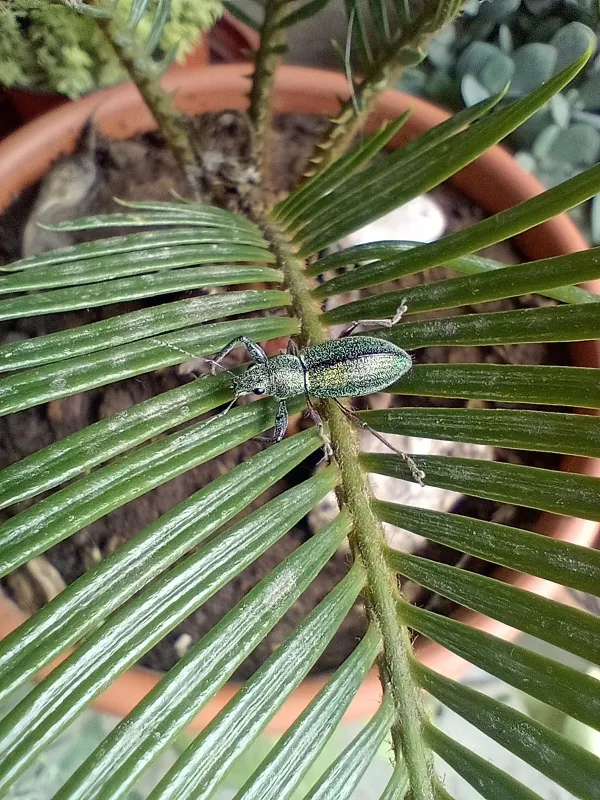
Description
How to identify
Naupactus is a genus of broad-nosed weevils belonging to the family Curculionidae. These beetles are widely recognized for their impact on agriculture and ornamental plants in various parts of the world.
Adult beetles typically measure between 7 mm and 15 mm in length. Their bodies are elongated and covered in tiny, dense scales that often create distinctive colors or patterns, ranging from gray to brown or black, sometimes with a metallic sheen.
The larvae are legless, C-shaped grubs with creamy-white bodies and hardened, brown heads equipped with strong mandibles adapted for feeding on roots beneath the soil surface.
The life cycle involves complete metamorphosis, consisting of eggs, larvae, pupae, and adults. The soil-dwelling nature of the larval stage makes them difficult to monitor or detect until damage becomes severe.
These insects are highly adaptable, allowing them to thrive in diverse environments, including orchards, vineyards, and nurseries, often causing significant economic losses.
What it damages
Naupactus is a highly polyphagous pest, meaning it feeds on a wide range of botanical hosts. Primary targets include citrus, apple, pear, and various stone fruit trees, as well as grapevines.
Adults cause damage to foliage by feeding on the edges of leaves, creating characteristic notches. Heavy infestations can lead to substantial leaf loss, which reduces the plant's photosynthetic capacity.
The larval stage causes the most severe damage by feeding on the root system. Initial feeding occurs on fine rootlets, progressing to the destruction of primary roots and the root collar, which significantly impairs the plant's ability to take up water and nutrients.
Root damage also opens entry points for soil-borne pathogens, such as fungi and bacteria, which cause secondary infections like root rot, potentially leading to the death of the host plant.
Beyond commercial fruit trees, these pests frequently attack ornamental shrubs, berries, and occasionally vegetable crops planted in fields adjacent to infested orchards.
Signs of infestation
The most recognizable sign of an infestation is the notched, scalloped appearance of leaf margins, often referred to as "ragging," caused by the nocturnal feeding habits of the adult beetles.
Symptoms of root damage include yellowing of the foliage, stunted growth, and general plant decline, which often mimic signs of drought stress despite adequate irrigation.
A closer inspection of the soil around the base of the trunk or plant usually reveals the presence of larvae. Digging in the upper 20-30 cm of soil in infested areas typically yields these soil-dwelling grubs.
During the flowering and fruiting season, adults may also feed on flower buds and young fruitlets, leading to poor fruit set and reduced harvest quality.
Observing the plant at night using a flashlight is the most reliable way to find the adult beetles, as they are most active during the cooler evening hours.
Control measures
Integrated Pest Management (IPM) is essential for controlling Naupactus because of its complex lifecycle spanning both soil and canopy environments.
Cultural control involves frequent mechanical cultivation of the soil around the base of trees. This practice disrupts the soil surface, exposing larvae to desiccation and natural predators like birds.
Chemical control usually targets the adult stage. Insecticides with contact or stomach action are applied to the canopy during peak emergence periods, preferably in the evening to maximize effectiveness.
Biological control has shown great promise, particularly the use of entomopathogenic nematodes such as Heterorhabditis or Steinernema species. These are applied to the soil to infect and kill the larvae naturally.
Effective monitoring using sticky traps or trunk bands can also help track beetle populations, allowing growers to time their intervention strategies for maximum economic efficiency.
Taxonomy
- Latin name
- Naupactus
- Order
- Coleoptera (beetles)
- Family
- Curculionidae
- EPPO code
- NAUPSP
Discussion
No discussions yet — be the first.