
Giant millipede
Narceus
Description
How to identify
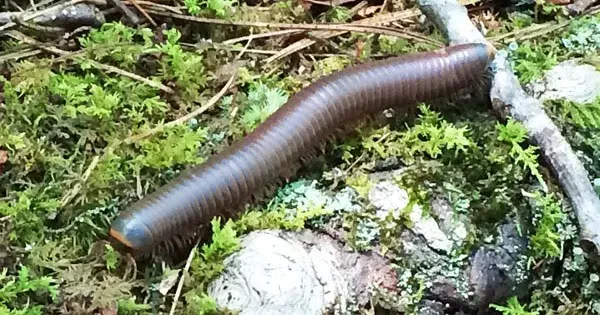
The giant millipede (Narceus) belongs to the class Diplopoda and the family Spirobolidae. These arthropods are characterized by their cylindrical bodies protected by a hard, dark-colored chitinous exoskeleton with numerous segments.
Adult specimens can grow significantly, reaching lengths of up to 10–15 centimeters. A key behavior of these millipedes is their ability to curl into a tight spiral when threatened, which serves as a primary defense mechanism.
Their life cycle is relatively long, often spanning several years. In their natural habitat, they thrive in moist, shaded environments enriched with decaying organic matter, which is their primary source of food.
Reproduction occurs in the soil, where females deposit eggs in clusters. Larvae emerge and undergo several molting stages, gradually increasing their body segment count and reaching maturation over multiple seasons.
While many millipedes are considered beneficial decomposers, species within the Narceus genus can transition into agricultural pests when their population density becomes excessive relative to available natural food sources.
What it damages
These pests inflict damage on a wide variety of vegetable and berry crops. They pose the greatest threat to young seedlings and germinating seeds, as they feed on tender root tissues and succulent stems.
Crops most frequently affected by Narceus activity include strawberries, cucumbers, potatoes, and various root vegetables. They are known to bore deep tunnels into fruit that is in contact with the soil surface.
Beyond direct feeding, millipedes facilitate the spread of secondary infections. The lesions they create provide entry points for fungi and bacteria, leading to rot and the eventual collapse of the plant.
In greenhouses and high tunnels, where moisture levels are consistently high and natural predators are scarce, millipede populations can expand rapidly, causing catastrophic damage to commercial crops.
Heavy damage is particularly prevalent in soils rich in uncomposted organic matter, which provides both a feeding ground and an ideal humid environment for these arthropods to congregate and multiply.
Signs of infestation
The most direct sign of a millipede infestation is the visual observation of the pests themselves, especially during the early morning or evening hours near the root zone or under mulch layers.
Strawberries and other low-hanging fruits often show deep, irregular cavities. These bite marks usually appear on the undersides of the fruit, indicating where the millipedes have gained access.
Plants may exhibit sudden wilting despite adequate moisture. A close inspection of the root crown typically reveals significant tissue damage, characterized by gnawed stems and damaged root systems.
Poor germination or missing rows of crops can often be attributed to millipedes consuming seeds before they are able to emerge, leaving behind bare patches in the seedbeds.
The presence of fine, pellet-like excrement around the base of the plant is another indicator of a high population density, signaling that the pests have been actively feeding in the immediate vicinity.
Control measures
Effective control starts with cultural practices that reduce soil moisture. Regular cultivation and hoeing of the soil surface help dry out the top layer, making it less hospitable for these moisture-dependent pests.
Trap crops or mechanical baits are highly recommended. Placing sliced potatoes or carrots on the soil surface attracts the millipedes, which can then be collected and removed by hand on a daily basis.
Proper crop rotation and the prompt removal of crop residues are essential. By eliminating unnecessary organic debris, you deprive the millipedes of the hiding spots and food supplies they need to survive.
In cases of severe infestation, targeted insecticide applications may be necessary. Products containing active ingredients like diazinon or metaldehyde (where legally permitted for the specific crop) can effectively manage population levels.
Using inert mulches, such as sand or gravel, around the base of vegetable plants creates a dry barrier that discourages millipedes from crawling upward to reach the fruit or succulent stems.
Taxonomy
- Latin name
- Narceus
- Family
- Spirobolidae
- EPPO code
- NARCSP
Discussion
No discussions yet — be the first.