
Mytilicola intestinalis
Mytilicola intestinalis
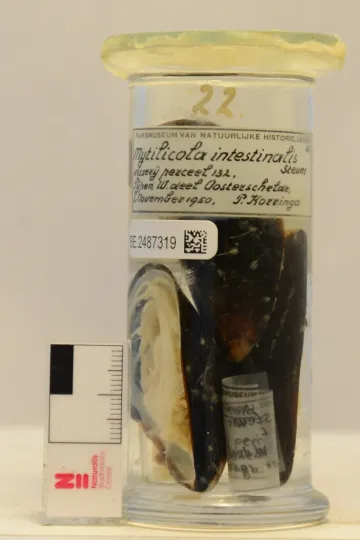
Description
How to identify
Mytilicola intestinalis is a parasitic copepod belonging to the family Mytilicolidae, commonly known as the red worm, which inhabits the digestive tract of marine bivalve mollusks.
The adult female is worm-like in appearance, typically reaching a length of about 8 to 10 mm, possessing a brownish-red color that makes them visible when the mollusk tissue is dissected.
Males are significantly smaller and less distinct, often found within the mantle cavity or attached to the females within the host's gut lumen.
The parasite utilizes its specialized appendages to maintain its position within the intestine, effectively resisting the peristaltic movements of the host's digestive tract.
The life cycle involves free-swimming larval stages (nauplii) that drift in the water column before infecting a suitable host through the inhalation currents of the mollusk.
What it damages
The primary hosts of this parasite include common mussels, oysters, and other commercially significant bivalves, often leading to reduced fitness of the infected population.
By living inside the host's digestive system, the parasite feeds on the ingested organic matter, causing nutritional stress and reduced growth rates in the host.
High levels of infestation often result in the condition of the mollusk declining, with lower meat yields and poor meat quality, significantly impacting marketability.
In addition to physiological stress, the presence of the parasite can decrease the reproductive capacity of the mollusk, potentially affecting the long-term sustainability of local beds.
Although it does not usually cause direct mortality, it weakens the host's immune system, making the population more susceptible to secondary infections or unfavorable environmental conditions.
When it appears
The infestation pressure and the reproductive rate of the parasite are highly dependent on water temperature, with peak activity occurring during the warmer summer months.
Larval stages are released into the water column when temperatures exceed specific thresholds, facilitating the spread of the parasite among dense shellfish colonies.
In temperate zones, the cycle may slow down during winter, but the parasite persists within the host, ready to resume reproduction as soon as water temperatures rise.
The duration of the infection season can vary depending on regional climates and the hydrodynamic characteristics of the cultivation site.
Continuous monitoring during spring and summer is critical to track the spread of the parasite within an aquaculture site and to assess the scale of the potential impact.
Signs of infestation
There are no visible symptoms on the outer shell of the mollusk, making early detection difficult without specialized diagnostic procedures.
The most common sign is a noticeable decrease in the condition index (meat weight relative to total body size) of the bivalves despite stable environmental and feeding conditions.
Upon laboratory examination, the presence of adult worms in the gut or digestive diverticula confirms the infestation.
A reduction in the growth rate and size of individuals across a specific cultivation patch can serve as an indirect indicator of a parasitic problem.
In severe cases, the affected mollusks appear thin and watery, showing signs of severe malnutrition that can be clearly distinguished from healthy specimens.
Control measures
Effective management begins with strict biosecurity protocols for the transfer of seed and spat from endemic areas to pristine or uninfected locations.
Reducing the stocking density in aquaculture farms can help lower the rate of transmission between individuals, preventing rapid population outbreaks of the parasite.
Quarantine measures are highly recommended for new introductions of shellfish stock to ensure they are free from Mytilicola intestinalis before integration into existing stocks.
- Regular site monitoring and sampling of shellfish populations for parasite load.
- Cleaning of equipment and lines to prevent the accumulation of organic matter and larval habitats.
- Fallowing of cultivation sites to break the life cycle of the parasite through the absence of hosts.
Integrated pest management strategies focusing on these preventative measures remain the most effective approach in open-water shellfish farming.
Taxonomy
- Latin name
- Mytilicola intestinalis
- Family
- Mytilicolidae
- EPPO code
- MYTCIN
Discussion
No discussions yet — be the first.