
Ant-loving cricket
Myrmecophilus
Description
How to identify
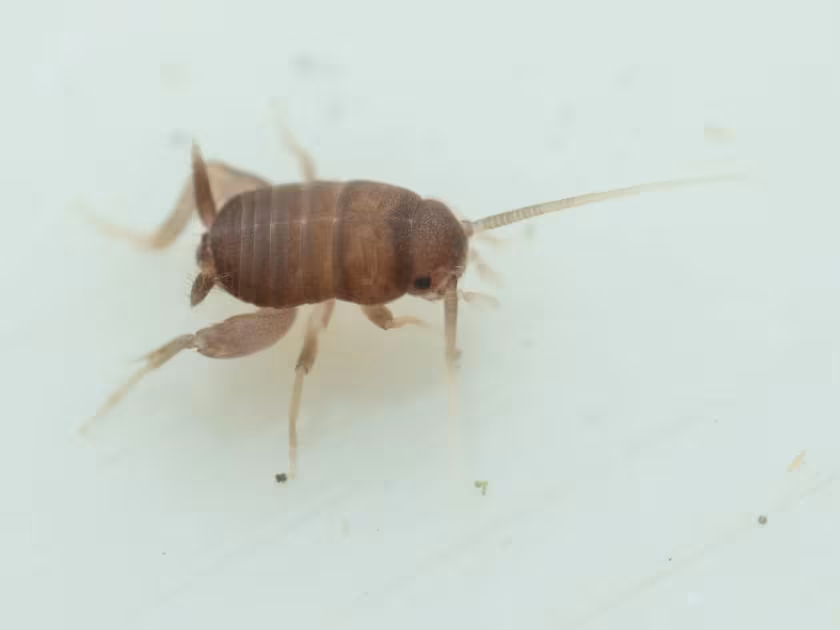
The ant-loving cricket (genus Myrmecophilus) belongs to the order Orthoptera and the family Myrmecophilidae. These are minute, wingless insects that superficially resemble tiny crickets.
Adult specimens typically measure between 2 and 5 millimeters in length. Their bodies are oval and vary in color from yellowish-tan to dark brown, providing excellent camouflage within ant colonies.
A distinctive feature is the complete absence of wings and the presence of enlarged hind legs, which enable them to jump very quickly when disturbed.
Their antennae are relatively short and highly sensory, compensating for the lack of functional eyes. They spend their entire life cycle in total darkness, deep inside ant nests.
The mouthparts are adapted for specialized feeding, often consuming debris or secretions gathered within the symbiotic environment provided by the host ants.
What it damages
Myrmecophilus species are not primary plant pests that consume leaves or fruits directly. However, they are considered pests due to their strong association with ant colonies.
By living within ant nests, they encourage the presence of ants, which are notorious for farming and protecting aphids, scale insects, and mealybugs on various crops.
These protected aphids suck plant sap, leading to stunted growth, leaf curling, and the transmission of viral plant diseases across the entire farm.
The ants themselves may cause direct physical damage to roots when excavating tunnels, which is exacerbated by the stable environment maintained for their myrmecophilous guests.
Overall, the presence of these crickets indicates a healthy, undisturbed ant population that will continuously contribute to the survival of sap-sucking garden pests.
When it appears
The life cycle of the ant-loving cricket is strictly tied to the development and behavior of the host ant colony throughout the entire year.
Activity peaks during the spring and summer months when ants are busy foraging and expanding their nest structure, facilitating the movement of crickets through the galleries.
During the winter, these crickets retreat deep into the nest, where the microclimate provided by the ants allows them to survive cold temperatures.
Reproduction typically occurs during the warmer part of the year, ensuring that the next generation is born when the host colony is most populous and stable.
The number of generations per year is dependent on the local climate and the specific species of the ant host, usually resulting in a single annual cycle.
Signs of infestation
Detection is difficult because these insects rarely leave the nest. The primary indicator is the presence of numerous ant nests within the root zone of crops.
If an ant nest is physically disturbed, one can observe tiny, cricket-like insects jumping rapidly to escape, moving deeper into the soil or under vegetation debris.
An indirect sign is the persistence of aphid infestations on plants, despite regular attempts to wash them away or treat them with contact insecticides.
If ants are observed aggressively defending pests on stems or leaves, it is highly likely that their nest system contains a complex of myrmecophiles, including Myrmecophilus.
Root damage or wilting of seedlings without apparent signs of disease may also suggest underground tunnel activity by ants harbouring these crickets.
Control measures
Effective control of Myrmecophilus is impossible without targeting the host ant colony that serves as their only habitat and protection.
The application of insecticidal baits containing fipronil or other ant-specific poisons is the most effective way to eliminate the colony and its inhabitants.
Agricultural practices such as frequent soil cultivation and tilling break the continuity of underground tunnels and disrupt the stable environment required by the crickets.
Using natural repellents like diatomaceous earth or essential oils around the nest entrances can discourage ant activity and drive them out of the garden.
An integrated approach involving biological control agents, such as beneficial nematodes or entomopathogenic fungi, can help suppress both ants and their associated cricket guests.
Taxonomy
- Latin name
- Myrmecophilus
- Order
- Orthoptera (locusts)
- Family
- Myrmecophilidae
- EPPO code
- MRMPSP
Discussion
No discussions yet — be the first.