
Coypu
Myocastor coypus
Description
How to identify
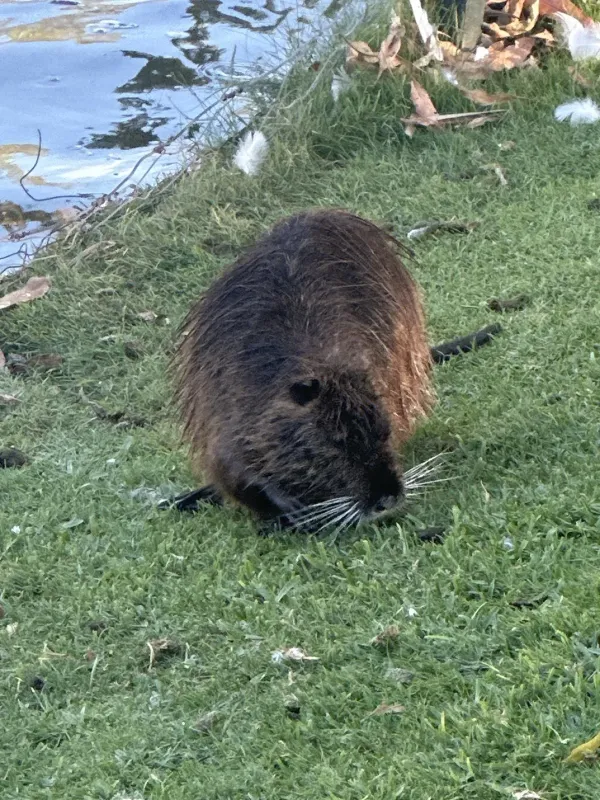
The coypu (Myocastor coypus), also known as the nutria, is a large, semi-aquatic rodent and the only member of the Myocastoridae family. It resembles a large rat, with a massive body up to 60 cm long and a long, scaly tail.
A defining feature is its bright orange incisors, perfectly adapted for cutting through tough plant stems. The animal is primarily nocturnal, swimming and diving skillfully thanks to the webbing on its hind feet.
Sexual maturity is reached at 4–6 months. Coypus are highly prolific; a female can produce 2–3 litters per year, with 5 to 10 offspring in each, leading to rapid population expansion.
In the wild, coypus burrow into riverbanks or build reed nests. In areas where they have been introduced, they quickly colonize drainage systems and the edges of ponds.
This species is considered invasive globally, causing significant disruption to aquatic ecosystems and damaging agricultural infrastructure in many regions.
What it damages
Coypus cause severe damage to coastal and near-water crops. Their diet consists of young shoots, rhizomes, and the terrestrial parts of various plants.
Grain crops like corn, wheat, and rice suffer the most. Rodents not only consume the plants but also trample large sections of fields as they move through them.
Root vegetables such as sugar beets, carrots, and potatoes are also frequently targeted. Coypus often damage greenhouses and open-ground vegetables located near canals or riverbanks.
Beyond cultivated plants, these animals consume aquatic vegetation, which leads to bank erosion and the degradation of dams, levees, and irrigation systems.
- Destruction of corn and rice fields.
- Loss of young nursery trees.
- Structural damage to irrigation canals and dams.
- Consumption of stored fodder and hay.
When it appears
Coypu activity continues throughout the warm season, though peak damage to agriculture occurs during the active growing phase of crops.
In the spring, coypus feed on young shoots, which can severely compromise crop establishment. Summer and autumn bring the greatest damage to grains and root vegetables.
During winter, provided there is open water, coypus remain active, often moving closer to barns or storage areas in search of food during colder months.
Damage intensity increases during dry years when natural aquatic vegetation is scarce, forcing the rodents to migrate into nearby fields for nutrition.
While breeding can occur year-round, the majority of the population growth happens in spring and summer, placing the most pressure on crops during their vulnerable stages.
Signs of infestation
The first sign of coypu presence is the creation of distinct paths through tall grass and reeds near the water's edge, where they move between their burrows and feeding grounds.
In fields, you may find patches of trampled vegetation where coypus have been grazing. Corn stalks or reeds are often cleanly cut at an angle, characteristic of their powerful teeth.
Muddy banks often show tracks of the hind feet, with clear webbing between the toes. Near these tracks, one can often find remnants of chewed rhizomes.
The presence of burrows in banks and exits from the water covered in plant debris are clear indicators that a colony has established itself in the area.
Damage to root vegetables is often seen at the soil level; coypus consume the top of the root while leaving the remainder in the ground, causing the plant to perish.
Control measures
Mechanical exclusion is the most effective defense. Installing heavy-duty wire mesh fencing along the perimeter of the field near water sources prevents rodent access.
The use of live-capture traps is recommended to control populations without the risk of spreading toxic chemicals into the water supply.
Agricultural management includes the regular clearing of riverbanks to remove dense vegetation, which eliminates the cover and nesting sites needed by coypus.
In some instances, acoustic deterrents are used, though their long-term efficacy is often limited due to the animal's high adaptability to new environments.
In cases of large-scale infestations, coordinating with local environmental agencies for professional trapping and management programs is the most successful long-term strategy.
Taxonomy
- Latin name
- Myocastor coypus
- Order
- Rodents
- Family
- Myocastoridae
- EPPO code
- MYOCCO
Discussion
No discussions yet — be the first.