
Green weevil
Myllocerus viridanus
Description
How to identify
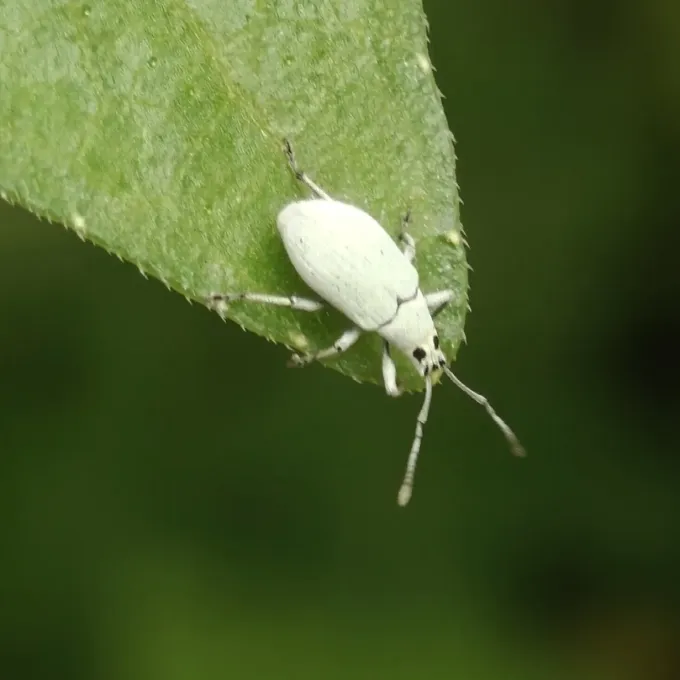
The green weevil (Myllocerus viridanus) is a member of the Curculionidae family. It is recognized by its vibrant green, scaly body that serves as camouflage among the foliage of host plants.
Adult insects feature the characteristic snout (rostrum) typical of the weevil family, which they use for feeding on plant tissues and for laying eggs.
The larvae are typically creamy-white, legless grubs that reside in the soil, feeding on the root systems of various plants throughout their development.
The life cycle consists of four distinct stages: egg, larva, pupa, and adult, with the environmental conditions playing a key role in the duration of each phase.
Adults are highly mobile and tend to drop from plants when disturbed, making manual detection difficult during quick field inspections.
What it damages
This species is a known polyphagous pest, meaning it attacks a wide variety of plants, including fruit trees, cotton, coffee, tea, and various legumes.
The adults are primarily responsible for foliage damage, consuming the leaf margins and creating a notched or serrated appearance, which reduces the plant's photosynthetic capacity.
Larval feeding on roots leads to stunted growth, reduced nutrient uptake, and increased vulnerability to soil-borne pathogens or drought stress.
In high-density populations, the cumulative effect of adult and larval damage can lead to partial or total defoliation, severely impacting crop yield and plant health.
Young seedlings are particularly susceptible to root damage, which can lead to seedling mortality if the infestation is not addressed promptly.
When it appears
The activity of the green weevil usually correlates with the arrival of warm spring weather, when adult beetles emerge from the soil to begin feeding.
The peak feeding and reproductive period typically coincides with the active vegetative growth phase of crops, allowing the insects to find abundant food sources.
Depending on the local climate, the species may undergo multiple generations within a single season, leading to persistent pressure on crops throughout the summer.
As temperatures begin to drop in autumn, the population transitions towards overwintering stages in the soil profile, where they remain protected from cold.
Agronomists track seasonal weather data to predict the emergence of adults, enabling targeted interventions before the pest population reaches damaging levels.
Signs of infestation
The most distinctive symptom of an infestation is the irregular, scalloped edges of the leaves, commonly referred to as the 'notched' or 'ragged' leaf sign.
In cases of severe infestation, adult beetles can often be spotted on the underside of leaves or hiding in plant crevices during the early morning or evening hours.
General yellowing (chlorosis) of the foliage and wilting of plants despite adequate soil moisture may indicate root system destruction by the larvae.
The presence of small, dark fecal pellets on the foliage is another indicator that a population of adult weevils is currently feeding in the area.
- Premature leaf drop and lack of new shoot development.
- Reduced seedling vigor in young plantations.
- Presence of live beetles on foliage upon careful inspection.
Control measures
Management of the green weevil relies on an Integrated Pest Management (IPM) approach that combines cultural, biological, and chemical control methods.
Cultural practices, such as soil cultivation and weeding, are essential to destroy pupae and larvae located in the top layers of the soil, significantly reducing the next generation.
Biological controls, including the application of beneficial nematodes or entomopathogenic fungi, provide a sustainable alternative for managing soil-dwelling larvae.
Chemical control using systemic or contact insecticides is recommended when economic thresholds are exceeded, ensuring correct timing to maximize the efficacy of the application.
Monitoring using pheromone or sticky traps helps agronomists determine the optimal timing for spray programs, minimizing unnecessary chemical exposure.
Taxonomy
- Latin name
- Myllocerus viridanus
- Order
- Coleoptera (beetles)
- Family
- Curculionidae
- EPPO code
- MYLLVI
Discussion
No discussions yet — be the first.