
Gray weevil
Myllocerus undecimpustulatus
Description
How to identify
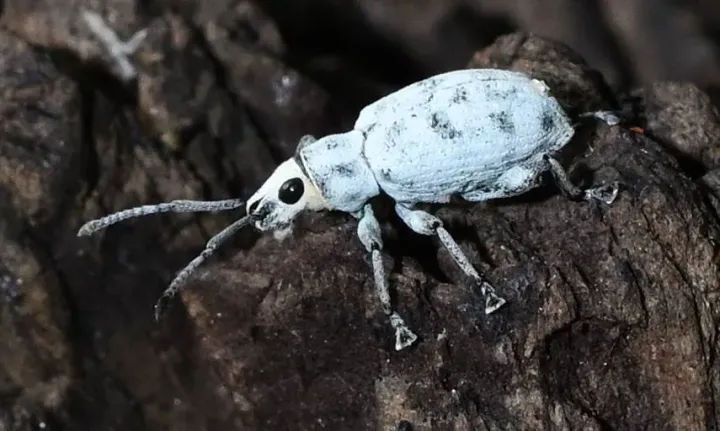
The gray weevil (Myllocerus undecimpustulatus) is a member of the Curculionidae family, easily recognizable by its greyish, scale-covered body that blends perfectly with soil surfaces.
These insects are typically 5 to 7 mm long, characterized by a short, broad snout and a robust, oval-shaped body structure typical of most weevil species.
The larvae are white, legless, and possess a curved body, which is a common trait among soil-dwelling Curculionidae that feed on root systems.
The pupal stage occurs within the soil, where the insect constructs a small protective chamber to complete its metamorphosis away from predators.
Adult beetles are diurnal, though they often exhibit cryptic behavior, such as feigning death when disturbed to evade detection by field observers.
What it damages
The gray weevil is a significant polyphagous pest, known primarily for attacking cotton crops, although it frequently infests various legumes and other agricultural plants.
Adults primarily cause damage by feeding on the leaves, creating irregular notches along the margins, which can significantly reduce the photosynthetic capacity of the plants.
The larvae, living underground, pose a severe threat as they feed on the root hairs and main roots, weakening the plant's ability to absorb essential nutrients and water.
Seedlings and young plants are particularly susceptible; heavy infestations can lead to substantial stand loss and stunted development of the remaining crops.
Beyond direct damage, the feeding activity often leaves plants stressed, making them more susceptible to secondary infections, environmental stressors, and drought.
When it appears
Emergence of adult weevils from the soil usually occurs in the spring when temperatures rise, signaling the start of their active foraging period.
Population density often peaks during the early vegetative stages of host crops, when succulent tissues provide optimal nutritional conditions for the beetles.
The species may undergo several generations within a single growing season, which allows for rapid population growth if conditions remain favorable.
As autumn approaches and temperatures drop, the insects migrate deeper into the soil profile to enter a state of diapause for the winter months.
Environmental factors, especially rainfall patterns, play a crucial role in the survival of larvae, with moist soil environments generally favoring higher survival rates.
Signs of infestation
The most immediate sign of an infestation is the characteristic notched pattern on leaves, often referred to as leaf-notching, which is diagnostic for many weevil species.
Wilting of plants during the hottest hours of the day, which does not resolve with adequate moisture, is a strong indicator of subterranean root damage caused by larvae.
Inspecting the base of the plants or looking for beetles in the crevices of soil clods can confirm the presence of the pest population on the field.
- notched or serrated leaf margins;
- sudden wilting or chlorosis of young plants;
- presence of larvae in the root zone;
- reduced crop vigor and overall patchy development.
When investigating a field, look for clumps of dirt that move slightly, as these are often the adult beetles attempting to hide or feign death upon disturbance.
Control measures
Integrated Pest Management strategies include deep autumn plowing to disturb the soil, exposing larvae and pupae to predators and adverse weather conditions.
Crop rotation is an essential preventive measure that breaks the life cycle by removing the preferred host crops for consecutive seasons.
Chemical intervention should be based on economic thresholds, utilizing insecticides that target the adults before they have the opportunity to lay eggs.
Maintaining field sanitation, such as removing crop residues and weeds, eliminates alternative host plants and reduces overwintering sites for the beetles.
Monitoring programs using visual counting or traps help track population trends, ensuring that control measures are applied at the most vulnerable stage of the pest's life cycle.
Taxonomy
- Latin name
- Myllocerus undecimpustulatus
- Order
- Coleoptera (beetles)
- Family
- Curculionidae
- EPPO code
- MYLLUU
Discussion
No discussions yet — be the first.