
Myllocerus spinicollis
Myllocerus spinicollis
Description
How to identify
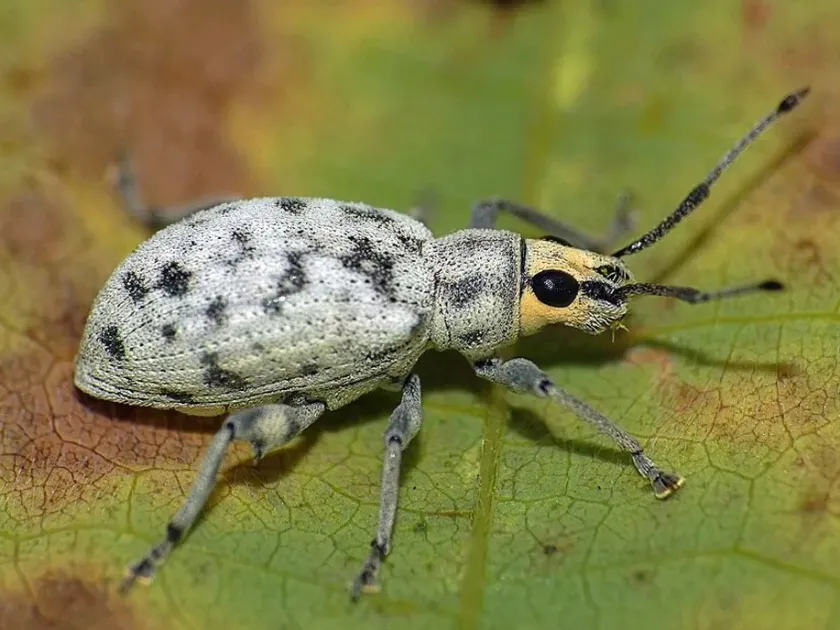
Myllocerus spinicollis is a species of broad-nosed weevil belonging to the family Curculionidae. These beetles are characterized by their relatively small size and a body covered in specialized scales.
The name spinicollis refers to the distinct spinous projections found on the pronotum, which serve as a primary morphological feature for professional identification under magnification.
The larvae of this species are typical of the Curculionidae family: legless, creamy white, with a slightly curved body. They reside in the soil profile throughout their entire developmental stage.
Adult beetles have a short, robust rostrum and are capable of feigning death when disturbed, dropping off the host plant into the soil, which helps them evade predators.
Understanding their life cycle is crucial for effective control, as the separation between the soil-dwelling larval stage and the foliage-feeding adult stage requires different management tactics.
What it damages
As a polyphagous insect, Myllocerus spinicollis infests a variety of crops including legumes, cotton, and various horticultural plants. This makes it a significant risk factor in diverse agricultural systems.
Adult beetles feed primarily on leaves, creating distinct semi-circular notches along the margins. This feeding habit is known as «leaf scalloping» and can drastically reduce the photosynthetic area.
In high population densities, adults can cause severe defoliation, which stunts plant growth and significantly reduces the total yield of the affected crop.
Larval feeding on roots inhibits the plant's ability to take up water and nutrients. This damage often goes unnoticed until the plants show clear signs of stress, such as wilting or chlorosis.
Secondary infections often colonize the damaged roots, leading to root rot and further plant decline, which complicates the assessment of the initial pest damage.
When it appears
Adult emergence typically begins in late spring as soil temperatures rise, signaling the transition from the overwintering phase to active feeding and reproduction.
The period of peak adult activity usually occurs during the early vegetative stages of crops, making young seedlings particularly vulnerable to heavy infestation.
The insect may complete one or more generations per year depending on the climatic zone and the availability of host plants for continuous feeding throughout the season.
As autumn approaches and temperatures drop, adults move deeper into the soil profile to find suitable overwintering sites, remaining dormant until the following spring.
Regular scouting during the early morning or late evening is highly recommended during the spring season to detect the initial arrival of beetles in the field.
Signs of infestation
The most diagnostic sign of an infestation is the presence of serrated or notched leaf margins, commonly referred to as edge-feeding, which is unique to many broad-nosed weevils.
Plants that appear yellowed, stunted, or show premature wilting despite adequate irrigation should be inspected for root damage caused by larvae.
Field inspections should include checking the undersides of leaves and soil surface debris, where beetles often hide during the heat of the day.
The presence of bare patches in the field, where seedlings have failed to establish or died shortly after emergence, is a strong indicator of larval soil activity.
Tracking the migration of beetles from adjacent wild vegetation or previous years' crop residues is a vital part of early detection for farmers.
Control measures
Effective management begins with robust crop rotation strategies, which effectively starve the soil-dwelling larvae by removing their preferred host plants from the cycle.
Deep cultivation of the soil after harvest can expose larvae and pupae to predators and adverse weather conditions, significantly reducing the overwintering population.
When chemical intervention is necessary, systemic insecticides applied to the foliage or as a soil drench can target both adults and larvae, depending on the application timing.
It is important to integrate these measures with biological control agents, such as entomopathogenic fungi or beneficial nematodes, which can suppress larval populations.
Always monitor the population density and apply control measures only when the economic threshold is reached to minimize the environmental impact and prevent resistance.
Taxonomy
- Latin name
- Myllocerus spinicollis
- Order
- Coleoptera (beetles)
- Family
- Curculionidae
- EPPO code
- MYLLSI
Discussion
No discussions yet — be the first.