
Weevil Myllocerus lineatocollis
Myllocerus lineatocollis
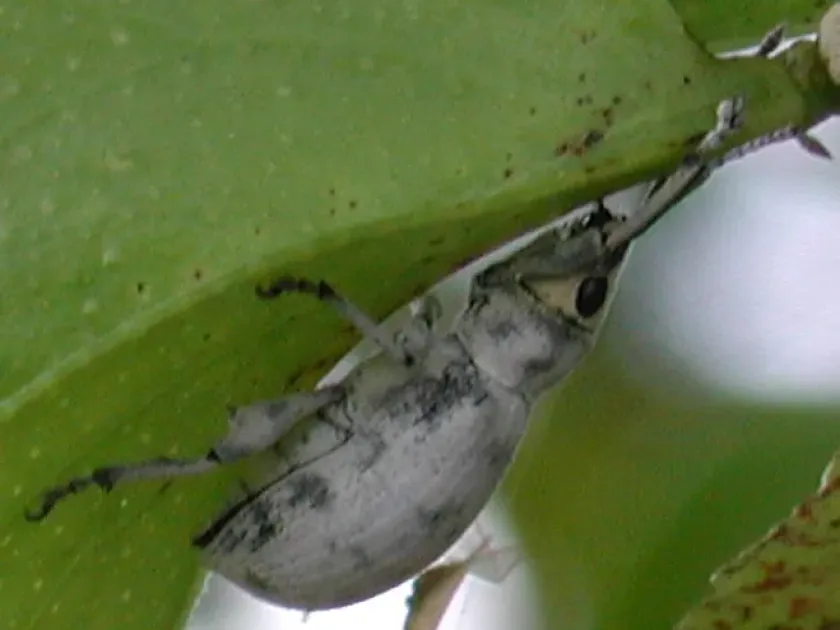
Description
How to identify
The adult Myllocerus lineatocollis is a member of the Curculionidae family, order Coleoptera. This species is characterized by its elongated body, typically covered with fine scales, which often provide effective camouflage against plant surfaces.
The beetle possesses a distinctive snout, common to most weevils, which is used for feeding and environmental sensing. Adults are primarily diurnal, meaning they are most active during daylight hours when they feed on plant foliage.
Larvae are legless, fleshy, and typically white in color, living primarily underground. Their development is closely tied to the soil environment, where they inhabit the root zone of host plants until they pupate.
The species undergoes a complete metamorphosis, passing through egg, larva, pupa, and adult stages. Understanding these developmental phases is crucial for determining the timing of control measures.
Morphologically, identification relies on examining the patterns on the pronotum and the specific shape of the scales covering the elytra, which helps distinguish this species from other related weevil pests.
What it damages
Damage caused by Myllocerus lineatocollis is twofold: adults cause defoliation by feeding on leaf margins, while larvae compromise plant health by feeding on the root system. This dual attack significantly stunts plant development.
The host range includes a variety of legumes, orchard trees, and vegetables. Young plants are particularly vulnerable, as their smaller root systems and foliage cannot withstand intense herbivory.
Root damage by larvae disrupts the plant's ability to absorb water and essential nutrients. In fields with high larval populations, this frequently manifests as wilting, chlorosis, and in severe cases, the death of the plant.
Foliar damage by adults reduces the photosynthetic capacity of the plant. This loss of surface area directly impacts energy production, leading to decreased yields and poorer quality of the harvested produce.
Economic damage is most severe in drought-prone areas where the added stress of pest feeding prevents the plant from maintaining its physiological balance, often leading to secondary susceptibility to pathogens.
Control measures
Managing Myllocerus lineatocollis requires an Integrated Pest Management (IPM) strategy that combines cultural, biological, and chemical methods to effectively lower population levels.
Cultural control practices, such as deep plowing after harvest, are essential. This process disrupts the lifecycle by exposing larvae and pupae to extreme weather conditions and natural predators in the soil.
Biological control options, such as the application of entomopathogenic fungi or nematodes, are increasingly used to target the larval stage in the soil, offering an environmentally friendly alternative to traditional pesticides.
Chemical control involving systemic insecticides is effective when applied during the peak emergence of adults. It is critical to follow local regulations and rotate modes of action to prevent the development of insecticide resistance.
Regular monitoring using pheromone traps or field scouting helps determine the exact timing for intervention, ensuring that applications are targeted and economically efficient while minimizing impact on non-target species.
Taxonomy
- Latin name
- Myllocerus lineatocollis
- Order
- Coleoptera (beetles)
- Family
- Curculionidae
- EPPO code
- MYLLLI
Discussion
No discussions yet — be the first.