
Grey weevil
Myllocerus lefroyi
Description
How to identify
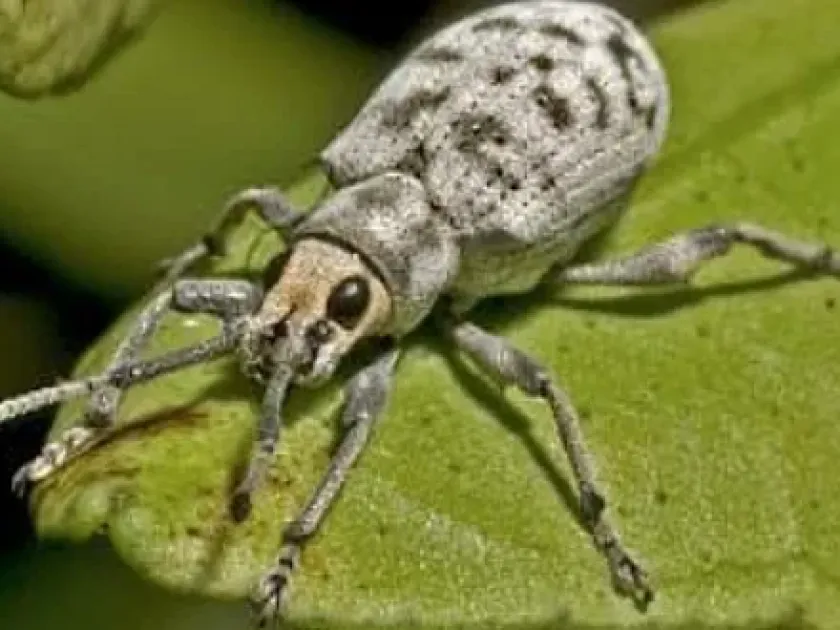
The grey weevil (Myllocerus lefroyi) belongs to the order Coleoptera and the family Curculionidae. It is characterized by a body covered in fine grey scales, which allows the insect to blend perfectly with soil and plant debris.
The adult weevils possess a typical elongated snout (rostrum) and elbowed antennae. Despite their modest size, they are prolific breeders, and their presence can quickly escalate in favorable agricultural environments.
The larvae are white, C-shaped, and develop within the soil. They possess strong mandibles for feeding on plant roots. Since they reside underground, they often go unnoticed until significant damage is already done to the crop root system.
The insect undergoes a complete metamorphosis, including egg, larval, pupal, and adult stages. The duration of this cycle depends largely on soil moisture and ambient temperature, which determine the population dynamics of the pest.
Grey weevils are known for their defensive behavior of dropping from plants and "playing dead" when disturbed, which is a common survival strategy that makes manual counting during field scouting difficult.
What it damages
This pest is highly polyphagous, causing damage to various plants, with a notable impact on cotton, legumes, and several fruit crops. The damage is twofold, affecting both the foliage and the root system.
Adult beetles feed on the leaves, creating irregular notches along the margins. In cases of severe infestations, the leaf surface area is drastically reduced, hindering photosynthesis and overall plant growth.
Root damage caused by larvae is particularly detrimental to young plants. By destroying the root tissues, the larvae prevent the plant from absorbing necessary water and nutrients, leading to yellowing, wilting, and eventually plant death.
Infested plants become highly susceptible to secondary pathogens. Bacteria and fungi often colonize the wounds made by the weevils, leading to systemic infections that further weaken the crop and lower quality standards.
Economic losses vary based on infestation intensity. Early detection is crucial, as unchecked populations can devastate entire field sections, significantly reducing yields and agricultural profitability.
Control measures
Cultural control practices, such as deep autumn plowing, are highly effective. This operation exposes larvae and pupae in the soil to harsh weather conditions and natural predators, significantly reducing the next generation's population.
Crop rotation is a fundamental strategy. By alternating crops that are not suitable hosts for Myllocerus lefroyi, farmers can break the life cycle of the pest and prevent it from establishing a permanent foothold.
Chemical control involving systemic insecticides is recommended during peak periods of adult activity. Application timing is essential to ensure maximum efficacy, typically targeting the periods when beetles are most active on the foliage.
Biological pest management options include the use of entomopathogenic fungi, which specifically target soil-dwelling larvae. This method is gaining popularity due to its lower environmental impact compared to traditional chemicals.
Maintaining clean fields by removing alternative host weeds is vital. These weeds often serve as shelters and feeding sites for adult weevils during the off-season, allowing them to survive until the next planting period.
Taxonomy
- Latin name
- Myllocerus lefroyi
- Order
- Coleoptera (beetles)
- Family
- Curculionidae
- EPPO code
- MYLLLE
Discussion
No discussions yet — be the first.