
Blister beetle
Mylabris pustulata
Description
How to identify
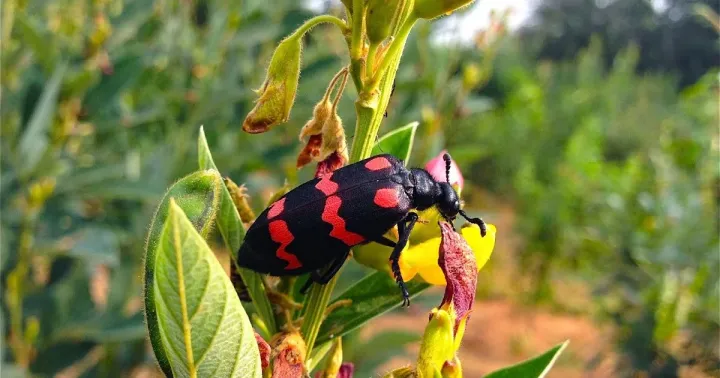
The blister beetle (Mylabris pustulata) is a member of the Meloidae family within the order Coleoptera. Adult beetles are typically 20–35 mm long, characterized by an elongated body and striking black wing covers marked with prominent orange or red transverse stripes or spots.
These insects are named for the chemical compound cantharidin found in their hemolymph. This toxin acts as a potent defense mechanism; contact with the beetle can cause severe skin irritation, blisters, and chemical burns on humans and livestock.
The biological cycle of this species is complex, as the larvae are predatory. They typically inhabit the soil, where they parasitize the nests of wild bees or feed on the egg pods of grasshoppers, playing a significant role in their native ecosystems.
The metamorphosis is complete, progressing through egg, larval, pupal, and adult stages. Once the adults emerge, they move to the surface to seek out floral resources for nutrition and breeding.
Adults are highly capable fliers, which enables them to move rapidly between fields, making their appearance unpredictable and often sudden during the peak summer bloom.
What it damages
The blister beetle is a significant polyphagous pest that causes severe damage to agricultural crops by feeding primarily on flowers, buds, and young developing fruit.
Primary host crops include various legumes such as soybeans, chickpeas, and peas, as well as several vegetable species. The destruction of reproductive parts often leads to a total failure of fruit set.
In addition to floral feeding, when populations are high, these beetles may consume foliage, causing skeletonization of leaves, which further stresses the plant and hampers its growth and overall yield potential.
The intensity of the damage is often exacerbated by the fact that adult beetles feed in groups, quickly decimating the flowering structures of plants in a localized area.
- Total loss of flowers and reproductive buds.
- Drastic reduction in legume pod formation.
- Leaf damage affecting plant photosynthetic capacity.
When it appears
The adult stage of Mylabris pustulata is most active during the warmest summer months, which coincide with the flowering period of major commercial crops in the region.
The initial migration into agricultural fields usually begins in early June, with the population density peaking throughout July when weather conditions are most favorable for flight.
Adult beetles exhibit peak daily activity during the hottest part of the day. Their mobility is highest in direct sunlight, which is when they are most actively feeding and searching for mates.
Conversely, during overcast, rainy, or cooler days, the beetles become sluggish and hide deep within the plant canopy, making them harder to detect during routine crop scouting.
As the season nears its end in late August, adults move to the soil to lay eggs, marking the transition to the next generation, with larvae overwintering in the soil profile.
Signs of infestation
The most obvious indicator of a blister beetle infestation is the visual presence of large, brightly colored beetles resting on or feeding within the flower heads of the target crops.
Heavily infested fields exhibit ragged, eaten flowers with missing petals, stamens, or pistils, often leaving only the stalk behind in cases of severe feeding.
Scouting reveals fragmented plant tissue and beetle excrement on the flowers and surrounding leaves. These signs often point to a significant infestation before the damage becomes irreversible.
The presence of a distinct, acrid odor around the plants, secreted by the beetles as a defensive reaction, is another indicator of their presence within the canopy.
Sudden declines in bloom density that cannot be attributed to environmental stress or moisture deficiency often suggest that blister beetles are present in the field.
Control measures
Effective control of Mylabris pustulata primarily involves the application of chemical insecticides. Contact and systemic insecticides are recommended to reduce beetle populations quickly.
It is crucial to time applications during the early morning or late evening. This practice minimizes the risk to non-target, beneficial pollinators like bees, which are essential for crop productivity.
Integrated Pest Management (IPM) strategies include monitoring field edges where beetles first appear, allowing for spot treatments rather than field-wide applications to reduce chemical usage.
Cultural control methods include deep autumn tillage. By turning the soil, growers can disrupt the larval development sites, thereby reducing the number of adults that emerge in the following spring.
In smaller garden settings, physical removal is possible, but one must wear gloves to prevent cantharidin-induced blisters, as the toxin can easily penetrate the skin upon contact.
Taxonomy
- Latin name
- Mylabris pustulata
- Order
- Coleoptera (beetles)
- Family
- Meloidae
- EPPO code
- MYLBPU
Discussion
No discussions yet — be the first.