
Wood stork
Mycteria americana
Description
How to identify
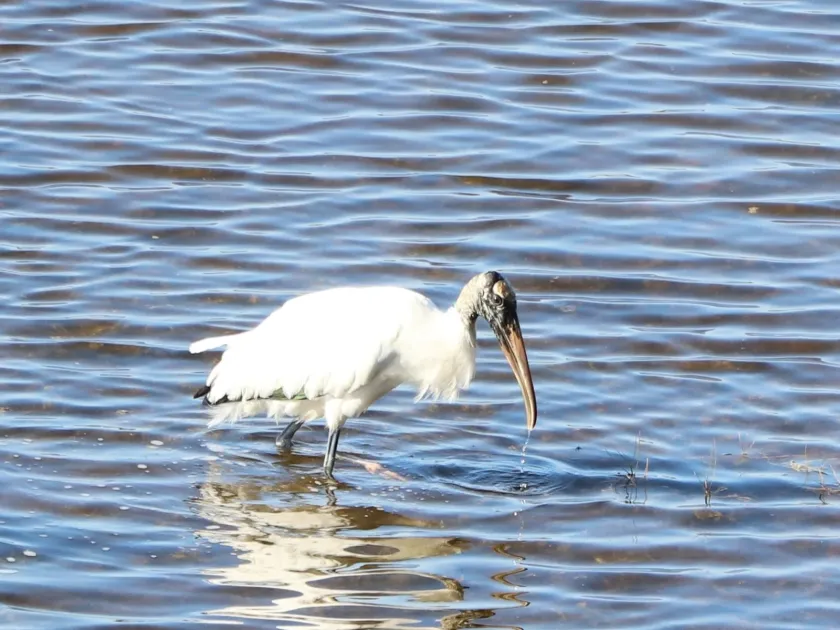
The wood stork (Mycteria americana) is a large, long-legged wading bird belonging to the Ciconiidae family. It is easily recognized by its heavy, down-curved bill and a bald, scaly head and neck that are dark in color.
Adult wood storks have white plumage with black flight feathers that are especially striking when the bird is in flight. With a wingspan often exceeding 1.5 meters, these birds are highly visible in agricultural landscapes.
Juvenile birds are distinguishable by their feathered heads and lighter, brownish coloration. They often congregate in large colonies, especially in nesting or roosting areas, which can lead to significant localized pressure on resources.
Their biology is intrinsically linked to water environments, as they rely on aquatic ecosystems for foraging. However, their opportunistic feeding behavior frequently leads them to enter cultivated lands.
Wood storks are highly intelligent and adapt to the presence of human activity, often utilizing man-made irrigation systems for their foraging needs.
What it damages
The primary agricultural damage caused by wood storks occurs in rice farming and aquaculture. By foraging in rice fields, they crush young seedlings through trampling, which causes significant reductions in crop density and overall yield.
In fish farming, these birds can cause substantial economic losses by preying on juvenile fish. Their presence in aquaculture ponds can deplete stock levels very rapidly if not properly managed.
The accumulation of bird excrement in irrigation channels and fields can degrade water quality. This alters the chemistry of the water, which may negatively impact plant health and favor the growth of harmful pathogens.
Large flocks of wood storks can damage a significant percentage of a field in a very short amount of time. The combined effect of physical destruction and resource depletion makes them a major pest in specific ecological zones.
The cost of reseeding fields and managing water quality due to bird activity is a substantial hidden expense for many agricultural businesses.
When it appears
Peak activity for the wood stork typically occurs during the breeding and nesting season, which requires high protein intake. During this time, they are extremely active and travel long distances for food.
Post-breeding migration periods also represent a significant threat to late-season crops. Farmers should be particularly cautious during these movement windows to avoid mass gatherings on fields.
In irrigated farming, wood storks often visit fields immediately after watering cycles. Wet soil makes it easier for them to locate amphibians, fish, and insects, making them a consistent issue throughout the growing season.
During periods of drought, the concentration of wood storks around artificial reservoirs becomes much higher, as these sites become the only reliable source of food and water in the area.
Their daily foraging rhythm is highly dependent on daylight. They are most active during the early morning and late afternoon hours, coinciding with the time farmers often monitor field conditions.
Signs of infestation
The most reliable sign of wood stork activity is the presence of distinctive, deep footprints in the mud or soft soil. These prints are easily found in rice paddies after water levels fluctuate.
Visual confirmation of large, white birds congregating near or on cultivated land is an obvious sign of potential damage. Their size and distinct silhouette make them hard to miss even at long distances.
Damaged crops usually appear flattened, broken, or uprooted. The soil in affected areas often appears churned up, and the overall plant distribution in the field becomes patchy and uneven.
Accumulated droppings on leaves and irrigation equipment are clear markers of the birds' long-term presence. This organic waste can lead to secondary plant health issues if left unaddressed.
The sudden absence of local aquatic wildlife or small fish, combined with audible bird calls, serves as a strong indicator that a wood stork colony is feeding in the vicinity.
Control measures
Managing wood storks requires an integrated approach using a combination of auditory and visual deterrents. Changing deterrent methods regularly is crucial to prevent the birds from habituating to the equipment.
Bioacoustic devices that mimic predator calls or distress signals from other birds are highly effective. These should be moved periodically to keep the birds from identifying them as static non-threats.
Physical barriers, such as netting over high-value aquaculture ponds or reflective ribbons over fields, offer the best protection. These measures are labor-intensive but provide the most consistent results.
Agronomic management, such as maintaining precise water levels in rice paddies and clearing dense vegetation around field edges, can make the area less attractive for foraging wood storks.
- Deploying bioacoustic bird deterrent systems.
- Using reflective tape or flashers to disorient birds.
- Installing physical mesh netting over small ponds.
- Scheduling field inspections during peak activity hours.
- Managing irrigation schedules to discourage feeding.
Taxonomy
- Latin name
- Mycteria americana
- Family
- Ciconiidae
- EPPO code
- MYKTAM
Discussion
No discussions yet — be the first.