
Northern gannet
Morus bassanus
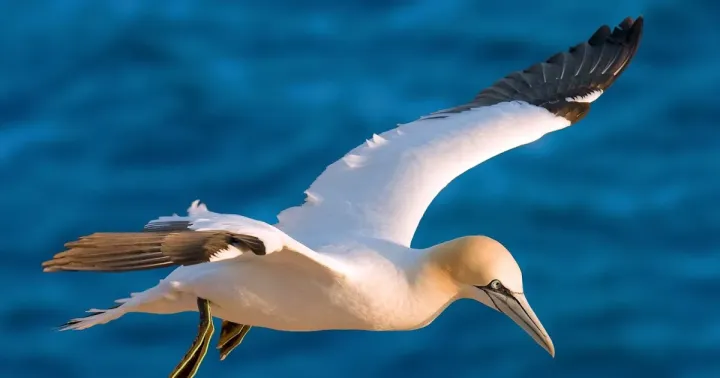
Description
How to identify
The Northern gannet (Morus bassanus) is a large seabird belonging to the Sulidae family. They are easily recognized by their white plumage, black wingtips, and yellow-shaded heads.
These birds are master divers, capable of plunging into the ocean from great heights to catch fish. Their wingspan is impressively large, often reaching 1.8 meters.
Northern gannets are colonial nesters, primarily found on rocky offshore islands and cliffs in the North Atlantic. They are highly specialized marine creatures.
From an agronomical perspective, these birds are not pests. Their morphology and behavior are strictly tied to the maritime environment, making them absent from agricultural lands.
Understanding their ecology is simple: they are sea-dwellers that do not interact with terrestrial farming systems or food production cycles.
What it damages
Northern gannets do not cause any damage to agricultural crops. Their diet consists exclusively of marine fish such as mackerel and herring caught in the open sea.
They have no interest in grains, vegetables, or fruits. Their bills are specialized for fishing, not for consuming or destroying crop plants or soil.
There is no record of Northern gannets impacting agriculture. They are not phytophagous and do not exhibit any behavior that could be considered pestilent.
Because they do not frequent fields or orchards, they pose zero threat to harvest yield or the health of any plant species managed by humans.
Agricultural professionals should not consider this species in their risk management or crop protection plans.
When it appears
The life cycle of the Northern gannet is dictated by the seasons of the North Atlantic. They spend the breeding season on remote coastal cliffs.
During the non-breeding season, they migrate far out into the ocean. They do not travel inland, meaning they stay completely away from agricultural zones.
Their presence near the coast is seasonal, but even then, they do not enter farm lands. They are not active during the planting or harvesting periods of most crops.
Seasonal shifts in their population are entirely driven by marine food availability, having no connection to agricultural calendar dates.
They are not a seasonal threat to farming operations at any time of the year, regardless of the crop rotation or cultivation techniques used.
Signs of infestation
There are no signs of Northern gannet infestation in agricultural fields. If you find animal damage in your crops, it is caused by local terrestrial pests, not seabirds.
Signs of their presence, such as nesting or guano, are strictly limited to coastal rocky cliffs, not arable land or farmland infrastructure.
If you see a large white bird near a field, it is extremely unlikely to be a Northern gannet. They are restricted to coastal zones and avoid inland environments.
No damage indicators like bitten stems, missing grains, or trampled soil can be attributed to this species in a farming context.
The absence of traces in fields confirms that this species is not part of the agricultural ecosystem and does not require monitoring by agronomists.
Control measures
Control measures against the Northern gannet are unnecessary and counterproductive. They are not pests, so no protection strategies are needed.
Farmers should focus their resources on managing actual agricultural pests rather than concerns regarding marine birds. No repellents are required.
Northern gannets are protected species in many jurisdictions. Any attempt to interfere with their natural behavior is both illegal and ecologically harmful.
Maintaining a healthy environment, including the preservation of coastal habitats, helps balance the ecosystem without impacting agricultural production.
If you have questions about local wildlife, it is best to consult with local conservation authorities rather than treating seabirds as agricultural risks.
Taxonomy
- Latin name
- Morus bassanus
- Family
- Sulidae
- EPPO code
- MORUBA
Discussion
No discussions yet — be the first.