
Iris weevil
Mononychus vulpeculus
Description
How to identify
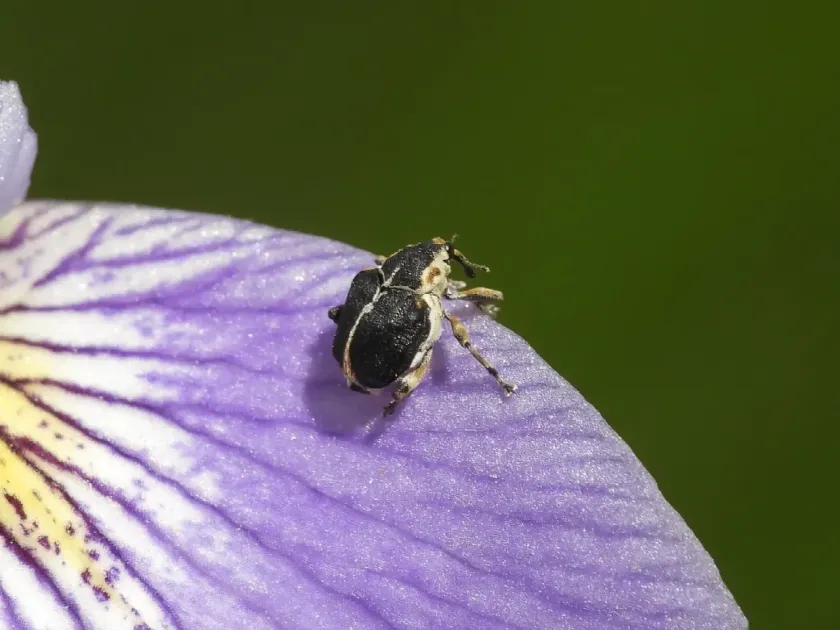
The iris weevil (Mononychus vulpeculus) is a small beetle belonging to the Curculionidae family. Adult individuals are typically 3–4 mm long and possess the characteristic elongated rostrum typical of the weevil group.
The coloration of the adult beetle is generally black, occasionally exhibiting a matte or dull sheen. A key diagnostic feature for this species is a distinct light-colored patch on the elytra, which aids in field identification.
The larvae are legless and have a pale, whitish, or yellowish body with a hardened, brownish head capsule. They spend their entire developmental phase shielded within the tissues of the host plant.
These insects are moisture-loving and are most commonly found in damp environments, such as stream banks or near water features, where wild populations of host plants are concentrated.
Adult beetles exhibit a defense mechanism known as thanatosis; they will readily fall to the ground and feign death when disturbed, making them notoriously difficult to spot among foliage.
What it damages
The primary host plants for this weevil are species within the Iris genus. While they frequently infest wild irises, ornamental cultivars in damp gardens are also susceptible to their presence.
The most significant damage occurs in the reproductive structures of the plant. Females deposit eggs directly into the ovary, leading to the destruction of the developing seed capsule.
Adult weevils also feed on the foliage and flower buds, creating small, pinprick-like holes. While this does not usually kill the plant, it significantly degrades the aesthetic value of the blooms.
Larval feeding destroys the internal tissues of the seed pods. As a result, the seeds fail to mature properly, which is particularly detrimental for gardeners collecting seeds or maintaining plant stocks.
In cases of high infestation rates, the reproductive potential of an entire iris patch can be severely compromised, hindering the natural propagation of the plants.
When it appears
Adult weevils emerge from overwintering sites in the soil or under debris during early spring when temperatures become consistently conducive to insect activity, usually above 10-12°C.
Their peak activity phase correlates precisely with the bud development and blooming stages of irises. This is when females search for suitable egg-laying sites on the developing reproductive parts.
The larval stage occurs throughout the summer months as the seed pods develop. The larvae consume the inner tissues of the pods, remaining hidden until the end of their developmental cycle.
Pupation occurs in late summer, typically within the hollowed-out seed pods. New adults emerge late in the season to find suitable overwintering shelter in the top layer of the soil.
Since the species completes only one generation per year, timely intervention during the spring growth phase can effectively suppress their population and prevent future damage.
Signs of infestation
Small, neat punctures on flower buds and stalks are the earliest indicators of an iris weevil presence, resulting from adult feeding and egg-laying activities.
Deformed, stunted, or prematurely yellowing seed pods are classic symptoms that the larvae are active inside and have successfully compromised the seed development.
Inspecting a suspected pod often reveals internal decay, frass (larval excrement), and a hollowed-out interior, confirming the presence of the pest.
Observers might spot adult weevils in the early morning or evening hours resting at the base of the leaves or along the stems, as they are most active during these cooler periods.
Widespread premature drop of flower buds or the complete failure of seed pods to mature suggests a need for a detailed inspection of the iris planting area.
Control measures
The most effective mechanical control measure is the regular harvesting and destruction of infested seed pods before the adult weevils emerge to enter their overwintering stage.
Deep cultivation of the soil around the iris clumps in the autumn helps disrupt the overwintering sites of the adults, significantly reducing the population that will survive into the next year.
Application of contact insecticides during the bud formation stage can be highly effective in preventing females from laying eggs in the ovaries.
Maintaining proper garden hygiene and removing debris helps limit the shelter available to both adults and pupating larvae, making the area less attractive to the pest.
- Regular monitoring of flower buds during the spring.
- Prompt disposal of damaged pods in the trash (do not compost).
- Utilizing natural predatory insects that target curculionids.
Taxonomy
- Latin name
- Mononychus vulpeculus
- Order
- Coleoptera (beetles)
- Family
- Curculionidae
- EPPO code
- MOONVU
Discussion
No discussions yet — be the first.